
Player with a sunny desk
You play during the day with a window or lamp nearby and want to keep the map, text and menus clear despite reflections.


Start with the light in your room. Consider both SDR brightness and how well the screen handles reflections, and, where possible, avoid placing a window or lamp directly opposite it. Then choose between a compact Full HD monitor, a 27-inch QHD screen or an ultrawide, depending on your desk, PC and game. A high refresh rate doesn’t automatically make a screen easier to read in daylight. With OLED, you should also consider the risk of static game elements remaining visible over time.
You play during the day with a window or lamp nearby and want to keep the map, text and menus clear despite reflections.
You want more room for the map and interface than a compact Full HD screen offers, while sticking with a standard-sized desk rather than opting straight for an ultrawide.
You want a wide workspace and have room for an ultrawide monitor. You’ll also want to check that the game makes good use of the format.
First compare the lighting conditions and the screen layout you need. Then consider whether a higher refresh rate matters for the way you play.
| Buying concern | What to look for | Who it matters to |
|---|---|---|
| Daylight readability | Check SDR brightness, screen finish and, if possible, reflection measurements for the exact model. Consider the position of your window and lamp, too. | If I play by a window during the day, I want to see the map and menus clearly despite the incoming light. Around 36% of consumers say daylight readability is their main buying concern. |
| Sharpness and map detail | Compare 23.8-inch Full HD with 27-inch QHD at your viewing distance, and check that your PC can handle your chosen resolution in the game. | If you want more room for map details and game information, you could weigh up a 27-inch QHD screen against a more compact Full HD model. Around 29% of consumers name this as their top priority. |
| Wide workspace | Check your desk width and viewing distance, and whether the game supports 3440 × 1440 in a usable way. | If I want to see the map and side panels next to each other, an ultrawide needs to suit both my desk and the game interface. Around 21% of consumers prioritise a wide workspace. |
| Smoothness and long-term use | Check the refresh rate you can achieve through the input you plan to use. If you’re considering OLED, factor in static interface elements that stay visible for long periods. | If you mainly care about smooth motion, compare the stated refresh rates for each connection. If you’re considering OLED, also think about how you use fixed game menus. Around 14% of consumers say this is their main buying concern. |
Brightness and direct reflections each affect what you can see in a bright room in different ways. A stated brightness level or anti-glare coating doesn’t guarantee that the screen will be easy to read where you plan to use it.
Where possible, compare independent measurements for the exact model and assess the position of your window and lamp.
The refresh rate you can achieve also depends on the connection and your PC. The stated maximum refresh rate for the MSI MAG 27CQ6F varies by input.
First decide which resolution and screen layout suit you. Then check the refresh rate through the connection you’ll actually use.
Prolonged exposure to the same static elements can cause burn-in on OLED screens.
Consider how often and for how long menus or other fixed elements remain visible, and read the terms for the specific OLED model.
The Nitro VG240Y Gbip is an example of a compact, flat 23.8-inch Full HD IPS monitor.
The Legion R27qe is a 27-inch QHD IPS example in a conventional 16:9 layout.
The MAG 27CQ6F is an example of a curved 27-inch QHD VA monitor.
The Evnia 34M2C3500L/00 is an example of a 34-inch ultrawide VA monitor.
The UltraGear 27G610A-B is another example of a 27-inch QHD IPS monitor.
These products cover compact Full HD, 27-inch QHD, ultrawide and OLED options for colony games. Check that each model’s features suit your room, desk and game.
 No image available
A compact Full HD IPS option for a smaller desk setup.
The product details list 23.8 inches, Full HD, 200 Hz, 300 cd/m² and an anti-glare coating. The coating isn’t an independent reflection test.
 No image available
A 27-inch QHD option if you want more room for the map and interface in a 16:9 setup.
The product details list 2560 × 1440, up to 200 Hz, 400 cd/m² and a matte anti-glare finish. This finish isn’t an independent reflection measurement.
 No image available
A 27-inch QHD option if you want to weigh up map detail on a standard-sized desk against features suited to a bright room.
The product details list 2560 × 1440, 1152 local dimming zones and up to 275 Hz. Stated typical SDR brightness is 450 cd/m², and the screen surface is described as AG. These aren’t independent readability or reflection measurements.
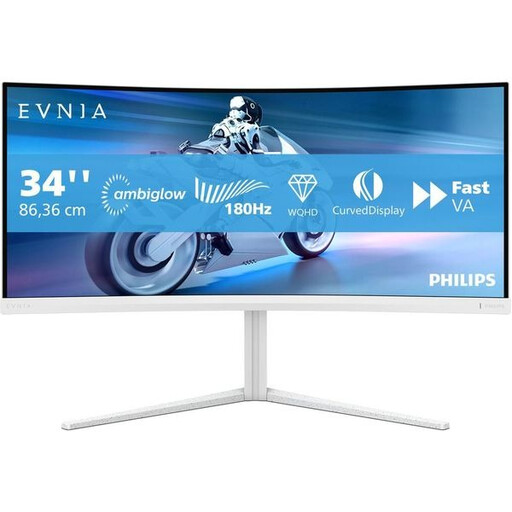 No image available
An ultrawide option if you want to view the map and side panels side by side across a wider screen.
The product title lists 34 inches, UWQHD, VA, a curved screen and 180 Hz. Check that your desk has enough room and that the game makes good use of 3440 × 1440.
 No image available
A 27-inch QHD OLED option if you’re considering OLED and want to factor in the effects of fixed game elements remaining visible for long periods.
The product title lists 2560 × 1440, 240 Hz, HDMI 2.1 and DisplayPort 1.4. Prolonged exposure to the same static interface can cause burn-in on OLED screens.
No. For a bright room, focus on the exact model’s SDR brightness and reflection handling; HDR brightness describes a different viewing situation.
Check the specifications for each input, and use a compatible output and cable. For the MAG 27CQ6F at 2560 × 1440, MSI lists up to 180 Hz via DisplayPort and up to 144 Hz via HDMI 2.0. This won’t automatically apply to other models.
Use a dry microfibre cloth to remove everyday dust. For stubborn dirt, check your monitor manufacturer’s cleaning instructions, too.
According to the Dutch government, for a standard online purchase from a business, you’ll often have a 14-day cooling-off period. An online purchase from a private individual isn’t covered by the same distance-selling rule. If the product is faulty, the seller is your first point of contact for a solution, such as a repair or replacement.