
Fan of dark adventure games
You want to consider contrast in dark scenes and compare OLED with the care it requires when displaying static images for long periods. LG outlines care considerations for OLED monitors; these vary by model.


First, choose a monitor that fits on the shared desk with its stand in place. Then check which resolution and refresh rate your PC or console can deliver through the connection you plan to use. OLED or QD-OLED may suit you if dark scenes are your priority; IPS is another option to consider if the screen will also display static images for long periods. 4K offers more pixels than QHD, but your source device and connection must support the picture mode you want.
You want to consider contrast in dark scenes and compare OLED with the care it requires when displaying static images for long periods. LG outlines care considerations for OLED monitors; these vary by model.
You’re looking for a screen and stand that fit in the available space. The overall dimensions with the stand, such as those of the LG 27GR93U-B, are more useful for this than screen size alone.
You want to check in advance which resolution and refresh rate your device can actually deliver through the connection you plan to use.
First measure the available desk space, then check the picture mode your device can support. Finally, weigh up the panel type and care requirements based on how you’ll use the monitor.
| What to consider | What to look for when buying | Best suited to |
|---|---|---|
| Dark scenes | Compare OLED and IPS models, and check the care instructions for the exact model. | If dark scenes matter most to me, I’ll factor contrast into my choice; around 33% of consumers prioritise contrast. |
| Desk space | Measure the available width and depth, then compare them with the dimensions including the stand. | With a shared desk, I want both the screen and its stand to fit in the available space; around 25% of consumers focus mainly on the set-up. |
| Sharpness and source device | Check the resolution, input and settings on your PC or console for the picture mode you want. | If I connect my own PC or console, I want to be sure it supports the sharpness and picture mode I’m after; around 25% of consumers prioritise compatibility. |
| Care and shared use | Check the OLED care instructions and compare the energy labels for the exact models. | If I also use the monitor for static content over long periods, I’ll factor care and usage into my decision; around 17% of consumers pay the most attention to these points. |
A monitor’s maximum refresh rate is not the same as the output a console delivers in a particular game.
Before choosing based on the number of hertz, check the combination of source device, input and selected resolution.
The stand takes up space too. For example, LG lists the 27GR93U-B as 253,7 mm deep with its stand; this applies to that specific model.
Measure the available desk space and compare it with the monitor’s full dimensions, including the stand.
In its general support information for OLED monitors, LG warns that displaying the same image for a long time may cause faint marks. This is not a measured failure rate for any particular model.
Read the care instructions for the exact model and factor them in if the monitor will also display static content for long periods.
The models reviewed include both 27-inch 4K IPS and OLED options. Always compare the exact model numbers.
The models reviewed offer different ways to enjoy 4K, including QD-OLED and a model with a separate FHD high-refresh-rate mode.
The MAG 274QRF QD E2 is a QHD model in this selection, for those who aren’t set on 4K.
The models reviewed include both a QHD gaming monitor and a separate Full HD option.
This selection includes QHD and 4K gaming monitors with IPS or OLED panels, to suit different preferences for resolution, dark scenes and screen size.
 No image available
A good fit if you’re looking for a 27-inch QHD screen with IPS technology.
27 inches; 2K WQHD; Rapid IPS; 200 Hz.
 No image available
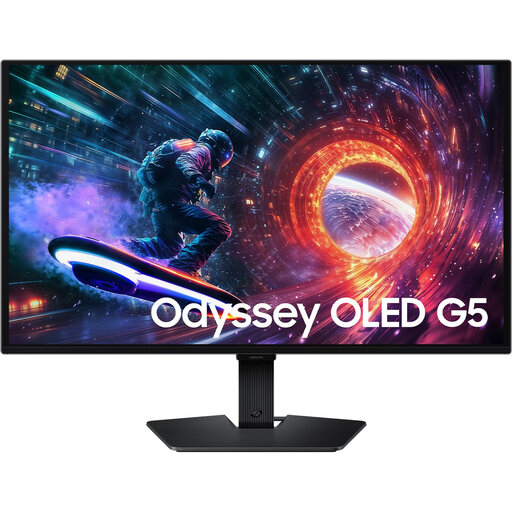
A good fit if you’re considering a 27-inch OLED monitor with QHD resolution for games featuring dark scenes.
27 inches; Quad HD; 180 Hz; OLED.
 No image available
A good fit if you’re looking for 4K UHD resolution and an IPS panel on a 27-inch screen.
27 inches; 4K UHD; IPS; 180 Hz.
 No image available
A good fit if you’re looking for a larger 32-inch OLED screen with 4K resolution for cinematic games.
32 inches; 4K Ultra HD; OLED; 165 Hz.
 No image available
A good fit if dark scenes are important to you and you’re looking for a 27-inch QHD OLED monitor. LG’s general guidance warns of possible marks on OLED monitors if the same image is displayed for long periods.
27 inches; QHD (2560 × 1440); OLED; 240 Hz.
Not necessarily. PlayStation states that the PS5 supports 4K video output at up to 120 Hz. The console selects an output based on the capabilities of the connected screen, so a monitor specification of, say, 144 or 240 Hz doesn’t guarantee that mode in a game. Check the settings and connection for your own set-up.
Measure the available space and compare it with the monitor’s dimensions, including the stand. For example, LG lists the 27GR93U-B as 253,7 mm deep with the stand. Also check the height and tilt adjustments for the model you’re considering.
For marks that appear after the same image has been displayed for a long time, LG recommends using the screen-cleaning function in the monitor settings. Check the manual for the model you’ve bought for instructions and to confirm whether this applies.
According to the Netherlands Authority for Consumers and Markets (ACM), the seller is responsible for the statutory warranty if a product is faulty; a commercial manufacturer’s warranty is separate. For online purchases, consumers generally have up to and including 14 days after delivery to change their mind, subject to applicable exceptions, according to the ACM.
Yes. The European Commission states that computer monitors are covered by energy labelling rules for electronic displays. Compare the labels for the exact models you’re considering.