
The detail-focused gardener
Wants to see paths, plants and objects clearly on a large screen, so compares the resolution they want with what their own PC can deliver. MSI specifies a resolution of 3840 × 2160 for the MPG 321URX QD-OLED.


A large 16:9 screen with 4K resolution is a good choice if fine details in your virtual garden come first; an ultrawide 21:9 screen is better if you mainly want extra horizontal space. Before choosing, check whether your game supports the aspect ratio, what your PC can output through the connection you plan to use, and whether the screen will fit on your desk. If menus stay in the same place for long periods, also weigh up OLED and LCD, along with the warranty terms.
Wants to see paths, plants and objects clearly on a large screen, so compares the resolution they want with what their own PC can deliver. MSI specifies a resolution of 3840 × 2160 for the MPG 321URX QD-OLED.
Wants space beside the virtual garden for design windows or other applications, and checks that their game looks good in 21:9. The AOC and Philips models mentioned offer a resolution of 3440 × 1440.
Often keeps design or game menus on screen for long periods, so considers the panel type, maintenance and warranty terms.
First decide whether detailed images or extra horizontal space matters most. Then consider the panel type, placement and the connection options available on your PC.
| What to consider | What to look for | Who is this important for? |
|---|---|---|
| Clarity on a large screen | Compare the resolution with what your PC can output through the connection you want to use. | If I want to see fine details in plants, paths and objects, I prioritise the resolution my PC can handle. Around 33% of consumers prioritise sharp details. |
| Horizontal workspace | Check that your game supports 21:9 and measure the width of your available desk space. | If I want to keep design windows open beside the garden, how the game looks in 21:9 matters. Around 27% of consumers prioritise extra horizontal space. |
| Panel for static menus | Compare OLED with LCD and read the maintenance and warranty terms for the exact model. | If menus often stay in the same place for a long time, I want to weigh up the panel type and terms carefully. Around 20% of consumers prioritise interface elements that remain visible for long periods. |
| Fit and everyday use | Measure the available space and check the connections and energy label, including for HDR. | If I want to know in advance whether the screen will fit and connect to my equipment, expected usage and energy consumption also matter. Around 20% of consumers prioritise practical considerations like these. |
The maximum refresh rate quoted by the manufacturer doesn’t tell you what frame rate your PC and game will achieve together.
Check what your equipment can output through the connection you plan to use before giving too much weight to the screen’s maximum refresh rate.
3440 × 1440 at 21:9 offers something different from 3840 × 2160 on a 16:9 screen: the first gives you a wider aspect ratio, while the second is the 4K option mentioned for fine details.
First choose between horizontal space and detailed images. Then check how your game displays menus and the edges of the picture in 21:9.
Manufacturer cover varies by model. Your statutory rights are also separate from any additional manufacturer’s warranty.
Read the terms for the exact model before buying, and ask the retailer what applies in the event of a specific issue, especially if fixed interface elements stay on screen for long periods.
The MPG 321URX QD-OLED is a 16:9 option with 4K resolution and a high stated refresh rate.
The AGON AG346UCD is an ultrawide QD-OLED model for anyone weighing up 21:9 screen space and OLED features.
The Evnia 34M2C5501A/00 is an ultrawide Fast VA LCD alternative.
The curved AW3225QF is a 32-inch-class 4K QD-OLED option.
The Curved Gaming Monitor G34WQi is an ultrawide 34-inch option.
These models include large 16:9 screens and ultrawide screens, with both OLED and LCD options. Choose based on the level of detail or extra window space you want, and check that your game supports the aspect ratio.
 No image available
A good fit if you value fine details on a large 16:9 screen. The product information lists a 31.5-inch screen, 3840 × 2160 resolution, QD-OLED and 165 Hz.
The product information advises avoiding static images at high brightness for long periods and using the OLED protection features.
 No image available
A good fit if you’re looking for a large 16:9 screen with 4K resolution to see the details in your virtual garden. The product name lists a 31.5-inch screen, 3840 × 2160 resolution and OLED.
 No image available
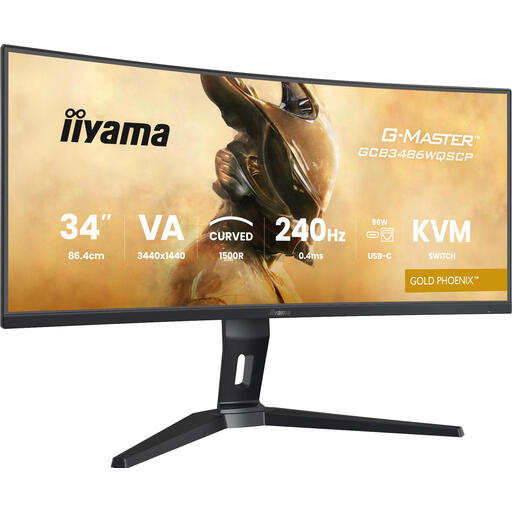
Worth considering if you want extra space for windows beside your garden. The product name lists a curved gaming monitor, up to 240 Hz and a KVM switch.
 No image available
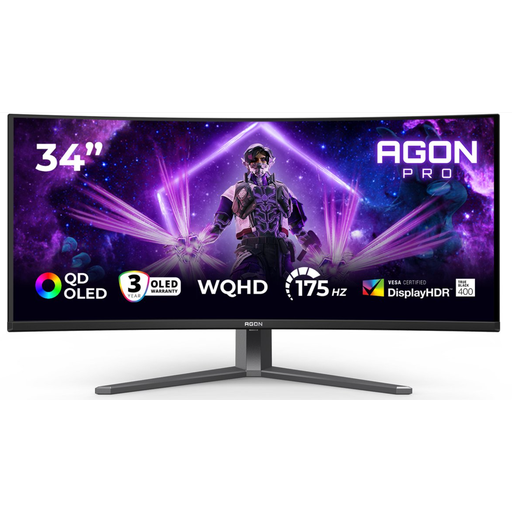
A good fit if you’re considering an ultrawide screen for extra horizontal space; check that your game displays as you want it to in 21:9. AOC lists a 34-inch screen and 3440 × 1440 resolution. The stated refresh rate is up to 175 Hz via DisplayPort and 100 Hz via HDMI.
AOC states that this model’s warranty terms include OLED burn-in cover. Check the terms for the exact version.
 No image available
A 32-inch IPS option to consider if you’re looking for a large LCD screen. The product name lists a 180 Hz refresh rate.
No, it depends on what you want to see on screen and how your game handles 21:9. Check how the game displays menus and the edges of the picture. If you mainly want to see fine details, also compare a 16:9 screen with 4K resolution.
First measure your desk, then compare your PC or console’s video output, the cable and the input on the exact screen with the resolution and refresh rate you want. A monitor’s maximum refresh rate doesn’t automatically match what your device can output while running your game.
Compare LCD with OLED and read the maintenance and warranty terms for the exact model. MSI describes OLED Care 2.0 as a way to reduce the risk of burn-in; AOC states that the AG346UCD is covered under its warranty terms.
For specific models, compare the European energy label, including the information for HDR use. ACM ConsuWijzer says that consumers generally have a 14-day cooling-off period after delivery when buying online. If a product is faulty, the retailer is responsible for providing a solution under the statutory guarantee.
Take a monitor you no longer need to an appropriate collection point. The Dutch government describes, among other options, the free take-back scheme when you buy a similar appliance; you can also hand it in at your local council.