What should you look for?
Start with screen readability and the workspace set-up; then work out how much graphics power your games or other programmes really need.
| What to consider |
What should you check? |
Who is this important for? |
| A readable screen for UI design |
Check the screen size, resolution and finish for each configuration. Also consider whether reflections and the lighting at your workspace affect readability. |
If I often design on the built-in screen, I want to assess details clearly without immediately needing an external monitor. Around 33% of consumers prioritise screen quality. |
| Connecting to a shared workspace |
Check whether a separate screen or keyboard is available and whether you can connect the laptop using the right port and cable. For employees who work at a screen for more than two hours a day, Arboportaal sets out specific requirements for using a separate screen and keyboard. |
If I move between shared desks, I want to know whether the available equipment works with my laptop and whether I can set up my workspace appropriately. Around 27% of consumers prioritise workspace connectivity. |
| Portability between desks |
Compare the stated weight and screen size of the exact configuration. Bear in mind that you may also need to carry an adapter and peripherals. |
When I take my laptop with me often, I don’t want to carry more screen space or accessories than is practical. Around 20% of consumers prioritise portability. |
| Graphics power for gaming |
Compare the requirements of your games and other design software with the GPU in the exact configuration. According to the Figma Help Centre, Figma doesn’t have a powerful gaming GPU as a general requirement. |
If I want to play demanding games as well as work on UI design, I want to match the graphics capabilities to those games and take battery use into account. Around 20% of consumers prioritise gaming performance. |
Arboportaal specifies the requirement for a separate screen and keyboard for employees who work at a screen for more than two hours a day; it isn’t automatically a general rule for every personal buyer. Screen reflections and workspace lighting can also affect readability, as Arboportaal explains.
Gaming laptops at Joybuy
This selection includes gaming laptops for UI design on the built-in screen and use at a shared workspace; configurations vary in areas such as screen, connections and graphics.
 No image available
ASUS ROG Zephyrus G16 GU605CM-QR026W
May suit you if you want to combine an OLED screen for design work with a laptop you can carry between workspaces; check that the connections are compatible with the peripherals available.
16-inch OLED, 2560 × 1600, 100% DCI-P3 and 240 Hz; Core Ultra 9 285H, GeForce RTX 5060, 16 GB RAM and 1 TB SSD. Stated weight: 1.85 kg. Connections listed: HDMI and Thunderbolt 4. Charger not included.
View at Joybuy
 No image available
ASUS ROG Strix G16 G614FR-S5252W
Worth considering if you want to combine UI design on your laptop screen with a GeForce RTX 5070 Ti laptop GPU for gaming.
16-inch WQXGA screen, 2560 × 1600, anti-glare, 100% DCI-P3 and 240 Hz; Ryzen 9 9955HX, GeForce RTX 5070 Ti, 16 GB RAM and 1 TB SSD. Stated weight: 2.5 kg. Charger not included.
View at Joybuy
 No image available
Lenovo Legion 5 15AHP11
May suit design work on the built-in screen and a shared workspace where DisplayPort and Power Delivery connections are useful; check compatibility with your monitor and cable.
15.3-inch WQXGA OLED screen, 2560 × 1600, 100% DCI-P3 and 165 Hz; AMD Ryzen 7 250, GeForce RTX 5060, 16 GB DDR5 and 512 GB SSD. Stated weight from 1.87 kg. The description lists two USB4 ports with DisplayPort and Power Delivery.
View at Joybuy
 No image available
MSI Stealth 16 AI+ B3WF-011NL Copilot+ PC
One to compare if you’re looking for an OLED screen and connections for external displays, alongside graphics capabilities for gaming.
16-inch QHD+ OLED screen, 2560 × 1600, 100% DCI-P3 and 240 Hz; Intel Core Ultra 9 386H, GeForce RTX 5060, 32 GB DDR5 and 1 TB SSD. The description lists HDMI 2.1 and Thunderbolt 4, and a weight of around 1.99 kg.
View at Joybuy
 No image available
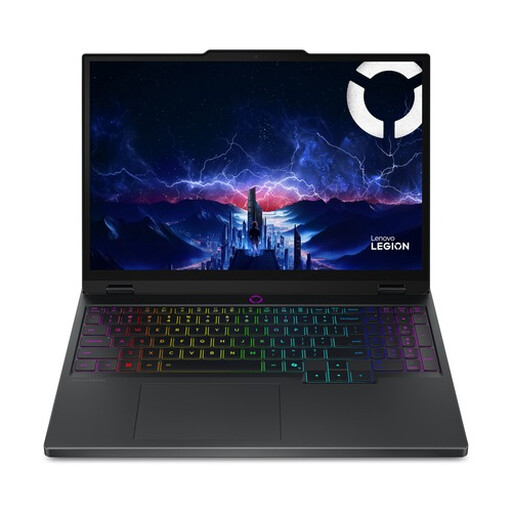
Lenovo Legion 5 15IAX10
This configuration may be worth considering if you play demanding games as well as working on design. When using it at a shared desk, bear in mind that the glossy screen finish may affect readability in reflective conditions.
15.1-inch WQXGA OLED screen, 2560 × 1600 and 100% DCI-P3; Core Ultra 7 255HX, GeForce RTX 5070 with 8 GB GDDR7, 16 GB RAM and 512 GB SSD. Stated weight from 1.9 kg. The screen has a glossy finish and the charger must be bought separately.
View at Joybuy
Frequently asked questions
Do you need a powerful gaming graphics card for Figma?
Not as a general requirement for Figma: the Figma Help Centre sets out low baseline graphics requirements. According to Figma, a discrete GPU can improve performance, but it can also increase battery use. Check the requirements for any other design software and games separately.
What should you set up at a shared desk?
Check whether a screen, keyboard and suitable cables are available, and whether the laptop has the right connections. For employees who work at a screen for more than two hours a day, Arboportaal explains that the screen and keyboard must not be attached to each other; when using a laptop, it must be possible to use a separate screen or keyboard. This doesn’t necessarily apply to every personal buyer.
What can you do if a large Figma file freezes?
First, check the memory warning and the options for reducing the file’s contents. Figma outlines memory limits for files in browsers; these can also apply when using the desktop app. So having more memory in your laptop doesn’t guarantee that a specific file limit will no longer be an issue.
What warranty and cooling-off period apply to an online purchase in the Netherlands?
When you buy as a consumer, you have a legal guarantee from the seller; according to the Dutch government, there’s no fixed statutory guarantee period in the Netherlands. Online purchases usually come with a cooling-off period of up to 14 days after delivery, subject to exceptions. Before buying, check which exceptions apply to your product.


