
Player in a bright room
You usually play in one spot, where incoming light can make the screen difficult to read. That’s why it’s important to check the brightness and reflections for the exact configuration.


First, choose a laptop whose screen is easy to read in similar lighting to your own, based on the exact configuration; resolution or refresh rate alone won’t tell you that. Then match the processor and memory to the size of the maps you play, and weigh up graphics settings, screen space and portability. Urban Games recommends 16 GB RAM for Transport Fever 2; the Transport Fever 2 Wiki notes that larger maps generally need more RAM and processing power.
You usually play in one spot, where incoming light can make the screen difficult to read. That’s why it’s important to check the brightness and reflections for the exact configuration.
You play a lot on large Transport Fever 2 maps and want to match the processor and memory to the scale of the simulation. Urban Games and the Transport Fever 2 Wiki explain how larger maps can require more system resources.
You want to play transport simulation games in different places and are weighing up a larger built-in screen against the convenience of portability.
| What to consider | What to look for when buying | Who should consider this? |
|---|---|---|
| Screen visibility in bright conditions | Check the brightness in nits and the screen finish for the exact configuration; if possible, assess reflections in similar lighting to where you’ll play. | If I play somewhere bright, I want to know first whether I can read the screen clearly. Around 33% of consumers put screen visibility first. |
| Large maps | Compare the installed RAM and processor for the exact configuration. Also consider the size of the maps you actually play. | For large Transport Fever 2 maps, I want enough system resources to run the simulation. Around 27% of consumers give large maps top priority. |
| Graphics settings | Check the full GPU model and the requirements of the specific game; don’t judge performance by the GPU series name alone. | If I want to use higher graphics settings, I look at both the graphics configuration and the screen resolution. Around 20% of consumers put graphics capability first. |
| Budget and configuration | Decide in advance which specifications you need, then compare the full configuration rather than just the product range. | I want to avoid paying for components I don’t need, without compromising on my main requirements. Around 13% of consumers start by weighing up their budget. |
| Portability and screen space | Compare the screen size and weight of the exact configuration, and also check screen visibility in the places where you plan to play. | If I take my laptop between places where I play, I weigh up a more compact size against the space available for the map and interface. Around 7% of consumers put portability first. |
A high resolution or refresh rate doesn’t tell you whether the screen is easy to read in a bright room. Screen brightness and reflections are separate things to consider.
Check the screen specifications for the exact configuration and, where possible, assess reflections in similar lighting.
Urban Games recommends 16 GB RAM for the PC version of Transport Fever 2. The Transport Fever 2 Wiki notes that larger maps generally require more RAM and processing power.
Choose based on the size of the maps you want to play and check the processor and RAM together. The game requirements mentioned here don’t automatically apply to other simulation games.
The Zephyrus G14 configurations we looked at have different amounts of memory: Notebookcheck lists 64 GB for the configuration in its ranking, while the Joybuy configuration has 32 GB.
Compare the full configuration codes and key specifications before treating models as the same product.
The Nitro V 16 AI is a 16-inch range worth comparing for its screen and memory configurations.
The Legion Pro 7 is a model range to compare across specific screen and memory configurations.
The ROG Zephyrus G14 is a more compact option if you want to take your laptop with you; there are also 16-inch Zephyrus models.
The Stealth A16 AI+ is a 16-inch model to compare with other screen sizes and configurations.
The OMEN 16 is a separate 16-inch configuration to compare for its screen, processor, memory and graphics card.
This selection focuses on gaming laptops for transport simulation games, with configurations for bright gaming spaces, large maps and different screen sizes.
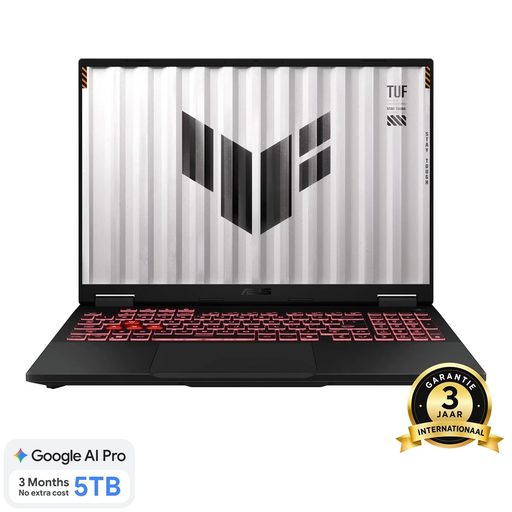 No image available
An option to compare if you’re looking for a large built-in screen and a configuration suited to simulations.
According to the product description: 18-inch WUXGA screen, Ryzen 9 8940HX, RTX 5060 Laptop GPU, 16 GB RAM and 512 GB SSD. Urban Games recommends 16 GB RAM for Transport Fever 2; that doesn’t determine this laptop’s performance.
 No image available
An option to consider if incoming light is a key factor; check for reflections in your own gaming space too.
According to the product description: 16-inch OLED screen with an anti-glare, low-reflection finish, 2560 × 1600 resolution, Core Ultra 9 285H, RTX 5060, 16 GB RAM and 1 TB SSD.
 No image available
A 16-inch option to compare if you’re looking for an anti-glare screen and a powerful processor for simulations.
According to the product description: 2560 × 1600 IPS screen with an anti-glare finish, Ryzen 9 9955HX, RTX 5070 Ti, 16 GB DDR5 and 1 TB SSD. The screen finish alone doesn’t guarantee good visibility in every lighting condition.
 No image available
A large-screen option to compare if you want plenty of space for maps and controls.
According to the product description: 18-inch UHD+ Mini LED screen with a stated brightness of 500 cd/m², Ryzen 9 8940HX and 1 TB SSD. A stated brightness figure alone won’t tell you how reflections will affect visibility where you play.
 No image available
An option to compare if you’re looking for a 16-inch screen with an anti-glare finish and a stated brightness level.
According to the product description: 300-nit WUXGA screen, Core 7 240H, RTX 5070 with 8 GB, 16 GB DDR5 and 1 TB SSD. The stated brightness doesn’t guarantee readability in every bright room.
No. Urban Games recommends 16 GB RAM for the PC version of Transport Fever 2, and a minimum of 16 GB for experimental map sizes. Check the requirements for other games and consider the size of the maps you want to play.
First, check whether the screen is easy to read where you plan to play, and adjust its position to reduce distracting reflections. Keep the ventilation openings clear; MSI’s product information for the Stealth A16 AI+ also warns about this.
According to ACM ConsuWijzer, online consumer purchases generally come with a statutory cooling-off period of up to 14 days after delivery, subject to exceptions. A faulty or inaccurately described product is covered by separate consumer rights; check the terms that apply to your purchase.
No. ACM ConsuWijzer explains that your statutory guarantee depends on what you could reasonably expect from the product. If a product is faulty, the seller is responsible for providing an appropriate solution; a commercial warranty period doesn’t replace this right.