
Tile-set creator working in daylight
You often draw in a set spot next to a bright window and want to see pixels and interface elements clearly without distracting reflections.


When creating tile sets next to a bright window, start by checking the screen finish on the exact model: a faster GPU won’t eliminate reflections. For your artwork, compare the resolution, aspect ratio and stated colour coverage too. Factor in the GPU and memory if you also play games or work on larger projects. Your workspace matters as well: Arboportaal recommends positioning your line of sight parallel to the window.
You often draw in a set spot next to a bright window and want to see pixels and interface elements clearly without distracting reflections.
You create tile sets and use the same laptop for games or larger projects, so you need to balance your screen choice against the performance you need.
You take your laptop with you and work in changing light conditions. Both screen performance and a practical workspace setup matter to you.
First, assess the screen finish and your workspace in daylight. Then compare the screen space available for your tile set, and only then choose a GPU and memory based on the games and projects you actually use.
| What to consider | What to look for | Who should pay particular attention? |
|---|---|---|
| Visibility next to a window | Check the screen finish for the full model code and assess the display in similar lighting conditions. | If I often draw next to a bright window, I want to minimise distracting reflections as much as possible. Around 36% of consumers prioritise visibility in daylight. |
| Tile-set workspace and colour | Compare resolution and aspect ratio; treat stated colour coverage as a specification, not proof of calibration. | When I need my canvas and tools on screen at the same time, screen space and colour reproduction are important factors. Around 29% of consumers prioritise drawing space and colour. |
| Gaming and larger projects | Compare the CPU, GPU, RAM and storage of the exact model with the software and games you use. | I want to play games or work on larger projects as well as creating tile sets, so I look at the full configuration. Around 21% of consumers prioritise this combined performance. |
| Working in different places | Check the dimensions, weight and screen finish; if you have a permanent workspace, consider a different screen setup if needed. | If I work in different places, I want to take both portability and changing daylight into account. Around 14% of consumers place the greatest importance on working in different locations. |
A high stated brightness doesn’t automatically mean reflections from a window will disappear. For the Legion 5i model described, Lenovo lists both 500 nits and a glossy screen.
Compare brightness and screen finish together and, if possible, assess a similar screen in similar lighting conditions.
Graphics processing power has no effect on the screen finish. The models mentioned pair different GPUs with different screens, so assess these features separately.
Choose your screen and workspace first, then compare the GPU with the games and projects you use.
Screen and hardware specifications can vary between configurations, even within the same product range.
Before ordering, check the full model code and the specifications for that particular model.
The Predator Helios Neo 16 AI PHN16-73-99CN is worth comparing if you’re specifically looking for an anti-glare screen.
The Legion 5i model mentioned has an OLED screen with stated brightness and colour coverage; its glossy finish is an important consideration.
The Dutch HyperX OMEN 16-am2680nd is a specific configuration worth comparing for a combination of drawing and gaming.
ASUS positions the ROG Zephyrus range as thin and light; check the specific model for the features that matter in your workspace.
These gaming laptops have different screen and hardware configurations for creating tile sets and gaming. Compare the screen finish, screen space and system specifications of each model with your own workspace and needs.
 Image unavailable
Could suit tile-set work where screen space and an anti-glare feature matter; check the screen in the lighting conditions you work in.
The product information lists an OLED screen with 2560 × 1600 pixels, a 16:10 aspect ratio and 100% DCI-P3. The product name specifies an Intel Core Ultra 9 285H, RTX 5060, 16 GB RAM and 1 TB SSD.
 Image unavailable
A configuration to compare if you want to play games as well as create tile sets; check the screen finish for use next to a bright window.
The product information lists an IPS screen with 2560 × 1600 pixels and 100% DCI-P3. The product name specifies 32 GB RAM, 1 TB storage and a 240 Hz refresh rate.
 Image unavailable
The high stated screen resolution could be useful if you want plenty of workspace; weigh the size and powerful configuration against your needs.
The product name specifies an 18-inch UHD+ Mini LED screen with 3840 × 2400 pixels and 120 Hz. It also lists an Intel Core Ultra 9 285HX, RTX 5090, 64 GB RAM and 6 TB SSD storage.
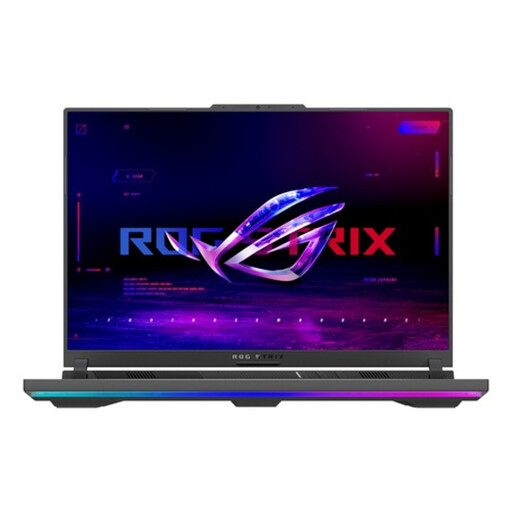 Image unavailable
A model to compare if you’re looking for an anti-glare screen and gaming hardware; your screen experience will still depend on the light and setup.
The product information lists an IPS-level anti-glare screen with 2560 × 1600 pixels, 500 nits and 100% DCI-P3. It also specifies an RTX 5070, 16 GB RAM and 1 TB storage.
 Image unavailable
Could suit a workflow where you want to combine screen space for creative work with gaming hardware; check the OLED finish in your lighting conditions.
The product information lists a 16-inch OLED screen with 2560 × 1600 pixels, 100% DCI-P3 and 240 Hz. The product name specifies an Intel Core Ultra 9 386H, RTX 5060, 16 GB RAM and 1 TB SSD.
Check the grid size and how your software imports tiles. Aseprite describes a tile set as tiles of the same size; the Godot documentation explains how to work with tiles on a grid. These are checks for your software workflow, not minimum laptop specifications.
Arboportaal recommends positioning your line of sight parallel to the window and using suitable blinds or curtains when daylight causes reflections. Try this setup even if you choose an anti-glare screen.
No. According to ACM ConsuWijzer, statutory warranty depends on what you could reasonably expect from the product under normal use; a seller’s or manufacturer’s warranty doesn’t automatically determine how long your statutory rights last. If a product is faulty, contact the seller.
According to ACM ConsuWijzer, online consumer purchases generally come with a statutory cooling-off period of up to 14 days after delivery. Conditions and exceptions apply to trying out and returning products, so check the relevant returns information before buying.
No, these obligations don’t automatically apply to every private buyer. Arboportaal outlines employers’ responsibilities: for employees who work at a screen for more than 2 hours a day, a separate screen or keyboard must be available when using a laptop. Whether this applies depends on the employment and working situation.