
Map-maker without reliable access to power
If you work on terrain maps in places where power sockets are hard to come by, compare battery life with your own project and check the charging options for the exact configuration.


A powerful gaming GPU isn’t automatically necessary for a 2D terrain map; for interactive 3D viewing, the GPU, graphics memory and RAM are more relevant points to compare. If you’re working without access to a mains socket, focus on battery life with your own GIS project and check whether the specific configuration you’re considering supports USB-C charging: having a USB-C port alone doesn’t confirm this. QGIS Documentation covers both terrain analysis and 3D map viewing; Esri distinguishes between minimum and recommended hardware for ArcGIS Pro.
If you work on terrain maps in places where power sockets are hard to come by, compare battery life with your own project and check the charging options for the exact configuration.
If you view or export terrain interactively in 3D, compare the graphics capabilities and memory of each configuration with the requirements of your software. QGIS Documentation explains how to export terrain and objects as 3D objects.
If you store elevation data and map layers locally, choose RAM and storage to suit your files and applications. The Consumentenbond also notes that the storage space you need depends on the number and type of files.
First decide whether you’ll mainly use 2D maps, interactive 3D or ArcGIS Pro. Then compare battery life and charging options, and choose RAM and storage to suit your files.
| What to consider | What to look for | Who should pay extra attention? |
|---|---|---|
| Use without access to a power socket | Compare battery life with your own mapping project and settings; a stated maximum isn’t a GIS usage test. | If you work somewhere without a reliable power supply, you’ll want to know how long your project remains usable on battery power. Around 36% of consumers say battery life away from a power socket is their top priority. |
| Graphics capabilities | Compare the GPU, graphics memory and RAM with the requirements of your chosen software and 3D scene. Esri warns that a system meeting only the minimum requirements may not perform well with ArcGIS Pro. | For interactive 3D terrain viewing, you’ll want to assess the scene without using gaming performance as a GIS benchmark. Around 29% of consumers put 3D viewing first. |
| RAM and storage | Compare capacity with your local elevation data and map layers; check whether it can be upgraded in the configuration you’re considering. | If you store source files locally, you’ll want enough space for your own layers without paying for more capacity than you need. Around 21% of consumers put storage and memory first. |
| Charging with the equipment available | Check USB-C Power Delivery support, the required wattage and the included adapter against the full model number. | If you rely on a charger you already have, you’ll want to know before buying whether it’s compatible with your laptop. Around 14% of consumers name charging compatibility as their top priority. |
A maximum battery life measured under factory conditions doesn’t tell you how long your mapping project will run. Acer states a maximum of 6 hours for the Nitro V 16 AI NH.QYXEH.00B, but this isn’t a measurement of GIS use.
Assess battery life using the software, scene and power settings you actually use.
Charging options, the required wattage and the included power supply can vary by model and configuration.
Check the full model number for explicit USB-C Power Delivery support, the required wattage and the included adapter.
You may need to buy an additional compatible charger if your available power supply isn’t suitable.
A feature listed for a laptop range doesn’t confirm that every configuration has the same battery, ports, GPU or memory capacity.
Compare the manufacturer’s product number for the configuration on offer with its specifications. For example, MSI lists different GPU options within the Katana 15 HX B14W range.
The Nitro V 16 AI NH.QYXEH.00B is a useful option to compare if you’re looking for 32 GB RAM, a 1 TB SSD and a dedicated GPU.
The HyperX OMEN 16-am2680nd is worth comparing if you’re looking for a 16-inch screen and a dedicated GPU.
The TUF Gaming A16 range is worth considering if you’re looking for clear information about USB-C Power Delivery and potential upgrades.
The LOQ 15AHP10 range has specifications worth comparing if you share a charging point.
The Katana 15 HX B14W range is worth comparing if you’re looking into GPU options and upgradeable memory.
These gaming laptops are worth comparing for interactive 3D terrain viewing in QGIS and working with local map files. As well as the specifications listed, check the battery life and charging options of the exact configuration for your needs.
 No image available
An option to compare for 3D terrain viewing and local map files.
18-inch screen, Ryzen 9 8940HX, RTX 5060, 16 GB RAM and 1 TB SSD.
The product description says the mains adapter must be purchased separately.
 No image available
An option to compare for 3D terrain viewing and map files stored locally.
16-inch IPS screen, 2560 × 1600, 32 GB RAM and 1 TB SSD.
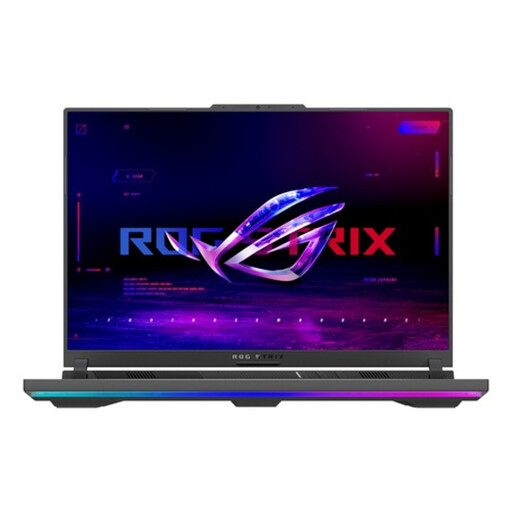 No image available
An option to compare for 3D terrain viewing and local map files.
16-inch WQXGA screen, RTX 5070, 16 GB RAM and 1 TB SSD.
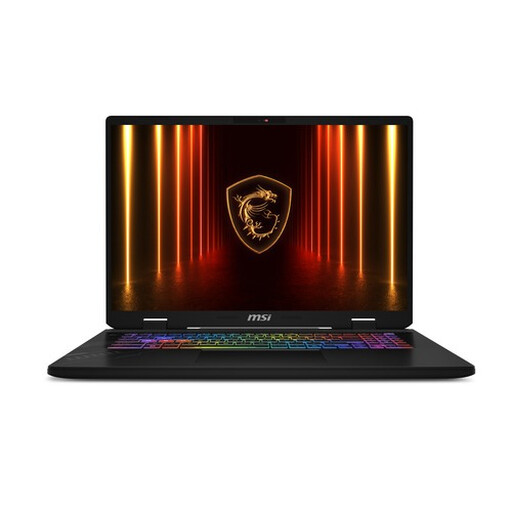 No image available
An option to compare for interactive 3D viewing and local map files.
17-inch QHD+ screen, Intel Core Ultra 7 255HX, RTX 5060 with 8 GB, 32 GB DDR5 and 1 TB SSD.
 No image available
An option to compare for 3D terrain viewing and map files stored locally.
15.6-inch Full HD screen, AMD Ryzen 9 270, RTX 5070 with 8 GB, 16 GB DDR5 and 512 GB SSD.
No, not just because you’re making a terrain map. QGIS covers both 2D hillshading based on a digital elevation model and interactive 3D map viewing. Decide how you’ll work, then compare the requirements of your software and files.
No. Check whether the port on the exact configuration supports USB-C Power Delivery for charging, and find out what wattage is required. Lenovo lists 65–100 W USB PD for the LOQ 15AHP10 range, as well as a separate power connector; this doesn’t confirm anything about another model or a specific charger.
Choose power settings to suit your work and lower the screen brightness if needed. The Consumentenbond says that lithium-ion batteries wear out and that a smart charging limit, if available, can help when a device is left plugged in for long periods; this feature varies by device.
For a distance purchase by a consumer in the Netherlands, there is generally a 14-day cooling-off period, according to the Rijksoverheid. You’re also entitled to a product that works as it should; if there’s a fault, contact the seller to resolve it. The Netherlands does not have one fixed statutory guarantee period for all products.