
Puzzle player who stays in one place
You usually play at a desk and want plenty of screen space, without assuming that a larger screen automatically means better gaming performance.


If you usually play in one place and want a large built-in screen, compare 18-inch models. If you regularly take your laptop with you, consider 16-inch models too. Then check the system requirements for your own puzzle games and the specifications for the full model number: a larger screen or higher refresh rate alone doesn’t prove that a game will run better.
You usually play at a desk and want plenty of screen space, without assuming that a larger screen automatically means better gaming performance.
You want a generous screen, but move your laptop around regularly. So compare 16-inch models too, and check the weight and dimensions of the full model.
You play a range of puzzle adventures and want to choose a configuration that suits the games you actually play, rather than choosing based on screen size alone.
Compare 18-inch models if you mainly play in one place and want a large built-in screen. If you take your laptop with you often, compare 16-inch models too. For both sizes, check your games’ requirements and the exact configuration.
| What to consider | What should you check? | Who is this important for? |
|---|---|---|
| Screen space | Check the screen size, resolution and panel for the full model number; don’t assume a general product-series description applies to every model. | If I mainly play in one place, I want a large built-in screen and to know exactly which resolution I’m getting. Around 36% of consumers say screen space is their top buying priority. |
| Suitability for games | Compare your games’ system requirements with the CPU, GPU, memory and storage of the exact model. | If I play different puzzle games, I want to know whether the model suits the games I play most and the settings I want. Around 29% of consumers say suitability for the games they play is their top priority. |
| Portability | Compare the stated dimensions and weight of the exact model, and remember to factor in the power supply you’ll need to carry. | If I move my laptop around regularly, I want to balance screen space with how practical the model is on the go. Around 21% of consumers say portability is their top buying priority. |
| Warranty and aftercare | Check the terms of any additional warranty or service plan separately from your statutory rights. | If I choose a model, I want to know what support is available if something goes wrong and what an extra plan adds. Around 14% of consumers say aftercare is their top buying priority. |
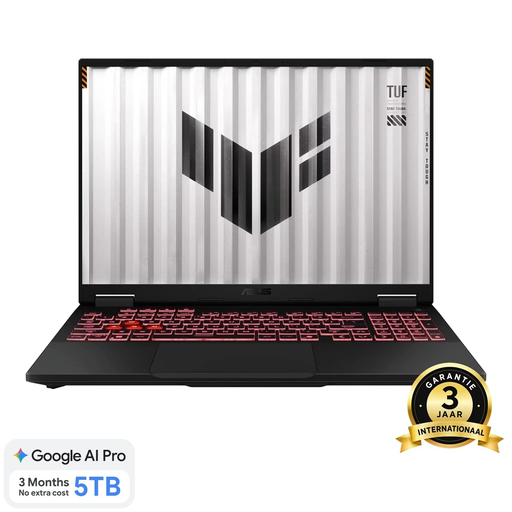
For the ASUS FA808UH-S8076W, the Joybuy product listing says Full HD+ in the title, but WQXGA and 240 Hz in the general description. That difference could affect your choice of screen.
Before choosing this model, ask for confirmation of the screen specifications for the full model number.
A screen specification or laptop ranking doesn’t automatically tell you how a particular puzzle game will run at your preferred settings.
First, make a note of the games you want to play and check their current system requirements. Then compare the exact screen and GPU configuration.
An additional plan is separate from the statutory rights you have against the retailer.
Check what cover an additional plan provides and consider it separately from your statutory rights.
The TUF Gaming A18 range includes several 18-inch models; compare the full model number.
The Predator Helios Neo 18 AI is an 18-inch range; NH.QVFEH.001 is a specific model you can compare.
The Legion range includes the 18-inch Legion 9i Gen 10.
The Vector 18 HX AI is another 18-inch range to compare for screen and GPU configurations.
The Blade 18 is an 18-inch model to compare if you’re also considering tested gaming laptops.
These Joybuy picks are 18-inch gaming laptops for anyone who mainly plays in one place and wants a large built-in screen. Compare each model’s configuration with the system requirements of your own games.
 No image available
This 18-inch model is well suited to playing in one place; compare its screen and GPU specifications with your games’ requirements.
Ryzen 7 260; 18-inch WUXGA screen with 1920 × 1200 pixels and 144 Hz; RTX 5070 laptop GPU; 16 GB DDR5; 1 TB SSD.
 No image available
This 18-inch model is worth comparing if you play in one place; check that the GPU and screen resolution suit your games.
Ryzen 9 8940HX; 18-inch WQXGA screen with 2560 × 1600 pixels and 240 Hz; RTX 5060 laptop GPU; 16 GB DDR5; 1 TB SSD.
 No image available
This 18-inch model is worth comparing for a regular gaming spot; choose a screen and GPU configuration that suits the games you play.
AMD Ryzen 7 260; 18-inch WUXGA screen with 1920 × 1200 pixels and 144 Hz; RTX 5060 laptop GPU; 16 GB DDR5; 512 GB SSD.
 No image available
Compare this 18-inch model with your games’ requirements; a high screen resolution or powerful GPU alone doesn’t mean you need it for your use.
18-inch UHD+ screen with 3840 × 2400 pixels, Mini LED and 120 Hz; Intel Core Ultra 9 285HX; RTX 5090 laptop GPU; 64 GB DDR5; 6 TB SSD.
 No image available
This 18-inch model is an option to compare for a regular gaming spot; check the screen resolution and GPU against the system requirements of your own games.
AMD Ryzen AI 7 350; 18-inch WQXGA screen with 2560 × 1600 pixels and 165 Hz; RTX 5060 GPU; 16 GB DDR5; 1 TB SSD.
No. An 18-inch screen gives you a larger built-in display, but it isn’t a general system requirement for puzzle games. Compare 16-inch models too if you take your laptop with you often, and check the requirements for the games you want to play.
Compare that particular game’s system requirements with the exact laptop configuration, and check how much storage space is available. Don’t assume that the settings or performance of one game will apply to another.
As well as any retailer’s or manufacturer’s warranty, you have statutory consumer rights, as explained by ACM ConsuWijzer. If the laptop doesn’t perform as you could reasonably expect under normal use, the retailer is responsible for providing an appropriate solution. There is no standard statutory warranty period of two years that applies in every case.
For most online consumer purchases, you have a statutory cooling-off period of up to 14 days after delivery, according to ACM ConsuWijzer. Check whether a legal exception applies to your order; the cooling-off period is separate from your rights if the product is faulty.