
Evening player who reads a lot of text
You spend long periods in the evening managing rooms, staff and menus, and want a screen that’s easy to read and comfortable to dim.


Choose a gaming laptop based on the hospital management game you actually want to play and a screen whose brightness you can comfortably adjust; a more powerful graphics card is not automatically the most useful choice. If you mainly play in one place, consider cooling and fan noise too. If you often take your laptop with you, give more weight to its size and weight.
You spend long periods in the evening managing rooms, staff and menus, and want a screen that’s easy to read and comfortable to dim.
You want to match your laptop to a specific hospital management game and the settings you use, without automatically opting for the most powerful GPU.
You play in a quiet, shared room or take your laptop with you, and want to weigh up noise, ventilation, size and weight.
First, decide which hospital management game and settings you want to use. Then compare the laptop’s full configuration and screen options with your gaming space and any need to take the laptop with you.
| What to consider | What should you check? | Who should pay particular attention? |
|---|---|---|
| Screen and readability | For the exact configuration, check the screen size, resolution, reflections and whether you can lower the brightness. | If I’m reading menus and maps for a long time in the evening, I want to be able to dim the screen comfortably and make out the text clearly. Around 36% of consumers prioritise readability and adjustable brightness. |
| Performance for your game | Look up the requirements for the game you want to play and compare them with the processor, GPU, memory and screen resolution of the full configuration. | If I haven’t chosen a hospital management game yet, I want to know first whether the full configuration meets its requirements. Around 29% of consumers prioritise this match. |
| Noise and cooling | If quiet operation matters, look for independent noise measurements for the exact configuration, and keep the ventilation openings clear. | In a quiet, shared room, I want to take fan noise and airflow into account, especially during longer gaming sessions. Around 21% of consumers make noise and cooling their top priority. |
| Portability | Check the weight, dimensions and power adapter. If you plan to use the laptop away from a socket, check the battery life under conditions that reflect how you’ll use it. | If I move my laptop regularly, I want to weigh up its size and weight against the screen space. Around 14% of consumers make portability their top priority. |
A product specification won’t necessarily tell you whether you’ll find the screen comfortable in a dark room. The American Academy of Ophthalmology recommends adjusting brightness to suit the ambient light. Using a computer in the dark for long periods can be tiring.
Check whether you can dim the exact configuration comfortably. If necessary, adjust the room lighting too, or take a break when your eyes feel tired.
Manufacturers offer different screen and GPU configurations within product ranges. The name of a series therefore doesn’t tell you which components are in the configuration you’re planning to buy.
Before buying, compare the full model number and specifications of the exact configuration.
In the Netherlands, statutory consumer rights apply alongside any manufacturer’s or retailer’s warranty. The Netherlands Authority for Consumers and Markets states that there is no fixed statutory warranty period for every product.
Keep your proof of purchase and report any fault to the retailer.
The LOQ range offers gaming configurations you can compare side by side. Lenovo’s product information lists configurations with different GPUs.
ASUS lists different screen options within the TUF Gaming A16 range, including OLED and IPS configurations.
According to MSI, the Katana 15 HX B14W range includes configurations with different screen resolutions and laptop GPUs.
This selection from Joybuy includes gaming laptops with a range of screen sizes and configurations. Compare the specific configuration with the requirements of your chosen game and the place where you play.
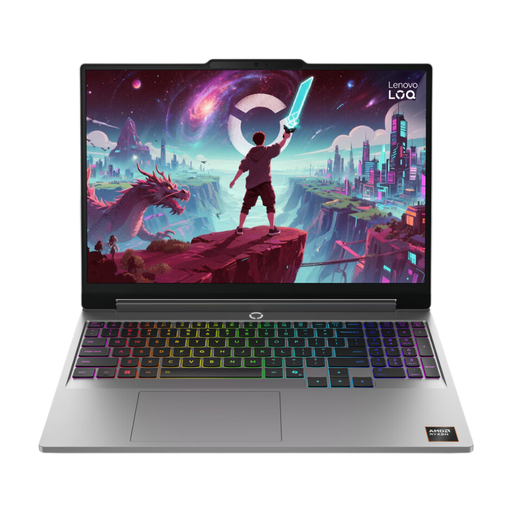 Image unavailable
An option to compare if you’re looking for a gaming laptop with a 15.3-inch screen and want to check your hospital management game’s requirements first.
Specifications: Ryzen 7 250, RTX 5070, 16 GB memory and 512 GB SSD. QWERTY keyboard.
 Image unavailable
This 16-inch gaming laptop is worth comparing if you want to weigh up screen space and the configuration for your chosen game.
Specifications: Ryzen 9 9955HX, RTX 5070 Ti, 16 GB memory and 1 TB SSD. QWERTY keyboard, Volt Green. According to the product description, the charger isn’t included and must be purchased separately.
 Image unavailable
This 18-inch configuration is worth comparing if screen space matters more to you than a compact size.
Specifications: Ryzen 9 8940HX, RTX 5060, 16 GB memory and 1 TB SSD. Eclipse Gray. According to the product description, the charger isn’t included and must be purchased separately.
 Image unavailable
This configuration is worth comparing if you want to weigh up an OLED screen and the stated resolution against your game’s requirements.
Specifications: 15.3-inch WQXGA OLED screen, 165 Hz, Ryzen 7 250, RTX 5060, 16 GB DDR5 and 512 GB SSD. Windows 11 Home, Belgian AZERTY keyboard layout.
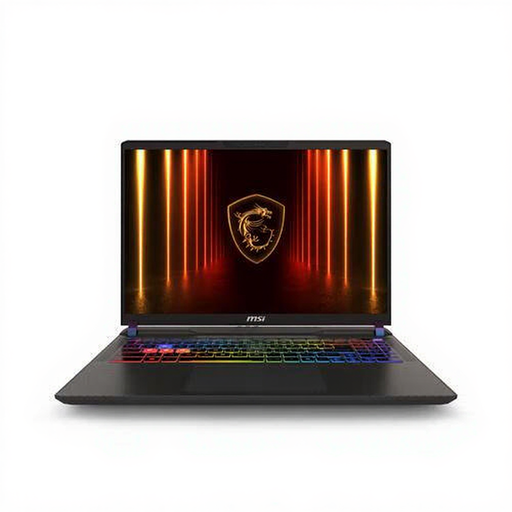 Image unavailable
A 16-inch configuration to compare with others if you want to match the screen specifications to your gaming space.
Specifications: Quad HD+, 16 GB DDR5, 1 TB SSD, NVIDIA GeForce RTX 5080 and Wi-Fi 6E (802.11ax). QWERTY keyboard. According to the product description, the charger isn’t included and must be purchased separately.
No. Start with the system requirements for the game you want to play. Compare them with the full laptop configuration; the game descriptions from Two Point Studios and Oxymoron Games don’t provide measured frame rates for this combination.
The American Academy of Ophthalmology says that using a computer in the dark won’t damage your eyes, but it can be tiring. Adjust the screen brightness to suit the ambient light, and change the lighting or take a break if your eyes feel tired.
Microsoft explains how to adjust brightness under Settings > System > Display. Adjust the brightness and, if it helps, the text size. This is a setting tip, not a guarantee against eye strain.
Place the laptop on a flat, hard surface and keep the ventilation openings clear. Lenovo Support gives this advice for overheating issues; also check the usage information for the configuration you’re considering.
For a qualifying distance purchase, you’ll generally have a 14-day cooling-off period, with some exceptions. Statutory consumer rights also apply if a product doesn’t meet what you could reasonably expect; if your claim is valid, the retailer is responsible for providing a solution. There isn’t one fixed statutory warranty period for every laptop.