
Menu designer in a shared workspace
You mainly edit menus near colleagues and want to be able to adjust the noise settings. Consider quietness and performance together, rather than as separate promises.


For game menu design in a shared office, start by choosing a laptop based on your engine and project size. Then check whether it remains suitable for your workload in a quiet mode. For Windows development with Unreal Engine 5.8, Epic Games recommends 32 GB RAM and at least 8 GB of graphics memory. Quiet mode may prioritise lower noise over power, so it does not guarantee quiet performance while building or testing.
You mainly edit menus near colleagues and want to be able to adjust the noise settings. Consider quietness and performance together, rather than as separate promises.
You’re working on menus within a larger Unity or Unreal project and need to match your laptop’s configuration to the engine and project size you actually use.
You take your development setup to meetings or another workspace, weighing screen space against portability.
Start with your engine and project requirements. Then compare how the laptop performs in a quiet mode, along with its screen and how well it fits your workspace.
| What to consider | What should you check? | Who is it for? |
|---|---|---|
| Quiet operation in the office | Check whether the exact configuration has a quiet mode and, if possible, look for an independent noise test under the kind of workload you expect. | If I work alongside colleagues, I want to be able to adjust fan noise without making my project unacceptably slow; around 33% of consumers put a quiet workspace first. |
| Capacity for your project | Compare your engine version, operating system and project size with the RAM and GPU configuration. For Windows development with Unreal Engine 5.8, Epic Games recommends 32 GB RAM and at least 8 GB of graphics memory. | If you’re working on a large engine project, you’ll want to match the configuration to the software you actually use; around 27% of consumers prioritise project capacity. |
| Screen for menu design | Compare screen size, resolution and the specifications of the exact screen variant. Decide whether you’ll also need an external monitor. | If I want to design and review interface elements, the available screen space matters; around 20% of consumers put screen workspace first. |
| Moving and connecting your laptop | Check the size, ports, power requirements and which accessories are included with the exact configuration. | If you regularly move between desks or meeting spaces, you’ll want to know what you need to bring and connect; around 20% of consumers prioritise portability and workspace setup. |
ASUS describes Silent mode as a setting that prioritises lower noise, which may limit the available power. The result depends on the model and workload.
Where possible, test your own project in the mode you want to use, and look for an independent noise test of the exact laptop configuration.
Configurations can vary within a series. For example, ASUS lists different memory and GPU configurations in the GA403 range.
Before buying, check the full model code, memory, GPU, screen and included accessories.
The ROG Zephyrus G14 may be worth comparing if a compact screen and portability are important to you.
The Legion Slim range is worth comparing if you’re looking for a gaming laptop to use in more than one place.
The Nitro V 16 AI is a range worth comparing if screen space is important to you.
MSI positions the Stealth A16 AI+ for gaming, creative work and productivity in a slim chassis.
OMEN configurations are worth comparing if you want to look at performance and thermal management settings.
These gaming laptops are relevant to game menu design, with configurations for larger engine projects and a range of screen sizes for working in one place or on the move.
 Image unavailable
This configuration is worth comparing if you need more memory and graphics capacity for a larger project.
The product name lists 32 GB RAM, a 1 TB SSD and a 16-inch IPS screen with 2560 × 1600 resolution, 240 Hz and a claimed 100% DCI-P3 colour gamut.
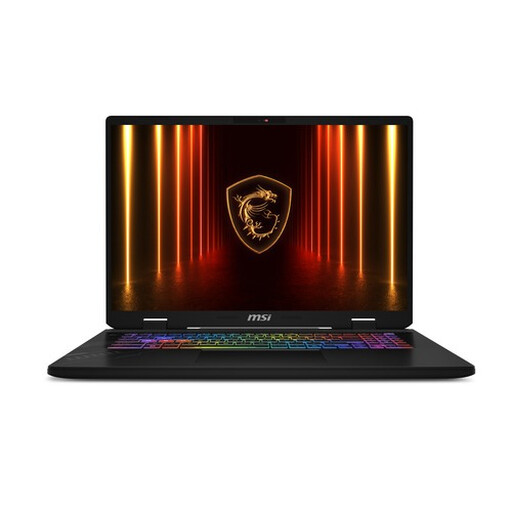 Image unavailable
This configuration is worth comparing for Windows development with Unreal Engine 5.8: Epic Games recommends 32 GB RAM and at least 8 GB of graphics memory.
The product name lists an Intel Core Ultra 7 255HX, RTX 5060 with 8 GB, 32 GB DDR5, a 1 TB SSD and a 17-inch QHD+ screen with a 240 Hz refresh rate. The stated operating system is Windows 11 Home.
 Image unavailable
Compare this configuration with your engine’s requirements. For Unreal Engine 5.8, Epic Games recommends 32 GB RAM, while this product name lists 16 GB.
The product name lists a Ryzen 9 9955HX, RTX 5070 Ti, 16 GB RAM and a 1 TB SSD, plus a 16-inch screen with 2560 × 1600 resolution.
 Image unavailable
This model may suit you if you want a 16-inch screen in a laptop you can also use in other workspaces. Its stated 16 GB RAM is below Epic Games’ 32 GB recommendation for Unreal Engine 5.8.
The product name lists an Intel Core Ultra 9 386H, RTX 5060, 16 GB DDR5, a 1 TB SSD and a 16-inch QHD+ OLED screen with a 240 Hz refresh rate. The stated operating system is Windows 11 Home.
 Image unavailable
The 14-inch size is worth considering if you’re looking for a more compact screen; check whether it gives you enough room for your editor windows and menu previews. The product name lists 16 GB RAM, compared with Epic Games’ 32 GB recommendation for Unreal Engine 5.8.
The product name lists a Ryzen 9 270, RTX 5060, 16 GB RAM and a 1 TB SSD. According to the product information, the memory is onboard and can’t be upgraded by the user.
The task alone doesn’t determine that. Consider your engine and project: Unity notes that performance and visual quality can vary with project complexity. For Windows development with Unreal Engine 5.8, Epic Games recommends a more powerful configuration.
Check that your exact model supports the mode, then test it with your own project. ASUS describes Silent mode as designed to reduce noise, which may limit component power; the result depends on the model and workload.
Check the power supply and required connections for the exact configuration. For example, the Joybuy listing for the Lenovo Legion 5 15IAX10 says that the charger must be bought separately; this doesn’t automatically apply to other configurations.
Consumer purchases generally come with a statutory 14-day cooling-off period. Ondernemersplein states that this period doesn’t apply when a business owner makes a purchase for business purposes. Working in an office doesn’t, in itself, make a purchase a business purchase.
For a consumer purchase, you can ask the seller for a solution, according to the Dutch government. For a product that isn’t working properly, the Dutch government specifies free repair or replacement. The same consumer rules don’t automatically apply to business purchases.