
Collision test developers
If you test lots of objects or run physics simulations repeatedly, processor load, memory and engine settings are all worth considering. Unity explains how the simulation frequency and colliders can affect CPU usage.


Start by considering the demands of your test project, then check how you’ll power the laptop at your workstation. A more powerful graphics card won’t automatically overcome a limitation in physics calculations. Compare the exact processor and memory configuration, and don’t assume USB-C power can replace the standard adapter under heavy load without checking the specific model.
If you test lots of objects or run physics simulations repeatedly, processor load, memory and engine settings are all worth considering. Unity explains how the simulation frequency and colliders can affect CPU usage.
If you move between workstations or share sockets, consider the supplied adapter, any USB-C charging support and how to power the laptop safely.
If you assess graphics as well as collision behaviour, compare the GPU and screen on the exact laptop configuration.
First, work out what your test project requires, then check whether the power supply suits your workstation. Consider display performance separately.
| What to consider | What should you check? | Who is this important for? |
|---|---|---|
| Processing capacity for tests | Compare the processor and installed RAM on the exact configuration. For Unity tests, also look at the profiler and simulation settings. | If I run larger scenes or repeated physics tests, I want to know what might limit my project. Around 33% of consumers prioritise processing capacity for collision testing. |
| Power at your workstation | Check the supplied adapter, the charging support of the specific USB-C port and the maximum load of any extension lead. | If I have limited access to sockets, the laptop needs to suit the power supply I can safely use there. Around 27% of consumers prioritise a suitable power supply. |
| Moving between test locations | Compare the weight, adapter and supported charging method for each configuration. Check the conditions behind any battery-life claim. | If I regularly move between workstations, I want to know what I need to take with me and how I can power the laptop there. Around 20% of consumers prioritise portability. |
| Visual assessment | Compare the GPU, screen resolution and refresh rate on the exact configuration with the requirements of your prototype. | If I also assess moving prototypes, I want to evaluate the graphics separately from the physics calculations. Around 20% of consumers prioritise visual assessment. |
In Unity, the simulation frequency and collider settings can affect CPU usage. A graphics specification alone won’t tell you what’s making a test run slowly.
First establish whether your test is limited by the simulation or the graphics. Then compare the exact configurations that suit that limitation.
A USB-C port alone doesn’t prove that a laptop will receive enough power through it for demanding tests. MSI describes USB-C PD on compatible gaming models as a backup power option for light tasks and recommends using the standard adapter.
Check the port, cable and power source for the exact model, including how much power is actually delivered.
Connecting extension leads together or overloading one increases the risk of an electrical safety issue.
Check the stated maximum load, and don’t connect extension leads to each other. The Fire Service advises plugging high-power appliances directly into a wall socket wherever possible.
Configurations within a product range can differ. Acer, for example, distinguishes between general series information and the specifications of the configuration you choose.
Compare the full model code and manufacturer part number before assessing the processor, memory, power supply or graphics specifications.
The TUF Gaming A14 range is worth considering if a compact laptop and the option of USB-C power are important to you.
The Nitro V 16 AI is a useful comparison if you’re considering a configuration with 32 GB RAM and a 16-inch screen.
The Legion Pro 7 16IAX10H is an example of a larger configuration for a fixed workstation with a standard adapter.
MSI is worth considering if you want to weigh up the standard gaming adapter against USB-C PD as a backup option on compatible models.
These Joybuy products offer a range of configurations to compare for collision testing, visual assessment and working in locations with limited access to sockets.
 No image available
A configuration to compare if you want to assess whether the listed processor and memory will suit your test project.
Intel Core i7-14700HX and 32 GB RAM.
RTX 5070; 16-inch screen with 2560 × 1600 pixels at 240 Hz.
 No image available
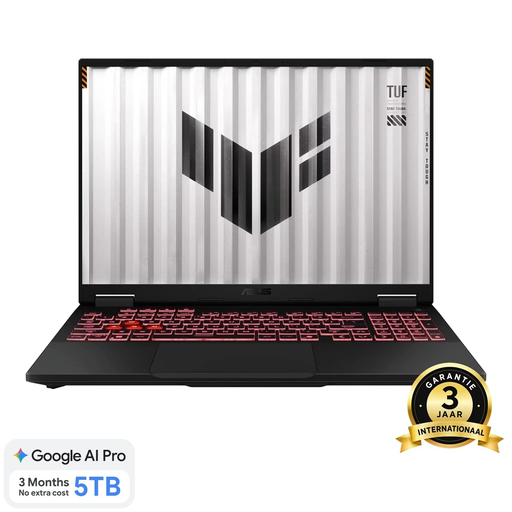
This configuration may be worth considering if USB-C PD matters to you; check that your power equipment and port are compatible.
AMD Ryzen 7 260 with 8 cores and 16 threads; 16 GB DDR5.
RTX 5060; 18-inch WUXGA screen at 144 Hz.
USB-C Power Delivery is listed for compatible equipment.
 No image available
A larger configuration to compare if you have a fixed workstation with a power adapter.
Core Ultra 9, RTX 5070 Ti and 32 GB DDR5.
16-inch WQXGA screen and 1 TB SSD; a power adapter is listed for this configuration.
 No image available
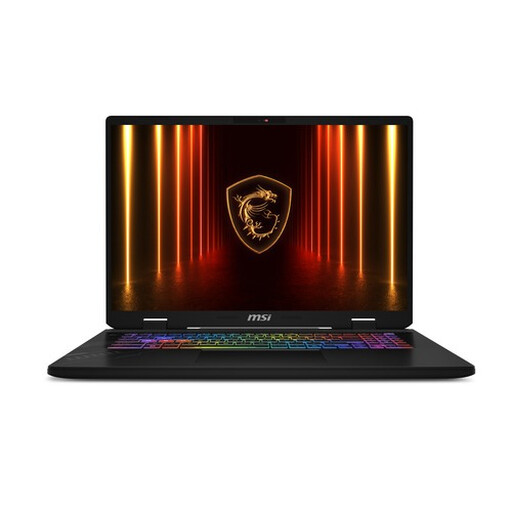
An option to compare if you want to assess a 17-inch screen and the listed memory configuration for your tests.
Intel Core Ultra 7 255HX, 32 GB DDR5 and RTX 5060.
17-inch QHD+ screen at 240 Hz and 1 TB SSD.
 No image available
This configuration is worth comparing if you want to assess the listed processor and memory expansion is important to you.
AMD Ryzen 9 270 with 8 cores and 16 threads; 16 GB DDR5.
RTX 5070 and 512 GB SSD; 15,6-inch screen.
The description lists two SO-DIMM slots and expandability up to 96 GB.
No, not automatically. In Unity, simulation load and the balance between accuracy and CPU usage also depend on factors such as the fixed time step and collider settings. Use the profiler to investigate what is limiting your test; don’t assume the same applies to other engines.
The presence of a USB-C port alone doesn’t prove that you can. Check whether the specific port on your model supports PD charging and how much power the power source can deliver through it. MSI describes PD on compatible gaming models as a backup option for light tasks and recommends using the original adapter.
Check the maximum load of any extension lead, don’t use a damaged one, and don’t connect extension leads to each other. The Fire Service advises plugging high-power appliances directly into a wall socket wherever possible. This is safety advice, not a model-specific ban on using a laptop adapter with an extension lead.
When you buy as a consumer, you have statutory rights and should contact the retailer if the product doesn’t meet your reasonable expectations. According to the Dutch government, there is no fixed statutory warranty period that applies to all products in the Netherlands; a commercial warranty is in addition to your statutory rights.
For a standard online consumer purchase, you generally have a statutory 14-day cooling-off period after delivery. ACM ConsuWijzer advises checking the applicable exceptions and conditions for trying out and returning the product.