Choose a gaming laptop based on the demands of your own collision tests and how usable the device remains in a quieter performance mode. For Unity projects, Unity’s Physics Profiler can help show how much processing time the physics requires; ASUS describes Silent mode as prioritising acoustics. However, none of the models listed here has been independently verified as quiet during your specific tests.
Who is this choice relevant to?
Working in a quiet study space
You want to investigate collision behaviour without disturbing other students with fan noise. ASUS describes Silent mode as prioritising acoustics, but that doesn’t tell you how much noise a particular laptop will make during your test.
Testing physics simulations
You run more complex or longer collision tests and want to know whether the physics places a heavy load on the processor. Unity’s Physics Profiler shows information about the physics processed in a scene.
Taking projects on the go
You take projects to different study spaces, so you compare memory, storage, screen and the power supply included with the exact configuration. Unity notes that the amount of RAM you need depends on the size and complexity of a project.
What should you look for when buying?
Quiet mode and lighter tests
Best for: scripts, scenes and limited collision tests in a shared study space.
Trade-off: a quieter power mode may limit available performance; assess the noise with your own test workload.
More complex tests and longer sessions
Best for: projects where measurements show that the physics requires a lot of processor time.
Trade-off: heavier workloads call for a separate assessment of noise; extra graphics power won’t automatically resolve processor load.
| What to consider |
What to look for |
Who should prioritise this? |
| Noise during testing |
Check the available power modes and assess noise under a comparable workload; don’t assume a mode is quiet based on its name. |
If I work in a quiet study space, I want to know what the laptop sounds like during my own test. Around 42% of consumers prioritise quiet operation under test load. |
| Simulation speed |
Measure how much time the physics requires in your own engine and compare performance under sustained load. Unity explains that certain collision detection modes can increase CPU load. |
When my collision tests require a lot of processing, I want enough CPU power without judging performance solely by the GPU. Around 33% of consumers give simulation speed top priority. |
| Working on projects in different locations |
Compare the RAM, SSD, screen and power supply actually included with each configuration. Assess battery life separately for the software you use. |
If I use my project in several study spaces, I want to know what I need to take with me and how much room there is for files. Around 17% of consumers prioritise working on projects on the go. |
| Exact configuration and purchase |
Check the full model number, configuration, seller, warranty information and returns policy. |
If you want clarity about the configuration and seller before ordering, it’s worth checking all the order details. Around 8% of consumers prioritise this peace of mind. |
Buying points not to overlook
-
Assuming a quiet mode means demanding tests will stay quiet
ASUS describes a trade-off between acoustics and power; this doesn’t provide an independently measured noise level for your project or a specific configuration.
Compare noise and usability using the same test workload and the same selected mode.
-
Assuming configurations with the same product line name are identical
Configurations within a product line can differ in memory and storage. Misjudging what you need could mean having to upgrade later.
Compare the full model numbers and the details of the exact configuration you’re considering.
-
Assuming a product page confirms that you can buy it
A product page doesn’t automatically mean that the configuration is currently available to order.
Check availability, configuration and seller again before ordering.
Brands to consider
ASUS
The TUF Gaming A16 is a product line worth considering if upgrade options matter to you; the exact configuration is still key.
- ASUS lists expandable RAM and SSD slots for the product line.
- ASUS describes different power modes, but that brand-level information doesn’t prove how noisy an individual configuration will be.
Lenovo
The Legion 5 Gen 10 (15 inch AMD) is worth comparing if you combine study use with a dedicated graphics card.
- For a Dutch configuration, Lenovo lists a Ryzen 7 260, RTX 5060, 16 GB RAM and 512 GB SSD.
- These configuration specifications don’t show that the laptop is quiet during collision testing.
Acer
The Nitro V 16 AI is worth comparing if project files and memory capacity are important to you.
- For configuration NH.QYXEH.00B, Acer lists 32 GB RAM and 1 TB SSD.
- These details don’t provide a comparable noise assessment for collision testing.
MSI
The Katana 15 HX is worth considering for comparisons of HX processors and configurations with a dedicated GPU.
- For the B14W line, MSI lists Cooler Boost 5 and configurations with up to an RTX 5070.
- These are manufacturer details for a range of configurations, not proof of quiet operation or performance for every Katana configuration.
Joybuy laptops for collision testing
This Joybuy selection focuses on gaming laptops for more complex collision tests and longer work sessions. Assess the exact configuration and how it performs under your own test workload.
 No image available
ASUS V16 FX3607VP-RP061W
The listed Core 7 240H makes this configuration worth comparing if your project puts a load on the processor; assess noise and performance during your own tests.
According to the product name: 16-inch WUXGA screen, 144 Hz, Core 7 240H, RTX 5070 with 8 GB, 16 GB DDR5 and 1 TB SSD. Windows 11 Home and a Dutch QWERTY keyboard are also listed.
View at Joybuy
 No image available
Thunderobot 16 gaming laptop
This gaming laptop is worth comparing for longer test sessions; check that the exact configuration on offer has the components your project requires.
The product name lists a 16-inch IPS screen with a resolution of 2560 × 1600 and a refresh rate of 240 Hz.
View at Joybuy
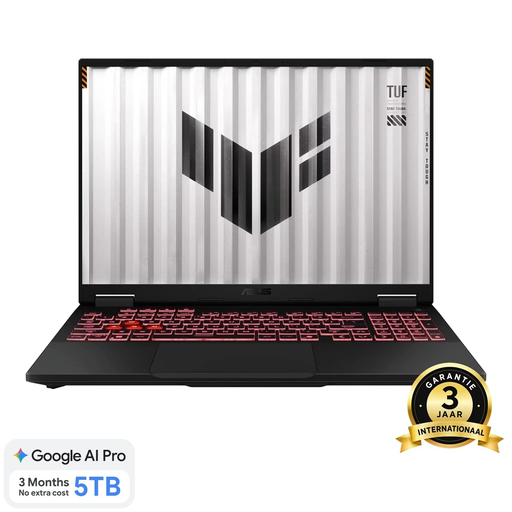 No image available
ASUS TUF Gaming A18 FA808UM-S8132W
Compare this configuration for its processor, memory and storage if you combine collision testing with project work; the listed components don’t by themselves indicate how noisy it will be.
Listed: Ryzen 7 260, RTX 5060 with 8 GB, 16 GB DDR5 and 512 GB SSD. According to the product details, the 18-inch WUXGA screen has a refresh rate of 144 Hz.
View at Joybuy
 No image available
ASUS TUF Gaming A18 FA808UP-S8011W
This configuration is worth comparing if you want to balance processor performance and room for your projects against the practical details of the setup.
Listed: Ryzen 7 260, RTX 5070, 16 GB RAM and 1 TB SSD. The power adapter must be purchased separately.
View at Joybuy
 No image available
ASUS ROG Strix G18 G814PM-S9012W
Consider this configuration if you want to compare the listed processor and storage setup for longer tests; assess acoustics under your own workload.
Listed: Ryzen 9 8940HX, RTX 5060, 16 GB RAM and 1 TB SSD. According to the product details, the 18-inch WQXGA screen has a refresh rate of 240 Hz. The charger is sold separately.
View at Joybuy
Frequently asked questions
Do you always need the most powerful graphics card for collision testing?
No, that doesn’t automatically follow from the application you use. If you use Unity, you can use the Physics Profiler to investigate how much time the physics requires; Unity describes collision detection as a trade-off that can affect processor usage. For other software, follow the requirements and measurements for your own project.
How do you set up a laptop for a quiet study session?
Check whether your exact model has a quieter power mode, then try it with your own test project. ASUS describes Silent mode as prioritising acoustics; without taking measurements, don’t assume it will make a demanding collision test quiet while keeping it just as fast.
What cooling-off period and warranty apply when buying online in the Netherlands?
According to the Dutch Government, online distance purchases from a business generally come with a 14-day cooling-off period, subject to exceptions. This is separate from the statutory guarantee: ACM ConsuWijzer states that the seller must help if a product doesn’t deliver what you could reasonably expect from it during normal use.


