
Player with limited desk space
You want to set up and put away your laptop without losing room for a mouse or clear ventilation. Compare the width and depth of the chassis, not just the screen size.


Start with the most demanding simulation game you want to play, then measure how much room you have left for the laptop, mouse, power adapter and adequate ventilation. A compact laptop leaves more space on a small desk, while a larger screen gives you more room for maps and menus. So check both the dimensions of the complete laptop and your game’s requirements. Urban Games and Paradox Interactive publish different recommended hardware for Transport Fever 2 and Cities: Skylines II, so desktop system requirements are no guarantee of the same performance on a laptop.
You want to set up and put away your laptop without losing room for a mouse or clear ventilation. Compare the width and depth of the chassis, not just the screen size.
You want to compare your game’s requirements with the full laptop configuration. Urban Games and Paradox Interactive publish different recommended hardware for Transport Fever 2 and Cities: Skylines II.
You want more screen space for maps and menus, and need to weigh that against the room the laptop takes up on your desk.
Choose this option: if you have limited desk space or want to put your laptop away regularly.
The trade-off: the built-in screen offers less room for maps and menus. Check the exact chassis dimensions and whether the memory can be upgraded.
Choose this option: if your desk has room for a larger screen, a mouse and clear ventilation.
The trade-off: a larger setup takes up more desk space. And a series name does not necessarily mean every model has the same configuration.
| Consideration | What to look for | Who should care most? |
|---|---|---|
| Desk space | Measure the usable desk surface and compare it with the width and depth of the exact model. Allow room for plugs, your mouse and ventilation around the vents. | If I have a small workspace, I want enough room to use the laptop comfortably and position it with space around it. Around 31% of consumers put desk space first. |
| Suitability for your game | Choose your main game first, then compare the processor, laptop GPU and RAM in the full configuration with the publisher’s requirements. Don’t assume a desktop graphics card is equivalent to a laptop GPU with a similar name. | If I want to play a particular transport or city simulation, I want to compare its requirements with the exact laptop configuration. Around 31% of consumers put game suitability first. |
| Screen visibility | Compare the screen size and resolution of the model you’re considering, and also check how readable the game interface is and whether the text scaling works for you. | If I want to see maps and menus clearly on the built-in screen, screen space matters more to me than having the smallest possible chassis. Around 19% of consumers put screen visibility first. |
| Configuration and running costs | Check the full model code, memory and any upgrade options, as well as which power adapter is included. Don’t compare models as if their configurations were identical. | If I’m choosing a laptop for the long term, I want to know exactly which configuration I’m buying and whether I can upgrade it later. Around 19% of consumers put configuration and total costs first. |
The screen size doesn’t tell you how much space the whole chassis, ports and cables will take up. A laptop may also have vents positioned close to a wall.
Measure the available desk space and check the dimensions of the exact model. ASUS recommends using a sturdy, flat surface and keeping the vents clear.
A game’s recommended desktop processor and graphics card don’t, on their own, confirm how a particular laptop configuration will perform.
Use the publisher’s requirements as a starting point. Then check the full laptop configuration and look for relevant tests of the game and settings you plan to use.
According to ASUS, the ASUS ROG Zephyrus G14 GA403UM-QS024W has 16 GB of onboard memory with no upgrade slot. This doesn’t automatically apply to other models.
Before buying, check the memory configuration and upgrade options for the full model code.
The ROG Zephyrus G14 is worth considering if a compact model is important for your desk setup.
The LOQ 15AHP10 is a range of 15.6-inch models for desks that can accommodate a larger screen.
The Predator Triton 14 AI is a compact range worth comparing if desk space is a priority.
The OMEN Transcend 14-fb1000 is a compact range with hardware that varies by configuration.
This selection from Joybuy includes a compact 14-inch model and laptops with larger built-in screens. Compare the chassis dimensions with your available space and check the configuration against the requirements of the game you want to play.
 No image available
This 14-inch model is worth considering if you have limited desk space. Measure the chassis and keep the vents clear.
14-inch 3K OLED screen; Ryzen 9 270; RTX 5060 Laptop GPU; 16 GB memory; 1 TB SSD.
The memory is built in and can’t be upgraded. The listed configuration alone doesn’t confirm performance in a particular simulation game.
 No image available
The 15.3-inch screen gives you more built-in viewing space than a 14-inch model, but it also takes up more room on your desk.
15.3-inch WQXGA OLED screen, 165 Hz; Ryzen 7 250; RTX 5060; 16 GB DDR5; 512 GB SSD.
Check the chassis dimensions and leave space around the laptop for ventilation. The configuration details aren’t test results for a particular game.
 No image available
This 16-inch model may suit you if your desk can accommodate a larger laptop and you want a bigger built-in screen.
16-inch QHD+ OLED screen, 240 Hz; Core Ultra 9 386H; RTX 5060; 32 GB DDR5; 1 TB SSD.
The listed chassis dimensions are 354 × 246 mm. Also allow room for a mouse and clear ventilation; the specifications don’t guarantee performance in a particular simulation game.
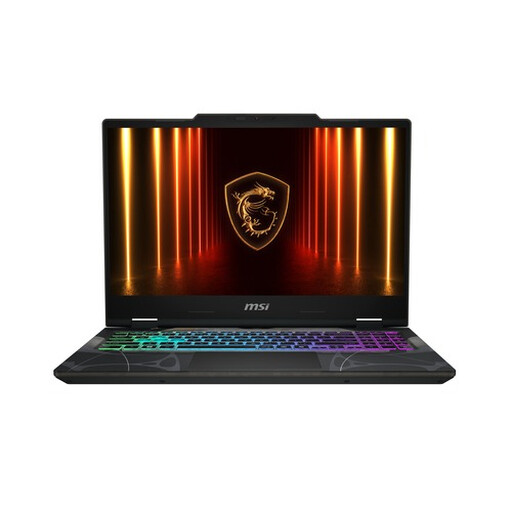 No image available
This 15.6-inch model gives you a larger screen. Compare the space available on your desk with the room you’ll need to use the laptop and keep it ventilated.
15.6-inch Full HD IPS screen, 144 Hz; Core 9 270H; RTX 5060 8 GB; 16 GB DDR5; 512 GB SSD.
The screen size alone doesn’t tell you how much room the whole setup needs. The configuration details don’t confirm performance in a particular game.
No image available
This 15.6-inch model is worth comparing if a larger built-in screen matters to you and your desk has room for it.
15.6-inch Full HD IPS screen, 144 Hz; Core i5-13420H; RTX 5050 8 GB; 16 GB DDR5; 512 GB SSD.
Check that you have space for the full setup and check your game’s requirements. These product details aren’t test results for simulation performance.
No, you can’t tell from the RAM alone. Urban Games recommends 16 GB for Transport Fever 2, and Paradox Interactive also recommends 16 GB for Cities: Skylines II. Both games have their own processor and graphics card recommendations too. Check the requirements for your game and your laptop’s configuration.
Place the laptop on a sturdy, flat surface and keep the vents clear. ASUS recommends leaving space around the vents, so remember to allow room for plugs and cables too, and check where the vents are on the model you’re considering.
It depends on the model. ASUS lists the ROG Zephyrus G14 GA403UM-QS024W as having 16 GB of onboard memory with no upgrade slot. For any other laptop, check the full model code and memory specifications.
An extended warranty doesn’t replace your statutory rights. According to ACM ConsuWijzer, the statutory guarantee is separate from a paid retailer’s or manufacturer’s warranty. If a product doesn’t do what you could reasonably expect under normal use, the retailer is responsible for providing an appropriate solution.
According to ACM ConsuWijzer, online purchases generally come with a statutory cooling-off period of up to 14 days after delivery, although some purchases are exempt. Check the terms that apply to your order, especially if you choose a customised configuration.