
2D tileset creator
You mainly create reusable pixel tiles and want to choose a laptop based on your drawing work, not just its GPU. Aseprite supports tilesets in tilemaps.


For pixel art and a simple 2D project, you don’t necessarily need a powerful dedicated gaming GPU: Aseprite supports tilesets, and Godot includes integrated graphics options in the minimum requirements for a simple project. If you also want to run specific demanding games or 3D projects, compare their system requirements with the GPU in the exact laptop configuration. Also consider screen space, memory, portability and cooling, as these can vary between configurations.
You mainly create reusable pixel tiles and want to choose a laptop based on your drawing work, not just its GPU. Aseprite supports tilesets in tilemaps.
You use one laptop for studying, creating tilesets and gaming, and weigh up screen space against how easy it is to carry around.
You combine drawing with several programmes, or want to try larger game projects later on. So compare the specifications of the exact configuration, including its memory and GPU.
First, decide which drawing programmes, engine and games you want to use. Then compare the exact laptop configuration for its screen, memory, portability and the requirements of that software.
| What to consider | What should you check? | Who is this important to? |
|---|---|---|
| Screen and drawing space | Compare the screen size and resolution of the exact configuration. Also check the panel and colour specifications if accurate colour judgement matters to you. | If I mainly draw on my laptop screen, I want enough room for my canvas and tools. Around 33% of consumers prioritise drawing space. |
| Game and project requirements | Check the GPU and supported graphics API against the requirements of your chosen engine, renderer and games. Compare the memory if you’ll have several programmes open at once. | If I want to run certain games or larger projects as well as create pixel art, I’ll check their requirements. Around 25% of consumers prioritise gaming and project growth. |
| Carrying it between your room and campus | Compare the stated weight and screen size of the same SKU. If you’ll use it away from a power socket, check battery figures measured under comparable conditions. | If I carry my laptop around often, I want a size that fits my bag while still giving me enough room to work. Around 25% of consumers prioritise carrying their laptop every day. |
| Budget and upgrading | Check the memory, any memory slots and the storage on the exact configuration. Don’t assume it can be upgraded based on the series name alone. | If I want enough memory and storage within my budget, I’ll also check whether it can be upgraded later. Around 17% of consumers prioritise cost and upgradability. |
Godot’s stated minimum requirements for a simple project also include integrated graphics options. The requirements for individual games may be different.
First decide which drawing programmes, engine, renderer and games you’ll use. Then compare their requirements with the exact laptop configuration.
Memory, screen and GPU can vary between configurations. For example, ASUS lists 16 GB of built-in, non-upgradeable memory for the Zephyrus G14 GA403UM-QS024W; Acer lists two memory slots for the Nitro V 15 NH.QNCEH.007.
Before choosing, check the full manufacturer code and the specifications of the configuration you’re considering.
According to Lenovo, a soft or uneven surface can block the vents.
Place your laptop on a hard, flat surface and keep the vents clear, as instructed in the manual.
The Legion Pro 5 83LT004QMH is a specific 16-inch configuration to consider when comparing screen space and memory for multitasking.
The ROG Zephyrus G14 GA403UM-QS024W is a 14-inch configuration to compare if you’re looking for a more compact screen size.
The Nitro V 15 ANV15-51 NH.QNCEH.007 is a 15.6-inch configuration to include in your comparison.
The OMEN 16-am2685nd is a specific 16-inch configuration to compare if screen space and gaming capabilities both matter to you.
These Joybuy products are gaming laptops to compare for tileset work and studying, with screen space, portability and potential games or larger projects in mind.
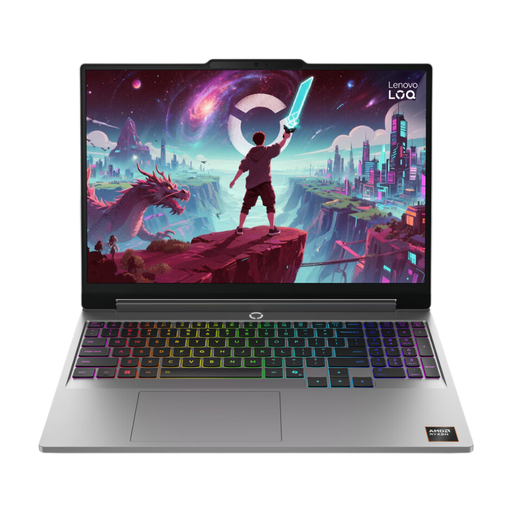 No image available
A configuration to compare if you want to combine tileset work and studying with gaming; check the GPU against the requirements of the games you choose.
15.3-inch IPS screen with a resolution of 1920 × 1200 pixels and 100% sRGB; 16 GB memory; RTX 5070 laptop GPU; 512 GB SSD; stated weight: 2.1 kg.
 No image available
A 16-inch configuration to compare if you want to combine plenty of screen space with studying and gaming; check that the GPU is suitable for your chosen games.
16-inch OLED screen with a resolution of 2560 × 1600 pixels and 100% DCI-P3; Intel Core Ultra 9 285H; 16 GB memory; RTX 5060 laptop GPU; 1 TB SSD; stated weight: 1.85 kg.
The product description states that the charger must be purchased separately.
 No image available
A configuration to compare if you want a large screen and are also considering games or more demanding projects; check the GPU against your software requirements.
16-inch IPS screen with a resolution of 2560 × 1600 pixels and 100% DCI-P3; AMD Ryzen 9 9955HX; 16 GB memory; RTX 5070 Ti laptop GPU; 1 TB SSD.
The product description states that the charger must be purchased separately.
 No image available
A configuration to compare if you want to use several applications and games alongside drawing; check the requirements of the games you choose.
16-inch IPS screen with a resolution of 2560 × 1600 pixels and 240 Hz; Intel Core i7-14700HX; 32 GB memory; RTX 5070 laptop GPU; 1 TB SSD; UK RGB keyboard.
 No image available
A configuration to compare if you want plenty of screen space on your desk; its stated weight is worth considering if you plan to take it to campus.
18-inch screen with a resolution of 2560 × 1600 pixels and 100% DCI-P3; AMD Ryzen 9 8940HX; 16 GB memory; RTX 5060 laptop GPU; 1 TB SSD; weight approximately 3 kg.
The product description states that the charger must be purchased separately.
No, creating a tileset alone doesn’t mean you need one. Aseprite supports tilesets in tilemaps, and Godot includes integrated graphics options in the minimum requirements for a simple project. Check the system requirements for individual games and other software separately.
According to its creator, the Aseprite trial version can’t save files. So don’t rely on it as a free solution for work you want to keep.
Keep the vents clear and, ideally, use a hard, flat surface. Lenovo warns that soft or uneven surfaces can block ventilation areas; also check the manual for your laptop.
According to the Dutch government, when a consumer buys remotely from a business, they have a 14-day cooling-off period in many cases; purchases from a private individual aren’t automatically covered by this rule. In the Netherlands, products are covered by a legal guarantee, but there’s no fixed statutory guarantee period. If something goes wrong, contact the seller.
In the Netherlands, sellers of electrical and electronic equipment must ensure their products meet the applicable European safety and electromagnetic compatibility requirements. This is an obligation for the seller; check the product information for the specific configuration you’re considering.