
2D tileset creator
You mainly draw reusable tiles and want a comfortable workspace for creating a tilesheet. Aseprite and Godot explain how to work with tilesets in their documentation.


If you mainly create 2D tilesets, prioritise the screen specifications and a configuration that suits your files; a more powerful GPU isn’t necessarily the deciding factor. If you also work on larger or more graphically demanding projects, check the requirements of your own engine and project, and weigh the extra GPU and memory capacity against how you use your laptop at your desk. Aseprite and Godot describe tileset workflows, while Unity points out that the amount of RAM you need depends in part on the size and complexity of your project.
You mainly draw reusable tiles and want a comfortable workspace for creating a tilesheet. Aseprite and Godot explain how to work with tilesets in their documentation.
You import your tileset into a game project and want to use your drawing programme alongside the editor. Godot and Unity outline their software requirements, and the size of your project also affects what you need.
You create tilesets, but also use the same laptop for more graphically demanding games or projects. The requirements of these additional tasks can affect which configuration you choose.
Start with the software and projects you use alongside drawing. Then choose a screen that gives you the workspace you want, and finally check what extra graphics performance your other work requires.
| What to consider | What should you check? | Who is this important for? |
|---|---|---|
| Screen for drawing | Check the size, resolution and stated colour gamut of the exact configuration, and consider whether you’ll use an external monitor. | If I spend a long time working on small tiles and a grid, I want to know how much screen space I’ll have and which screen features are specified. Around 36% of consumers prioritise the screen and drawing space. |
| Memory and storage | Compare the RAM and SSD capacity with the software you use and your project files; check whether the specific configuration allows for upgrades. | When I use my drawing programme and engine side by side, I want a configuration that suits the size of my project. Around 29% of consumers prioritise using an engine and drawing software at the same time. |
| Additional games and projects | Compare the requirements of the games and engine you use with the full CPU and GPU configuration. | If I also test or play more graphically demanding projects, I want to choose a laptop suited to that specific task. Around 21% of consumers prioritise more demanding testing or gaming. |
| Home workspace | Check the ports, keyboard layout and which power adapter comes with the exact configuration. | When my laptop is mainly used at a fixed home workspace, I want to know how it will work with my monitor and other equipment. Around 14% of consumers give their workspace setup the highest priority. |
The stated refresh rate in hertz doesn’t tell you the same thing as the resolution or colour gamut. Lenovo and MSI list different screen options for specific configurations, so check the full model details.
Compare the screen specifications for the exact model code and decide whether you’ll use an external monitor at home.
Godot lists minimum requirements for a simple project. Unity notes that memory requirements vary with the size and complexity of a project.
Check the requirements for your own editor, renderer and project before deciding how much GPU and memory capacity you need.
Screen options, GPUs, memory and storage can vary by configuration. For example, MSI lists several screen and GPU options within the Katana 15 HX B14W series.
Compare full model codes and check the specifications of the configuration you’re considering, not just the series name.
The Legion Pro 5 is worth comparing if, alongside tileset work, you also value a larger screen and the ability to handle projects.
The ROG Strix G16 is worth comparing if you combine tileset work with gaming or project testing.
The Katana 15 HX is worth comparing if a 15.6-inch gaming laptop with a dedicated GPU suits the additional games you play.
The OMEN range offers another option to compare if you’re also considering working on larger projects with a gaming laptop.
These gaming laptops are for anyone combining tileset work with larger or more graphically demanding projects. Compare the exact configuration and stated features with your own software and workspace.
 Image unavailable
A gaming laptop for anyone combining tileset work with larger or more graphically demanding projects.
The product name lists a Ryzen 9 9955HX, RTX 5070 Ti, 16 GB and a 1 TB SSD.
The charger must be purchased separately.
 Image unavailable
A gaming laptop worth comparing if you also want to run larger projects alongside your tileset work.
The product name lists an 18-inch screen, Ryzen 9 8940HX, RTX 5060, 16 GB and a 1 TB SSD.
The charger must be purchased separately.
 Image unavailable
A gaming laptop to consider if screen size and additional project work or gaming matter to you.
The product name lists a 16-inch IPS screen with a resolution of 2560 × 1600, 240 Hz and a stated 100% DCI-P3.
The product name also lists an i7-14700HX, RTX 5070, 32 GB, a 1 TB SSD and a UK QWERTY keyboard.
 Image unavailable
A gaming laptop worth comparing if you also want to carry out additional project work alongside drawing.
The product name lists a Core Ultra 9, RTX 5070 Ti and a QWERTY keyboard.
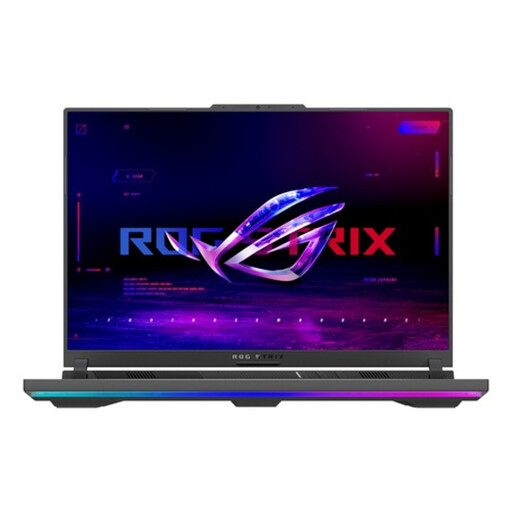 Image unavailable
A gaming laptop to compare with other configurations if you also want to run projects or games.
No. Creating a tileset on its own doesn’t mean you need a powerful dedicated graphics card. Aseprite explains how to create tilesets; also check the requirements of any games or more complex projects you plan to run.
According to the Godot documentation, you can drag a tilesheet into the TileSet panel. Check the documentation for the version of Godot you use; this is a workflow in the engine, not a recommendation for a particular laptop specification.
Unity recommends at least 8 GB RAM to run the editor, but larger or more complex projects may need more memory. So, consider your own project and which programmes you want to have open at the same time.
According to ACM ConsuWijzer, online purchases generally come with a statutory cooling-off period of up to 14 days after delivery. Exceptions may apply, so check the terms of your purchase and distinguish your statutory rights from any more generous returns policy offered by the seller.
No. The end of a manufacturer’s warranty doesn’t automatically mean your statutory rights expire. ACM ConsuWijzer explains that the seller is responsible for providing an appropriate solution if a product proves faulty under normal use. What you could reasonably expect from the product is also taken into account.