
Elevation map maker
You mainly turn elevation files into 2D terrain maps, such as hillshades, and need enough space for your data. QGIS Documentation describes terrain analysis and notes that high-resolution rasters can require a lot of storage.


Choose a configuration to suit the work you do. For 2D terrain maps, RAM and storage are important considerations, while 3D visualisation or post-processing in Blender also means checking your software’s graphics requirements. In a shared office, noise, the screen and connectivity matter too. Always check the full model code and the components of the specific configuration; options in a laptop range do not necessarily apply to every model.
You mainly turn elevation files into 2D terrain maps, such as hillshades, and need enough space for your data. QGIS Documentation describes terrain analysis and notes that high-resolution rasters can require a lot of storage.
You view terrain as a 3D scene or continue editing an export in Blender. QGIS Documentation describes 3D map views and exports; Blender publishes its own software requirements, which you can compare with the exact laptop configuration.
You work alongside colleagues and want to consider fan noise, screen setup and connectivity. Arboportaal also outlines workplace requirements for employees who spend long periods working with display screens.
| Consideration | What to look for | Who is this important for? |
|---|---|---|
| RAM and storage | Compare the installed RAM and SSD capacity with your files and workflow; check upgrade options for each model. | If I mainly work with elevation files, I want enough room for my data. Around 33% of consumers prioritise RAM and storage. |
| 3D performance | Check the GPU, VRAM and RAM against the requirements of the software you actually use. | When I view terrain in 3D or edit scenes further, I want to match the laptop to that software. Around 25% of consumers prioritise 3D capabilities. |
| Noise in the office | Look for measurements for the exact configuration under a comparable workload and operating mode. | When working alongside colleagues, I want to avoid fan noise disrupting the workplace. Around 25% of consumers put office comfort first. |
| Screen and connectivity | Check the screen configuration and whether the laptop has the ports you need for your external screen and keyboard. | For desk-based map work, I want to connect my screen and peripherals in a way that suits my setup. Around 17% of consumers consider the screen and workplace connections their main concern. |
2D raster analysis, 3D visualisation and post-processing do not have the same requirements. A powerful graphics card does not automatically make a laptop better suited to your specific GIS work.
First, decide which software and workflow you use. Then compare RAM and storage, and check the GPU and VRAM if your application needs them.
A manufacturer may offer several configurations within one laptop range. The range’s maximum memory, storage or screen option may not be included in the configuration you are looking at.
Compare the full model code with the RAM, SSD, GPU and screen configuration actually installed.
Information about the included adapter is not clear-cut for an ASUS TUF A16 offer. So don’t assume that every configuration comes with the same items without checking.
For the exact model code, confirm which adapter is included and which one is required.
The OMEN 16-am0640nd is a specific configuration worth considering if you’re looking for a gaming laptop with components already installed.
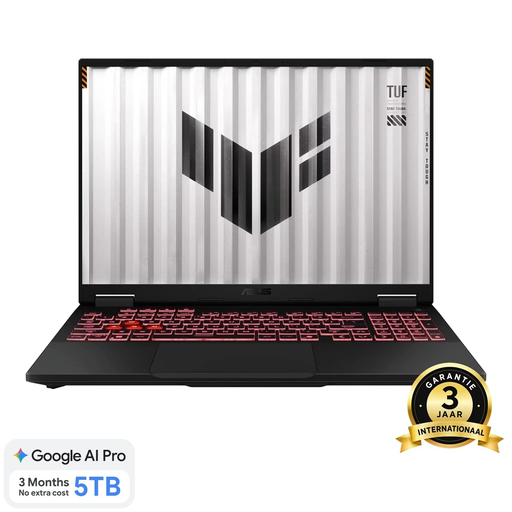
The TUF Gaming A16 is available in several configurations, so compare the full model code rather than just the range name.
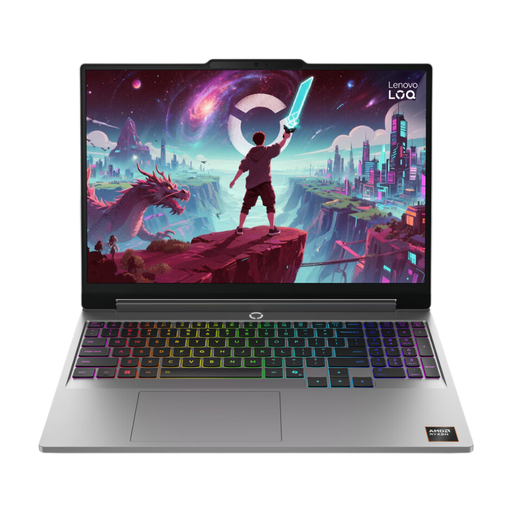
The LOQ 15IRX10 is a range worth comparing if storage expansion or connecting an external screen is important to you.
The Katana 15 HX B14W range includes several configurations for anyone considering 3D work too.
These gaming laptop picks are suited to terrain mapping and 3D terrain work. For 2D maps, focus on comparing the listed RAM and SSD configuration; for 3D work, the GPU and VRAM also matter for the software you use.
 No image available
A configuration worth comparing if you create terrain maps and also want to connect an external screen.
Ryzen 7 250; RTX 5070 with 8 GB GDDR7; 16 GB RAM; 512 GB SSD; 15.3-inch WUXGA screen; USB-C with DisplayPort and HDMI 2.1.
 No image available
An 18-inch configuration worth comparing if you also work with 3D terrain; check the specifications against your software.
Ryzen 7 260; RTX 5070 with 8 GB GDDR7; 16 GB RAM; 1 TB SSD; WUXGA screen; USB4 and HDMI 2.1.
 No image available
The listed 32 GB RAM and 1 TB SSD are worth comparing for work with terrain files and 3D applications.
RTX 5070; 32 GB RAM; 1 TB SSD; 16-inch IPS screen with a resolution of 2560 × 1600.
 No image available
A configuration with an RTX 5060 worth comparing if you use 3D visualisation; check it against your software’s requirements.
Ryzen 7 260; RTX 5060 with 8 GB GDDR7; 16 GB DDR5; 512 GB SSD; 18-inch WUXGA screen with 144 Hz; USB4 and HDMI 2.1.
 No image available
The listed memory, storage and GPU configuration is worth comparing with the requirements of your 3D software.
Intel Core Ultra 9 285HX; RTX 5090 with 24 GB GDDR7; 64 GB DDR5; 6 TB SSD storage; 18-inch UHD+ Mini LED screen with 120 Hz.
No, not necessarily. QGIS describes 2D terrain analysis using elevation data and hillshades. For 3D map views or post-processing in Blender, you should also check the requirements of that software. First decide on your workflow, then choose the GPU configuration you need.
For employees who work with display screens for more than two hours a day, Arboportaal states that the screen and keyboard must not be attached to each other, and that a separate screen or keyboard must be available when using a laptop. Whether this requirement applies to you depends on your work and how you use the equipment.
Check the requirements for the version you’re actually going to use. The ArcGIS Pro 3.7 documentation lists supported 64-bit versions of Windows; Blender publishes its own requirements. Compare these with the laptop’s exact processor, RAM and GPU configuration.
For a consumer purchase, the seller must help if a product does not meet the terms of the agreement; the manufacturer’s warranty is in addition to your statutory rights. The Dutch Government states that there is no fixed statutory two-year warranty period in the Netherlands. For online purchases from a business, you can usually change your mind within 14 days, subject to legal exceptions. Check separately which rules apply if you’re buying for business use.