
Tactical gamer with a permanent desk setup
You usually play at a desk and balance the demands of your games against a practical screen, suitable ports and enough storage.


For turn-based tactical games in a home office, choose a gaming laptop based on the demands of the games you actually play, not just the name of the GPU. If you mostly play at a desk, the screen, ports and storage can be just as important; a more powerful GPU or a high refresh rate is worthwhile mainly if your games and settings call for it. Before buying, check the exact configuration and the applicable product compliance information.
You usually play at a desk and balance the demands of your games against a practical screen, suitable ports and enough storage.
You want to play more graphically demanding games as well as tactical ones, so you compare the exact GPU configuration and screen resolution.
You use your laptop for everyday office tasks and gaming, so you consider the screen and ports as well as the graphics card.
First compare the requirements of the games you play with the exact laptop configuration. Then decide which screen, storage and port options suit your workspace.
| What to consider | What to look for | Who will value this? |
|---|---|---|
| Performance for your games | Compare the official system requirements with the CPU and GPU in the exact configuration. For laptop GPUs, also check the power limit. | If I mainly play certain tactical games, I don’t want to spend my budget on graphics capability I don’t need; around 33% of consumers prioritise performance suited to the games they play. |
| Screen and desk setup | Check the resolution, screen size and video and USB ports available on the exact model. | If you spend a lot of time working on the built-in screen or want to connect an external display, consider readability and the right ports; around 25% of consumers give the screen and desk setup top priority. |
| Storage and dual use | Check the SSD capacity, available space and whether the configuration can be upgraded. | If I want to store work files and several games on the same laptop, available storage matters a lot; around 25% of consumers prioritise storage and everyday use for both work and gaming. |
| Portability and power | Check the weight and power adapter; if you want to play away from mains power, check how the exact configuration charges and how long its battery lasts. | If you move your laptop between workspaces or want to use it away from mains power, consider portability and power; around 17% of consumers put these needs first. |
For example, 2K lists 8 GB of RAM and 45 GB of free storage as recommended system requirements for XCOM 2. These requirements apply to XCOM 2 and don’t automatically indicate what other tactical games need.
A laptop GPU’s power limit affects performance. Tweakers explains that, in certain circumstances, a laptop with a lower-tier GPU model can be faster than one with a higher model number.
Compare the full configuration and relevant independent benchmarks, not just the GPU label.
A higher GPU designation may cost more without delivering the performance improvement you expect.
For slower-paced, turn-based games, the benefits of a high refresh rate aren’t always clear-cut.
First decide which screen size, resolution and level of readability you want. Then consider how important refresh rate is for the games you play.
Money spent on a screen feature is no longer available for features you may use more often.
A model range may include different GPUs, SSD capacities, keyboard layouts and ports. A product listing may also contain conflicting specifications.
Compare the full model and part number with the specification table, and ask for clarification about any discrepancies before ordering.
Otherwise, you could receive a different configuration or keyboard layout from the one you expected.
The Nitro V 15 range includes gaming laptops in various configurations; compare the specifications for the full model number.
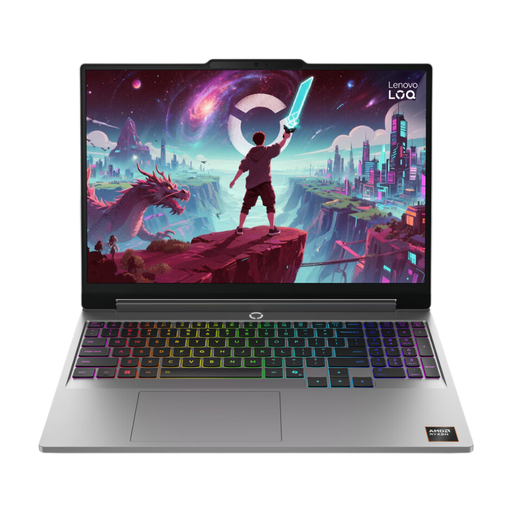
The LOQ range is one option to compare when looking at gaming laptops by CPU, GPU and screen.
The TUF Gaming F16 range is worth considering if you want to compare screen and upgrade options alongside the GPU.
The Katana 15 HX B14WEK-843NL is a specific model you can compare for its screen, GPU and storage.
This selection of gaming laptops on Joybuy includes a range of screen, storage and GPU configurations for desk setups and combined work and gaming. Before buying, check the specifications for the exact configuration and the applicable product compliance information.
 No image available
A gaming laptop for a desk setup, with the option to connect an external display.
 No image available
An option if you’re looking for a large built-in screen and 1 TB of storage for desk use.
 No image available
A 16-inch configuration to consider if you’re looking for a built-in WUXGA screen and 1 TB of storage.
 No image available
A configuration to compare if you’re looking for a higher-resolution built-in screen and more memory.
 No image available
An option if you want to weigh up an OLED screen with high resolution against storage capacity and keyboard layout.
The published system requirements from 2K don’t, by themselves, mean every player needs a powerful GPU. For XCOM 2, 2K lists 8 GB of RAM and 45 GB of free storage as recommended requirements; check the other components and your preferred settings separately, as these aren’t system requirements for other games.
First decide whether you’ll use the built-in screen or an external display, then check the video and USB ports available on the exact configuration. Keep the ventilation unobstructed and follow the chosen model’s manual for placement and maintenance; specifications aren’t an independent noise test.
According to ACM ConsuWijzer, the statutory guarantee applies alongside any manufacturer’s or seller’s warranty. If a product doesn’t perform as you could reasonably expect under normal use, the seller is responsible for providing a suitable remedy free of charge; there is no fixed warranty period in the Netherlands that applies to all laptops.
For a standard online consumer purchase, ACM ConsuWijzer says you generally have up to 14 days after delivery to change your mind. Before buying, check who the seller is and what returns information applies to your specific order; statutory exceptions apply.
The Dutch Government explains that electronic devices offered for sale in the EU must meet the applicable safety requirements and carry the required CE marking. The European Commission states that the common USB-C charging rules have applied to laptops since 28 April 2026. Check the information for the exact configuration: a USB-C port listing on its own doesn’t tell you what charging power it supports.