
Student creating pixel art
You work with frames, layers and previews, and want to use the canvas and timeline comfortably. Aseprite describes these features as part of its animation workflow.


Start with your sprite and animation work: assess the screen and memory of the exact configuration against your own projects. A powerful dedicated graphics card isn’t automatically necessary for a simple 2D project; Godot lists integrated graphics as a possible baseline for its editor, depending on the renderer you use. If you also play demanding games, compare their specific requirements with the GPU, and remember to allow space for the laptop and power adapter, with room for ventilation in a student bedroom.
You work with frames, layers and previews, and want to use the canvas and timeline comfortably. Aseprite describes these features as part of its animation workflow.
You create longer frame-by-frame animations, so you pay attention to memory and whether the specific configuration can be upgraded. Krita keeps animation frames in working memory.
You use one laptop for sprites, studying and gaming, balancing the gaming configuration against the space and portability you need. Godot distinguishes between the baseline for simple projects and the requirements of more demanding applications.
First, decide which task matters most to you, then compare the full model code and specifications of the configuration. A product family name or a specification stating “up to” doesn’t automatically tell you what’s inside the laptop you’re looking at.
| Concern | What to look for | Who it matters to |
|---|---|---|
| Workspace for sprites | Check the screen size, aspect ratio, resolution and stated colour coverage of the exact configuration. Consider whether the canvas and animation timeline are both easy to use at the same time. | If you want to view frames and layers alongside your canvas, a clear, spacious workspace matters. Around 40% of consumers put screen space for sprite work first. |
| Memory for animations | Check the installed RAM and whether it can be upgraded in this configuration. Match the capacity to your software and files. | If you create longer animations or larger files, you’ll want enough memory for your projects. Around 30% of consumers prioritise memory for animations; Krita notes that frames remain in working memory. |
| Gaming alongside animation | Compare the requirements of the games you play with the GPU, memory and screen of the complete model. Don’t treat “up to” as a specification for every configuration. | If the laptop also needs to run the games you play, factor their requirements into your choice. Around 20% of consumers make gaming their main consideration; Godot’s baseline for a simple project isn’t a performance promise for games. |
| Space and portability | Check the dimensions, weight and included power adapter for the specific listing. Keep the ventilation openings clear. | If you have a small desk or take your laptop out and about, you’ll want to know how much room the laptop and power supply take up. Around 10% of consumers prioritise a setup that suits their room and is easy to carry. |
The screen, memory and GPU can vary between configurations. A series page doesn’t necessarily describe the laptop you’re considering.
Before deciding, compare the full model code with the specifications tab for the exact configuration.
A specific ASUS TUF Gaming A16 FA608UH configuration is listed without a power adapter; for a specific HP OMEN configuration, the adapter is sold separately.
Check what’s included in the listing and the charging capacity required for that laptop.
Memory can be an important consideration for frame-by-frame work. For a simple Godot editor project, Godot lists integrated graphics as a possible baseline, depending on the renderer.
First decide whether you mainly need to work with larger animation files, have more screen space or get extra power for your games.
The TUF Gaming A16 range is a useful starting point for comparing gaming configurations by screen and upgrade options.
The Nitro V 16 range may be worth considering if you’re looking for a 16:10 screen and gaming in one laptop.
The HyperX OMEN 16 range is worth comparing if you combine sprite work with a strong focus on gaming.
The Legion Slim 5 Gen 9 range is worth considering if you combine studying and gaming.
These Joybuy picks focus on laptops for sprite animation combined with gaming. Compare the screen and memory configuration of each model with your animation work and the requirements of your games.
 No image available
An option to compare if you combine animation work with gaming and want to assess a 16-inch screen.
16-inch screen, 1920 × 1200, 16:10, 144 Hz; Intel Core 7 240H, RTX 5070 8 GB, 16 GB DDR5 and 1 TB SSD. The stated colour gamut is 45% NTSC, so bear this in mind if colour reproduction matters to you.
 No image available
This configuration is worth comparing if you want to play games as well as animate, and 32 GB of memory is high on your list of priorities.
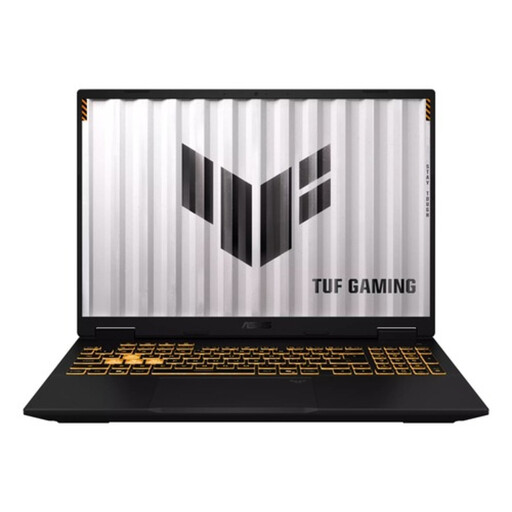
16-inch screen, 2560 × 1600, 240 Hz; Intel Core i7-14700HX, RTX 5070, 32 GB memory and 1 TB storage. The product name lists an IPS screen and 100% DCI-P3.
 No image available
A configuration to compare if you want to combine sprite work with gaming and are looking for a 16:10 screen.
16-inch screen, 1920 × 1200, 16:10, 165 Hz; Core i7-14650HX, RTX 5060, 16 GB RAM and 1 TB SSD.
No image available
This configuration gives you specific screen details to compare if you want to combine animation and gaming on one laptop.
16-inch screen, 1920 × 1200, 16:10, 165 Hz and stated 100% sRGB; RTX 5060, 16 GB DDR5 and 1 TB SSD. The listed weight is 2,20 kg.
 No image available
A 15.6-inch configuration to compare if you’re weighing up a smaller screen against your animation work and games.
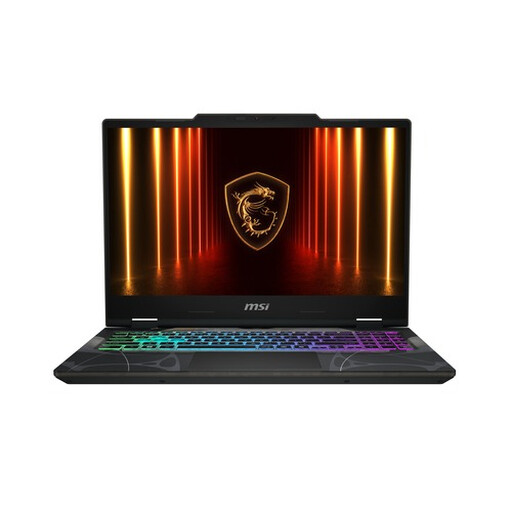
15.6-inch screen, 1920 × 1080, 144 Hz; Intel Core 9 270H, RTX 5060 8 GB, 16 GB DDR5 and 512 GB SSD. The description lists two SO-DIMM slots.
No, not for a simple 2D project alone: Godot lists integrated graphics as a possible baseline for its editor, depending on the renderer. Also check the requirements of your animation software and games; Godot’s baseline isn’t a guarantee for other projects.
Match the memory to your software and the size of your own files. Krita keeps animation frames in working memory, while ASUS lists upgradeable memory options for the TUF Gaming A16 family; check whether the specific configuration can be upgraded.
Check the dimensions and weight, make sure the specific listing includes a suitable adapter, and leave space around the ventilation openings. The specific ASUS TUF Gaming A16 FA608UH configuration is listed without a power adapter; this doesn’t automatically apply to other listings.
No, the port alone doesn’t prove that the charger supplies enough power for your configuration. Check the charging power information and what’s included; the Dutch Government outlines USB-C rules for new laptops from April 2026 and provides information on choosing a charger with the right power output.