Start with the size of your desk and the system requirements of the historical strategy games you play, rather than the most powerful graphics card. A compact screen can save space, but if you spend a lot of time reading map details, you’ll also need to consider screen readability and the components you need. Paradox Interactive recommends 16 GB of RAM for the Windows version of Crusader Kings III. That alone doesn’t tell you how well other games will perform or what frame rate to expect.
Who is this guide for?
Gamer with limited desk space
You want to leave room for a mouse and power supply beside your laptop. Compare the width and depth of the exact model, and keep the air vents clear. A small screen size alone doesn’t tell you whether the whole setup will fit. Lenovo recommends using a flat surface and keeping the air vents clear.
Player of long map-based campaigns
You read a lot of map information and menus, so you’ll want to assess both screen readability and the system requirements of your game. Paradox Interactive recommends 16 GB of RAM for the Windows version of Crusader Kings III.
Player of real-time battles
You also play historical strategy games with adjustable battle graphics. Compare the exact GPU configuration with the game’s requirements and settings; Total War describes graphics options for THREE KINGDOMS that can affect performance demands.
What should you look for?
First measure the space available, then compare screen readability and your games’ system requirements with the laptop’s exact configuration.
| What to consider |
What should you check? |
Who should pay particular attention? |
| Space for the whole setup |
Measure the space available and compare it with the width and depth of the exact laptop model. Leave room around the air vents. |
If I want to use a laptop, mouse and power supply on a small desk, I’ll look beyond the screen size alone. Around 31% of consumers put desk space first. |
| Reading maps and menus |
Consider screen size and resolution together, and compare the RAM, processor and storage with the requirements of your games. Paradox Interactive recommends 16 GB of RAM for Crusader Kings III on Windows. |
If I play long campaigns, I want to view map details and menus comfortably without losing sight of the system requirements. Around 31% of consumers prioritise readability and campaigns. |
| Graphics settings in battles |
Check the full GPU model and compare it with the system requirements and graphics settings of the game you’ve chosen. |
If I also play real-time battles, I want to match the configuration to the games and settings I actually use. Around 23% of consumers prioritise battles. |
| Matching specifications to your games |
Make a list of your games and preferred settings, then compare the RAM, GPU and storage of each model with the published requirements. |
If I don’t want to choose specifications I won’t use, I’ll start with my games and preferred settings. Around 15% of consumers prioritise value for money. |
Common buying pitfalls
-
Confusing screen size with the desk space you need
The laptop itself is only part of the setup: you’ll also need to allow for your mouse and clear space around the air vents.
Measure your desk and the exact laptop dimensions, and make room for your mouse and power supply without covering the air vents.
-
Assuming every model in a range has the same components
Memory, screen and GPU can vary between configurations, so a series name alone doesn’t give you the full specifications.
Compare the full manufacturer’s code with the specifications of the model being sold.
-
Assuming minimum system requirements guarantee your preferred settings
Paradox Interactive lists both minimum and recommended requirements for Crusader Kings III. Meeting the minimum requirements doesn’t guarantee that your preferred settings will work for every game.
Choose your games and preferred settings first, then check each game’s requirements. Don’t infer a frame rate from a list of specifications.
Brands to compare
ASUS
The TUF Gaming A14 and ROG Zephyrus G14 are compact ranges worth comparing if desk space is a priority.
- ASUS lists a 14-inch design for the TUF A14; the GPU varies by configuration.
- Specifications and performance can vary by SKU. Check the exact model and don’t assume its gaming performance from the range name.
Acer
The Predator Helios Neo 14 AI PHN14-71 is a compact range to consider if you’re looking for a small chassis with a dedicated GPU.
- For model NH.QUWEH.002, Acer lists a 14.5-inch IPS screen with 2560 × 1600 pixels, 32 GB of RAM and an RTX 5070 Laptop GPU.
- These specifications apply to NH.QUWEH.002; other configurations may differ.
HP
The OMEN Transcend 14 is a compact range with an OLED screen that’s worth comparing with other small gaming laptops.
- HP lists a 2.8K OLED screen and an RTX 4070 Laptop GPU for the configuration shown.
- The range page describes one configuration; check that the model on offer has the same components.
Lenovo
The Legion 5 15IRX10 is a larger range to compare if upgrade options and support for external screens are important to you.
- Lenovo documents two DDR5-SODIMM slots and support for external screens for this range.
- The available configurations don’t tell you which model is on offer. Check the specific product code and connections.
Gaming laptops at Joybuy
These models range from a compact 14-inch laptop to larger screen sizes. Compare their dimensions with your desk and match the components to the strategy games you play.
 No image available
ASUS ROG Zephyrus G14 GA403UM-QS024W
This 14-inch model is a compact option to compare if desk space is limited.
14-inch screen; Ryzen 9 270; RTX 5060 Laptop GPU; 16 GB RAM; 1 TB SSD.
View at Joybuy
 No image available
Lenovo Legion 5 15AHP11
The 15.3-inch screen needs more desk space than the compact 14-inch option, so measure your setup before choosing.
15.3-inch WQXGA OLED screen, 165 Hz; AMD Ryzen 7 250; GeForce RTX 5060; 16 GB DDR5; 512 GB SSD; Windows 11 Home.
View at Joybuy
 No image available
MSI Stealth 16 AI+ B3WF-011NL
With its 16-inch screen, this is a larger option to compare if you have enough desk space.
16-inch QHD+ OLED screen, 240 Hz; Intel Core Ultra 9 386H; GeForce RTX 5060; 32 GB DDR5; 1 TB SSD; Windows 11 Home.
View at Joybuy
 No image available
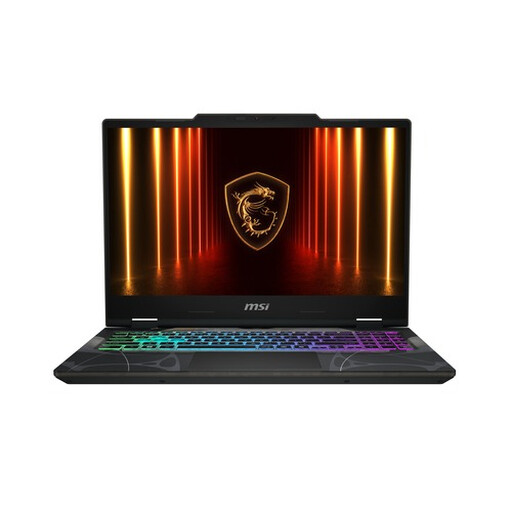
MSI Cyborg 15 B2RWFKG-1217NL
The 15.6-inch screen needs more room than a compact 14-inch model, so bear your available desk space in mind when choosing.
15.6-inch FHD screen, 144 Hz; Intel Core 9 270H; GeForce RTX 5060 8 GB; 16 GB DDR5; 512 GB SSD; Windows 11 Home.
View at Joybuy
 No image available
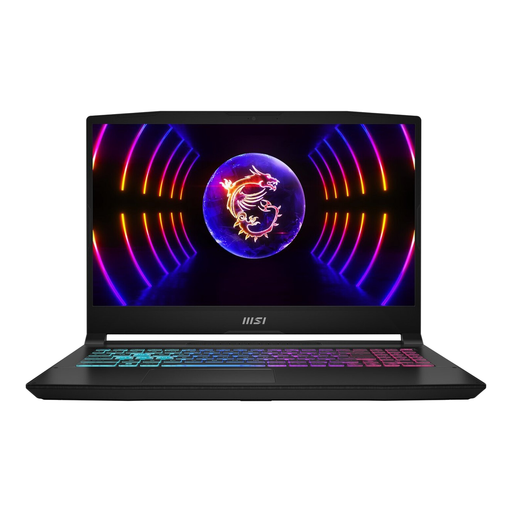
MSI Katana 15 HX B14WFK-046NL
Compare the 15.6-inch screen size and stated chassis dimensions with the space available on your desk.
15.6-inch IPS screen; Intel Core i7; RTX 5060; 16 GB RAM; QWERTY keyboard.
View at Joybuy
Frequently asked questions
Is 16 GB of RAM essential for every historical strategy game?
No, the amount you need varies by game. For the Windows version of Crusader Kings III, Paradox Interactive lists 8 GB as the minimum and 16 GB as the recommended amount. Check the system requirements for other games individually.
How can I set up a gaming laptop safely on a small desk?
Use a sturdy, flat surface and keep the air vents clear. Follow the manufacturer’s guidance on the clearance needed and how to clean your model.
Do online purchases in the Netherlands come with a cooling-off period and statutory guarantee?
Online purchases generally come with a statutory cooling-off period of up to 14 days after delivery, subject to exceptions explained by ACM ConsuWijzer. This is separate from your rights if a product is faulty: the seller must resolve the issue in line with the law. A fixed two-year guarantee is not the general rule in the Netherlands.
What should I check when a laptop is being sold from outside the EU?
Check the origin, the seller and the product information for the specific offer. The Dutch government states that electronic devices placed on the EU market must have the applicable CE marking. A model name alone doesn’t tell you whether a particular offer complies with the rules.


