What should you consider when choosing?
First decide whether you mainly need a large built-in screen or expect to take your laptop with you regularly. Then compare the full configuration with your game’s requirements and check what’s included.
The percentages below relate to consumers considering a gaming laptop for building in a sandbox world on a big screen. Each percentage shows the main buying priority for that group of consumers.
| Buying concern |
What to look for |
Who it matters to |
| Large built-in screen |
Compare both the screen diagonal and resolution for the full model number; a bigger screen doesn’t automatically mean a higher resolution. |
If I mainly want to build without a separate monitor, I prioritise the screen space provided by the built-in display. Around 31% of consumers put screen space first. |
| Gaming performance |
Compare your game’s requirements for your chosen edition and settings with the CPU, RAM, GPU and video memory of the exact configuration. For Minecraft: Java Edition, recommendations dated 21 July 2026 include 16 GB RAM and 6 GB video memory for 1080p at 60 fps on Fancy; this isn’t a guarantee for mods or other games. |
If I first want to know whether my game and settings are a good match for the laptop, I focus on the performance needed. Around 25% of consumers put gaming performance first. |
| Memory and storage |
Check the installed RAM and SSD capacity, and find out whether you can upgrade them if you expect to need more space. |
If I want to store multiple worlds, games and other files locally, I look at memory and storage. Around 19% of consumers prioritise storage space. |
| Portability |
Consider how often you’ll move your laptop, and check the weight, adapter and video output for the configuration you choose. The Consumers’ Association notes that laptops measuring 17 inches or more are larger, heavier and use more power. |
Consumers who regularly take their laptop with them and may use a separate monitor at home give more weight to portability. Around 13% put this consideration first. |
| Confidence in the configuration |
Check the full model number, screen and GPU specifications, and whether the appropriate adapter is included. |
If I want to avoid surprises about the configuration or the adapter I need, I check the product details before ordering. Around 12% of consumers make confidence in their purchase their main concern. |
Joybuy laptops with a large built-in screen
These Joybuy products have a built-in 18-inch screen and are aimed at anyone who wants to build in a sandbox world without a separate monitor.
 No image available
ASUS TUF Gaming A18 FA808UP-S8011W
The built-in 18-inch screen suits anyone who mainly builds in one place without a separate monitor.
Ryzen 7 260, RTX 5070, 16 GB memory and 1 TB SSD.
According to the product information, the adapter must be purchased separately.
Joybuy
 No image available
ASUS ROG Strix G18 G814PM-S9012W
With its built-in 18-inch screen, this is an option for anyone who wants to build without an external monitor.
Ryzen 9 8940HX, RTX 5060, 16 GB memory and 1 TB SSD.
The product information says that the adapter must be purchased separately.
Joybuy
 No image available
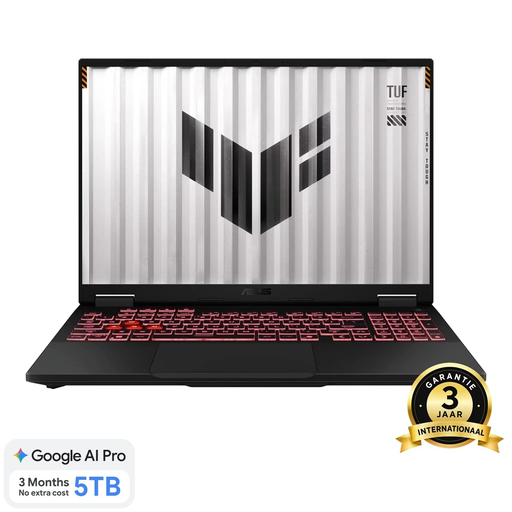
ASUS TUF Gaming A18 FA808UM-S8132W
The built-in 18-inch screen is a good fit if you mainly want to play and build without a separate monitor.
Ryzen 7 260, RTX 5060 8GB, 16GB DDR5, 512GB SSD and WUXGA 144Hz.
Windows 11 Home.
Joybuy
 No image available
MSI Titan 18 HX AI A2XWJG-492NL
This configuration has a built-in 18-inch screen for anyone who wants to build without a separate monitor.
UHD+ Mini LED 120Hz, Intel Core Ultra 9 285HX, RTX 5090 24GB, 64GB DDR5 and 6TB SSD.
Windows 11 Pro.
Joybuy
 No image available
Acer Nitro 18 AI AN18-61-R25V
The built-in 18-inch screen is a good fit if you want to build at home without a separate monitor.
AMD Ryzen AI 7 350, GeForce RTX 5060 8GB GDDR7, 16GB DDR5, 1TB SSD and WQXGA 165Hz IPS.
Windows 11 Home.
Joybuy
Frequently asked questions
Do I always need a powerful gaming laptop for a sandbox game?
No, it depends on the game, edition, settings and any mods you use. For Minecraft: Java Edition, recommendations dated 21 July 2026 give a target of 1080p at 60 fps on Fancy, with 16 GB RAM and 6 GB video memory among the requirements. This isn’t a guarantee for higher resolutions, mods or other sandbox games.
How can I use a larger external screen at home?
First check that the ports on your laptop and monitor are compatible. In Windows, once connected, press Win+P to choose whether to duplicate or extend your display, or show it only on the second screen.
What should I check before paying for an extended warranty?
First, find out what the additional cover includes and compare its terms with your statutory rights. According to the Dutch government, there’s no fixed statutory warranty period in the Netherlands; the seller is responsible if a product is faulty.
Can I always return a laptop bought online in the Netherlands within 14 days?
For distance purchases, you generally have a cooling-off period of up to 14 days after delivery, although statutory exceptions may apply. For example, the Dutch Authority for Consumers and Markets (ACM) mentions products made to individual specifications. Check the terms and conditions for your specific purchase.


