What should you look for?
First, compare your games’ requirements with the exact configuration. Then check that the laptop fits where you plan to play, with enough room around the air vents.
| What to consider |
What should you check? |
Who is this important for? |
| Noise and heat |
Look for a test of the exact configuration under gaming load. Check the available performance modes and keep the air vents clear. |
If I play while my room-mate is asleep, I want to know how loud the laptop gets under load. Around 31% of consumers say noise and heat are their main concern. |
| RPG performance |
Compare your games’ system requirements with the CPU, laptop GPU, RAM and screen resolution listed for the full model code. For Baldur’s Gate 3 on Windows, Larian Studios lists 8 GB RAM as the minimum and 16 GB as recommended. |
I want to compare my own RPGs with my preferred settings before choosing a configuration. Around 31% of consumers say gaming performance is their top priority. |
| Bedroom space |
Measure the available space and check the laptop’s dimensions and the position of its air vents. Leave room for warm air to escape. |
If I have limited desk or storage space, the screen size needs to fit without blocking ventilation. Around 19% of consumers put space requirements first. |
| Storage and configuration |
Check the available SSD space and the full configuration code. For Baldur’s Gate 3 on Windows, Larian Studios lists an SSD and 150 GB of available space; other games may have different requirements. |
I want enough space for the games I install at the same time, and I don’t want to compare configurations by product family name alone. Around 19% of consumers put storage and their chosen configuration first. |
Gaming laptops at Joybuy
These gaming laptops from Joybuy are options to compare with your RPGs’ requirements, the space you have available and the noise level you’re comfortable with in a shared bedroom.
 Image unavailable
ASUS V16 FX3607VP-RP061W
Compare the configuration with your RPGs’ requirements; the specifications alone don’t predict frame rates or fan noise.
Intel Core 7 240H, NVIDIA GeForce RTX 5070 8GB, 16GB DDR5, 1TB SSD, 16-inch WUXGA screen with 144Hz, Windows 11 Home and Dutch QWERTY keyboard.
View at Joybuy
 Image unavailable
Thunderobot Radiant S16, AMD Ryzen 7 7745HX
Compare the configuration with the requirements of your own RPGs; a GPU name alone doesn’t guarantee a particular level of gaming performance or noise.
AMD Ryzen 7 7745HX, NVIDIA GeForce RTX 5060, 16GB DDR5 RAM, 1TB SSD and 16-inch QHD+ screen with 240Hz.
View at Joybuy
 Image unavailable
Thunderobot Radiant S16, Intel Core i7-13650HX
Compare this configuration with your games’ system requirements and preferred settings; the specifications aren’t a measure of frame rates or noise.
Intel Core i7-13650HX, NVIDIA GeForce RTX 5060, 16GB DDR5 RAM, 1TB SSD and 16-inch QHD+ screen with 240Hz.
View at Joybuy
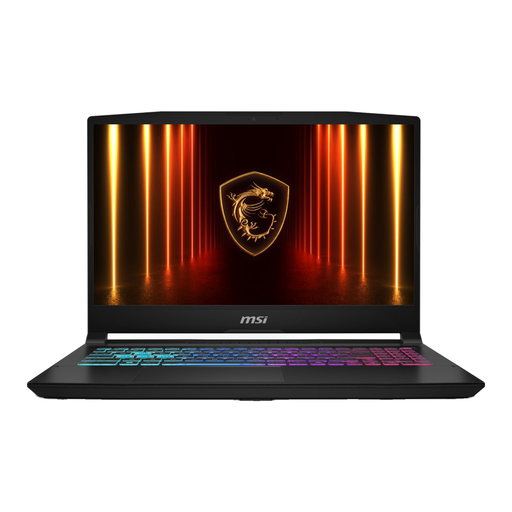 Image unavailable
MSI Cyborg 15 B13WFKG-804NL, 16GB, 512GB SSD
Compare this configuration with your RPGs’ requirements and available installation space; also check which accessories you’ll need for your setup.
15.6-inch Full HD screen with 144Hz, NVIDIA GeForce RTX 5060, 16GB RAM and 512GB SSD. The mains adapter must be purchased separately.
View at Joybuy
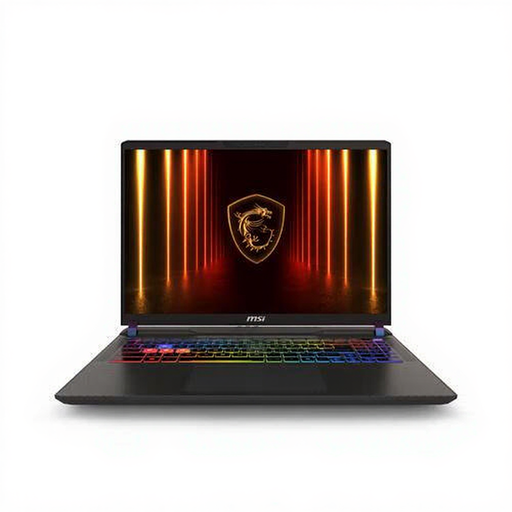 Image unavailable
MSI Vector A16 HX A8WIG-025NL
Use this configuration as a comparison point for your RPGs, and check how loud it is with the settings you plan to use.
AMD Ryzen 9 8940HX, NVIDIA GeForce RTX 5080, 16GB DDR5, 1TB SSD and 16-inch Quad HD+ screen with 240Hz. The mains adapter must be purchased separately.
View at Joybuy
Frequently asked questions
Is an advertised quiet mode enough to game next to a sleeping room-mate?
No. It doesn’t guarantee a particular noise level while you’re gaming. Where possible, compare a measurement of the exact configuration under gaming load, and consider the performance delivered by the setting used. HP’s description of a quiet OMEN is a manufacturer’s claim, not a measurement for your room.
Can I use a gaming laptop on my bed?
Make sure the air vents aren’t covered and that warm air can escape. Set the laptop down with space around it, rather than right up against a wall or cupboard, so air can circulate.
How much SSD space do I need for an RPG?
It depends on the game and what you want to install at the same time. For Baldur’s Gate 3 on Windows, Larian Studios lists an SSD and 150 GB of available space; check the requirements for your other games separately.
What returns and warranty rights apply to an online purchase in the Netherlands?
For a standard online consumer purchase, you generally have a statutory cooling-off period of up to 14 days after delivery; ACM ConsuWijzer lists some exceptions. The product must also meet what you could reasonably expect from it. If a fault is covered by the statutory warranty, the seller is responsible for putting it right.


