What should you look for when buying?
First, match the configuration to your engine and project size. Then consider how the laptop will fit into your shared workspace and what you’ll need to take with you when you move.
| What to consider |
What to look for |
Who should prioritise this? |
| Performance for your project |
Check your engine and renderer’s requirements for your project, then compare the exact CPU, GPU and RAM configuration. |
I want my editor and local tests to suit the size of my level, rather than relying on the ‘gaming’ label alone. Around 31% of consumers put project performance first. |
| Workspace and screen |
Consider screen size and reflections, available desk space, and ports for separate input devices or a monitor. |
If I share a desk, I want to be able to set up the screen and my input devices practically. Around 31% of consumers prioritise their shared workspace. |
| Portability and battery |
Compare the weight of the laptop and adapter, and look for battery tests under conditions that match level editing or testing. |
I regularly move between workspaces and want to know what I’ll have to carry and how long I can work without a power socket. Around 23% of consumers put portability first. |
| Everything you’ll need |
Check the RAM and SSD storage in the exact configuration, the accessories included and whether you’ll need separate input devices. |
I want to know in advance which configuration and workspace essentials will suit my project. Around 15% of consumers prioritise the purchase and aftercare. |
Joybuy products
These configurations are mainly suited to more demanding local testing or working across different workspaces. If you’re working on a simple 2D project, it’s worth deciding first whether you need this level of specification.
 Image unavailable
Lenovo Legion 5 15AHP11
An option to compare if you want to test levels locally and connect peripherals.
15.3-inch WQXGA OLED screen, 165 Hz; Ryzen 7 250; RTX 5060; 16 GB DDR5; 512 GB SSD; Windows 11 Home.
The description lists two USB4 ports.
Joybuy
 Image unavailable
ASUS TUF Gaming F16 FX610JM-TU120W
An option to compare if you want to design and test levels locally on the same laptop.
Core 5 210H; RTX 5060; 16 GB DDR5; 16-inch WUXGA screen; 1 TB SSD.
The description mentions an anti-glare screen and USB-C.
Joybuy
 Image unavailable
MSI Stealth 16 AI+ B3WF-011NL Copilot+ PC
An option to compare if you take your laptop between workspaces and want to test locally.
16-inch QHD+ OLED screen, 240 Hz; Core Ultra 9 386H; RTX 5060; 32 GB DDR5; 1 TB SSD; Windows 11 Home.
The description lists a weight of 1.99 kg and Thunderbolt 4.
Joybuy
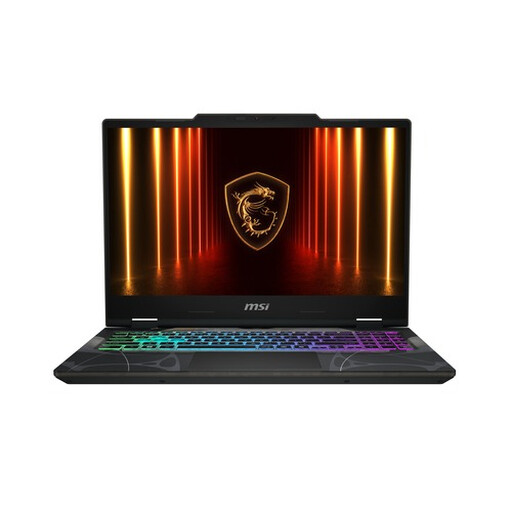 Image unavailable
MSI Cyborg 15 B13WEKG-1223NL
An option to compare if you move between workspaces and connect peripherals or an external screen.
15.6-inch Full HD screen, 144 Hz; Core i5-13420H; RTX 5050 8 GB; 16 GB DDR5; 512 GB SSD; Windows 11 Home.
The description lists USB-C with DisplayPort and HDMI.
Joybuy
 Image unavailable
Thunderobot Radiant S16 5060
An option to compare if you want to test locally and need ports for an external screen.
16-inch QHD+ 2K screen, 240 Hz; Core i7-13650HX; RTX 5060; 16 GB DDR5; 1 TB SSD.
The description lists USB-C, HDMI and Mini DisplayPort.
Joybuy
Frequently asked questions
Do I always need a dedicated graphics card to create a puzzle level?
No, not just because you’re creating a puzzle. Godot lists integrated graphics as a basic option for simple editor projects. Do check the requirements for your chosen engine, renderer and project. Unity notes that larger and more complex projects may need extra RAM.
How can I set up a laptop practically at a shared desk?
Check that there’s room for the laptop, adapter, mouse and, if needed, an external screen, and make sure the configuration has the ports you need. Arboportaal advises limiting laptop use without accessories as much as possible. It also outlines a conditional requirement for a separate screen or keyboard for employees who work at a screen for more than two hours a day.
What return and warranty rights apply to an online purchase in the Netherlands?
For online consumer purchases, you generally have 14 days from delivery to change your mind, subject to statutory exceptions, according to ACM ConsuWijzer. You also have statutory rights if a product doesn’t meet the standards you can reasonably expect; the Dutch government states that there is no fixed statutory warranty period. Check the terms of your specific purchase and contact the retailer if something is faulty.
Does the rule for more than two hours of screen work mean laptops can’t be bought?
No. The requirements outlined by Arboportaal concern workplace setup for employees who work at a screen for more than two hours a day. They don’t ban gaming laptops and don’t automatically apply to every private user.


