
Player with their own headphones
You want to know whether your wired or wireless headphones will work with the exact laptop model, including if you want to use the microphone while playing.


First, choose a laptop that meets the system requirements of the puzzle game you want to play. Then check that your headphones connect and work the way you want them to. An older game won’t necessarily need the same set-up as a newer, more graphically demanding adventure. Also factor in screen size, portability and any accessories that aren’t included when comparing your options.
You want to know whether your wired or wireless headphones will work with the exact laptop model, including if you want to use the microphone while playing.
You want to compare the system requirements of a more graphically demanding puzzle adventure with the CPU, RAM and GPU of a specific laptop configuration.
You want to match the configuration to the games you play, while considering screen size, portability and the accessories included.
Start with your game’s system requirements and your headphones’ connection. Then compare the total cost, screen and how easy the laptop is to take with you.
| What to consider | What should you check? | Who is this important for? |
|---|---|---|
| Connecting your headphones | For a wired headset, check the exact audio connection. For Bluetooth, check that both the laptop and headphones support it, especially if you plan to use the microphone. | If I want to use my existing wired or wireless headphones, I want to know that both the audio and microphone will work. Around 36% of consumers prioritise headphone compatibility above all else. |
| Game requirements | Compare your chosen game’s system requirements with the operating system, CPU, RAM, GPU and available storage of the exact laptop configuration. | If I mainly want to play a particular puzzle adventure, I’ll match the configuration to that game’s requirements. Around 29% of consumers prioritise gaming performance. |
| Total cost | Check what’s included with the specific listing, including the power adapter, and whether the SSD capacity is suitable for your games. | If I don’t want to buy extra components I don’t need, I’ll check what’s included and how much storage there is. Around 21% of consumers prioritise the total cost. |
| Screen and portability | Compare the screen size, resolution and stated weight with where you usually play and how often you’ll be taking the laptop with you. | If I play in different places, I’ll consider both the screen size and how easy the laptop is to carry. Around 14% of consumers prioritise portability and screen use. |
Different versions within a product range can have different GPU and storage configurations. For example, the stated specifications differ between the Lenovo LOQ 15AHP11 versions we looked at.
Compare the full manufacturer code, RAM, GPU, storage, screen and keyboard layout; the product range name alone isn’t enough.
For stereo sound while the Bluetooth microphone is active, Microsoft lists additional requirements for Windows, the laptop, drivers and headphones.
Check that both devices support LE Audio if you want to use this combination.
According to ASUS, the ASUS TUF Gaming A16 FA608UH version we looked at doesn’t include a power adapter; the manufacturer specifies that a 380 W adapter is required.
Check what’s included with the exact listing and factor in any accessories you still need.
For the Nitro V 15 ANV15-51, code NH.QNBEH.00C, Acer lists a 15.6-inch Full HD screen, 16 GB RAM, a 512 GB SSD and an RTX 4050.
According to Lenovo, the LOQ 15AHP11 we looked at, code 83TN0058MH, has a 15.3-inch screen, 16 GB RAM, a 1 TB SSD and an RTX 5060 laptop GPU.
According to ASUS, the TUF Gaming A16 FA608UH version we looked at has a 16-inch WUXGA screen, 16 GB RAM, a 512 GB SSD, an RTX 5050 laptop GPU and a combined 3.5 mm jack.
The HP Victus 15-fa2601ndx we looked at is a 15.6-inch Full HD configuration with 12 GB RAM, a 512 GB SSD and an RTX 4050.
These models are options to compare for puzzle adventures played with headphones. Compare their stated specifications with your game’s requirements, and check which connection your headset needs.
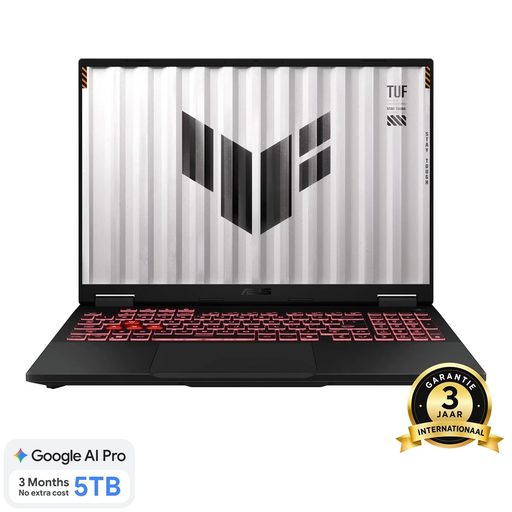 No image available
Compare the stated configuration with the system requirements of the games you want to play.
Ryzen 9 8940HX, RTX 5060, 16 GB RAM, 1 TB SSD, 16-inch WUXGA screen with 165 Hz.
 No image available
An option to compare if you want to use a wired headset. Check the connection and game requirements for this configuration.
Intel Core 7 240H, RTX 5070 8 GB, 16 GB DDR5, 1 TB SSD, 16-inch WUXGA screen with 144 Hz and a combined 3.5 mm headphone and microphone jack.
 No image available
The 16-inch version gives you a screen size to consider when comparing laptops for playing on the built-in display.
The product title lists an i7-14700HX, RTX 5070, 32 GB and a 1 TB SSD. Check the exact audio connection if you want to use a wired headset.
 No image available
Compare the stated configuration with the requirements of the puzzle game you want to play.
15.6-inch Full HD screen with 144 Hz, AMD Ryzen 9 270, RTX 5070 8 GB, 16 GB DDR5 and a 512 GB SSD.
 No image available
Compare the stated configuration with your chosen game’s system requirements and the screen size that suits the way you play.
16-inch QHD+ screen with 240 Hz, RTX 5060, 16 GB DDR5 and a 1 TB SSD.
No. Check the system requirements for the specific game you want to play. The requirements published by the Epic Games Store for the original The Talos Principle apply to that game; they aren’t general minimum requirements for puzzle adventures.
Bluetooth support alone doesn’t guarantee this. For stereo sound while the microphone is active, Microsoft lists requirements including a suitable version of Windows 11, integrated Bluetooth LE support, compatible drivers and suitable headphones. Check both devices and your settings.
First, check that the exact laptop has the connection or wireless feature your headphones need. For Bluetooth, select the correct audio output in Windows. If you have problems, Microsoft also recommends checking your settings, drivers and compatibility.
If a product is faulty, the seller in the Netherlands must provide a solution; the legal guarantee doesn’t have a fixed duration. For eligible online purchases from a business, the Netherlands government generally provides a 14-day cooling-off period. Check the terms that apply to your purchase.
Check what’s included with the exact version in the listing. For the TUF Gaming A16 FA608UH we looked at, ASUS states that the adapter isn’t included and specifies that a 380 W adapter is required. This doesn’t mean every listing for this product range includes the same items.