
Designer with a permanent dual-screen setup
You want to see your design tool alongside an example or reference, and usually work somewhere with space for an external monitor. Microsoft explains how to arrange connected displays in Windows.


A gaming laptop with two built-in screens makes most sense if you need two physical workspaces at once while you’re on the move. If you usually work in one place, a laptop screen paired with an external monitor could be a good fit. And if by two screens you mean two pages in your interface, you don’t need a second physical display. According to Figma’s documentation, Figma is largely browser-based. Check the screen specifications, video outputs and performance for the games you play on the exact configuration.
You want to see your design tool alongside an example or reference, and usually work somewhere with space for an external monitor. Microsoft explains how to arrange connected displays in Windows.
You want to use two physical workspaces at the same time while you’re on the move, and are considering a laptop with a second built-in screen. ASUS describes this feature on the ROG Zephyrus Duo GX651.
You want to combine design work with gaming. Figma is largely browser-based, so choose a more powerful graphics configuration to suit the games you play, not just your design work.
First, decide whether you need two physical screens at the same time. You don’t need a second built-in display to design two interface views in Figma.
| What to consider | What should you look for? | Who is this important for? |
|---|---|---|
| A dual-screen workspace | Check the laptop’s video output and the cable or dock you’ll need for your monitor. | I usually work in one place and want to see my design tool alongside an example. Around 33% of consumers put a permanent dual-screen setup first. |
| Two displays on the move | For a laptop with two built-in screens, check the panel layout, listed weight and keyboard arrangement. | I want to use two physical workspaces at once away from a permanent desk, too. Around 25% of consumers give top priority to having two built-in screens on the move. |
| Display quality for design work | Compare the screen resolution, panel type and stated colour gamut for the exact configuration; colour gamut isn’t the same as measured colour accuracy. | I assess designs on the laptop screen, so I want to take its specifications into account. For around 25% of consumers, display quality for design work comes first. |
| Gaming performance | Compare the GPU and screen refresh rate of the exact configuration with the games you play and the settings you want. | As well as design work, I mainly want to play games, so I choose my configuration accordingly. Around 17% of consumers put gaming performance first when buying. |
Designing with two pages or views doesn’t automatically mean you need two physical screens.
Before choosing between a single screen, an external monitor or a second built-in display, decide where and when you want to use two physical workspaces at the same time.
A dual-screen setup depends on the ports and compatibility of the exact laptop, monitor and any dock you plan to use.
Before you buy, check which video output is available and which connection your monitor supports.
A Joybuy product page for the Lenovo Legion 5 15IAX10 states that the charger isn’t included as standard with that specific configuration. This doesn’t automatically apply to other models.
Check the listing for the exact configuration to see which accessories are in the box and which adapter you’ll need.
The ROG Zephyrus Duo GX651 is an example of a gaming laptop with two built-in screens.
The Legion Pro 5 Gen 10 is a conventional gaming laptop to compare with an external monitor for a permanent workspace.
The OMEN 16 is a conventional gaming laptop range without a second built-in screen.
The Predator Helios Neo 16 is a conventional gaming laptop to consider when comparing screen specifications for design work.
This selection includes gaming laptops with one built-in screen for design work and gaming. For models with listed video outputs, check that the exact configuration will connect to your external monitor.
 Image unavailable
An option for combining design work and gaming on one screen; the listed video outputs are useful if you want to connect an external monitor.
16-inch OLED screen, 2560 × 1600, 100% DCI-P3, 240 Hz, RTX 5060, 16 GB RAM, 1 TB SSD and Intel Core Ultra 9 285H. HDMI and Thunderbolt 4 with DisplayPort are listed. According to the product description, the charger must be purchased separately.
 Image unavailable
The 18-inch screen may suit you if you want to work on designs and play games on one laptop screen; check how the exact configuration connects to a monitor if you want to use an external display.
18-inch WQXGA screen, 100% DCI-P3, 240 Hz, RTX 5060, 16 GB RAM, 1 TB SSD and Ryzen 9 8940HX. HDMI 2.1 and USB-C with DisplayPort are listed. According to the product description, the charger is sold separately.
 Image unavailable
A configuration with gaming specs and screen features for combining design work with gaming.
16-inch IPS screen, 2560 × 1600, 100% DCI-P3 and 240 Hz; RTX 5070, 32 GB RAM and 1 TB SSD.
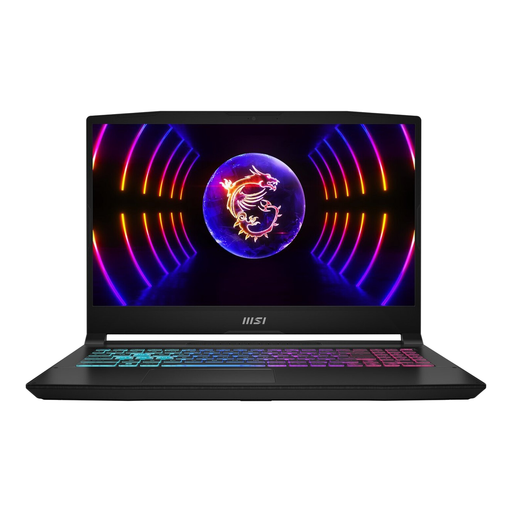 Image unavailable
A gaming laptop with a 15.6-inch screen; check the video outputs on this configuration if you want to use it with an external monitor.
15.6-inch IPS screen with Full HD resolution and 144 Hz; Core i7 and RTX 5060. According to the product description, the charger must be purchased separately.
 Image unavailable
A gaming configuration for combining design work on the laptop screen with gaming; the listed connections may be useful for an external display.
16-inch QHD screen with 240 Hz; AMD Ryzen 7 7745HX, RTX 5060, 16 GB DDR5 RAM and 1 TB SSD. HDMI and Mini DisplayPort are listed.
No, not if by two screens you mean two pages or views of the interface. If you want to see your design tool and an example at the same time on separate displays, decide whether you need this only at a permanent workspace or while you’re on the move as well. According to Figma, a second built-in panel isn’t a system requirement.
Connect the screen using a suitable connection, then arrange the detected screens via Settings > System > Display. Microsoft also explains how to use the Detect option if a connected screen doesn’t appear. Beforehand, check that your laptop, any dock and your monitor are compatible.
Not necessarily. Figma also describes an active memory limit per browser tab, which can vary by device and is relevant to the desktop app too. For large files, check Figma’s memory indicator and guidance; more system RAM alone doesn’t guarantee a solution.
According to ACM ConsuWijzer, for a standard online purchase you generally have a 14-day cooling-off period from delivery, with some exceptions. You’re also entitled to a legal guarantee: if a product used normally doesn’t meet the expectations you were entitled to have, the seller is responsible for providing an appropriate solution. The cooling-off period and legal guarantee are separate rights; a manufacturer’s guarantee doesn’t replace the legal guarantee.
Dutch government information explains that electrical and electronic devices placed on the market must comply with the applicable European rules. Manufacturers must meet requirements including CE marking and an EU declaration of conformity. Check the information for the exact configuration; general regulations alone don’t prove that an individual product meets every requirement.