Start by choosing a laptop that suits your garden design software and the size of your 3D scenes. Simple designs have different requirements from complex scenes and renders. Then compare the exact screen specification, keyboard backlighting, RAM and portability. Blender recommends 32 GB of RAM for that programme, while SketchUp recommends 8 GB of VRAM for PBR models with textures. These are guidelines for specific applications, not general minimum requirements for every virtual garden design project.
Who is this advice for?
Designer of complex 3D gardens
If you work with lots of objects, materials or renders, check that the RAM, video memory and rendering capabilities suit your software. Blender Foundation recommends 32 GB of RAM for Blender, while SketchUp recommends 8 GB of VRAM for models with PBR textures.
Evening designer
If you design for long periods in a dark room, consider screen reflections, brightness controls and keyboard backlighting. ASUS and Lenovo offer different screen specifications, and features such as the screen finish vary between exact models.
Designer who takes their laptop with them
If you move between workspaces, weigh the convenience of a built-in work area against the laptop’s size and weight. Consumentenbond says larger laptops are comfortable for extended screen-based work, but their size can make them less convenient to carry.
What should you look for when choosing?
Start with the requirements of the software you actually use. Then compare the screen specification and the practical differences that determine how well the laptop suits your desk and working environment.
| What to consider |
What should you check? |
Who is this important for? |
| 3D performance and rendering |
Check your programme’s requirements and compare the RAM, GPU and video memory for the exact specification. Blender recommends 32 GB of RAM; SketchUp specifies 8 GB of VRAM for PBR models. |
If you work with large scenes, materials or renders, you’ll want enough capacity for your software. Around 33% of consumers put 3D performance at the top of their list when buying. |
| Screen and controls in the dark |
Compare a matte IPS screen with a glossy OLED one, check the brightness settings and see whether the keyboard on the model you’re considering is backlit. Lenovo specifies a glossy OLED screen and backlit keyboard for model 83F0006ELK; ASUS lists an anti-glare IPS screen for FA808UM-S8112W. |
If you often design in a dark room, you’ll want to weigh screen reflections and keyboard visibility against your screen preference. Around 25% of consumers prioritise comfort when working in the dark. |
| What you need |
Compare the full CPU, GPU, RAM and SSD configuration with your software requirements. Also check the product page for the exact model to see whether a suitable power adapter is included. |
If you don’t want to pay for components your programme doesn’t need, start with the software requirements and check what’s included. Around 25% of consumers put the cost of buying the equipment they need first. |
| Portability and workspace |
Compare the screen size and weight with your carrying needs. Check the ports if you plan to use an external screen or input device. |
If you take your laptop between different workspaces, a more compact size may matter more than the extra room provided by a larger built-in screen. Around 17% of consumers prioritise portability. |
Common purchasing mistakes
-
Comparing only the GPU name
A graphics card’s name alone doesn’t tell you how a particular laptop will perform. Tweakers explains that the permitted GPU power can affect measured gaming performance; this is not a test of your garden design software.
Compare the full laptop configuration and, where possible, look for tests using the programme you work with.
-
Choosing a large screen without considering your workspace
A larger built-in screen gives you more room, but a larger laptop can be awkward if you move it often.
Choose a size that suits your desk, any external monitor you use and how often you need to carry it.
-
Assuming the power adapter is always included
A Joybuy product page for a specific Lenovo Legion 5 says that the charger is not included as standard. This applies to that particular model and not automatically to other laptops.
Check the box contents and the required adapter type on the page for the exact model.
Brands and product ranges to compare
Lenovo
The Legion 5 15IAX10 is one option to compare for a compact design setup with OLED; check the exact specification.
- Lenovo PSREF lists a 15.1-inch glossy OLED screen, RTX 5060 with 8 GB of VRAM, 32 GB of RAM and a backlit keyboard for model 83F0006ELK.
- These features apply to the model listed and not automatically to every Legion 5. The glossy screen finish may feel different from a matte one.
ASUS
The TUF Gaming A18 is worth comparing if a generous built-in screen area is important to you.
- ASUS lists an 18-inch anti-glare IPS screen and an RTX 5060 with 8 GB of VRAM for FA808UM-S8112W.
- ASUS also offers A18 models with different configurations, so check the full model number and specification.
Acer
The Nitro V 16 is a 16-inch product range to compare if you’re looking for a mid-sized option.
- Acer Netherlands describes the range as having a 16:10 screen and configurations up to RTX 5070.
- ‘Up to RTX 5070’ describes the top end of the range, not the configuration of every individual laptop. Check the exact specification.
HP
The OMEN 16 is another 16-inch product range to compare for gaming and creative work.
- HP lists several processor and memory options for the OMEN 16-ap0000 series.
- HP says the actual configuration varies by country and model. The series name alone therefore doesn’t confirm which components a specific laptop has.
Joybuy picks for garden design
These Joybuy picks are gaming laptops suited to garden design and 3D work, with screen space, RAM and keyboard backlighting in mind. Compare the configuration with the requirements of your own programme; specifications vary by model.
 No image available
Thunderobot 16 gaming laptop
The listed 32 GB of RAM and backlit RGB keyboard may be useful for projects that need plenty of memory and for working in a dark room.
Specifications: Intel Core i7-14700HX, RTX 5070, 32 GB RAM and 1 TB storage. The 16-inch QHD+ screen has a resolution of 2560 × 1600.
View at Joybuy
 No image available
MSI Titan 18 HX AI A2XWJG-492NL
The 18-inch screen gives you a large built-in workspace; check that its size suits your desk and any portability needs.
Specifications: Intel Core Ultra 9 285HX, RTX 5090 with 24 GB of video memory, 64 GB RAM and 6 TB SSD. The screen is an 18-inch UHD+ Mini LED display with a 120 Hz refresh rate.
View at Joybuy
 No image available
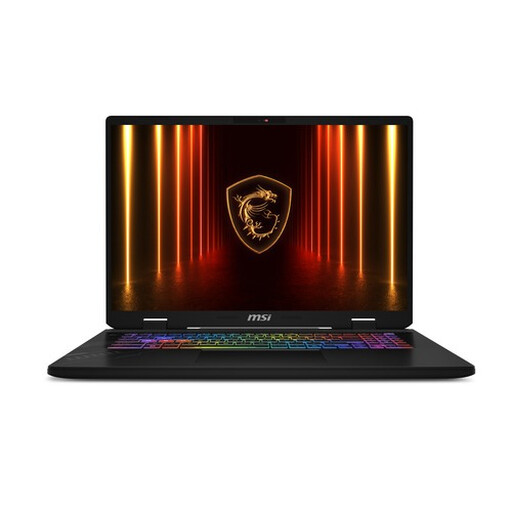
MSI Crosshair 17 HX AI D2XWFKG-071NL
The combination of 32 GB of RAM, 8 GB of video memory and a backlit keyboard suits a setup where both 3D performance and ease of use in the dark matter.
Specifications: Intel Core Ultra 7 255HX, RTX 5060 with 8 GB of video memory, 32 GB RAM and 1 TB SSD. The 17-inch QHD+ screen has a 240 Hz refresh rate.
View at Joybuy
 No image available
ASUS TUF Gaming A18 FA808UP-S8011W
The product description lists a matte, anti-glare screen and a backlit keyboard. These features may be useful if you design in a dark room; check whether 16 GB of RAM is enough for your programme and projects.
Specifications: AMD Ryzen 7 260, RTX 5070 with 8 GB of video memory, 16 GB RAM and 1 TB SSD. The 18-inch screen is WUXGA with a 144 Hz refresh rate.
View at Joybuy
 No image available
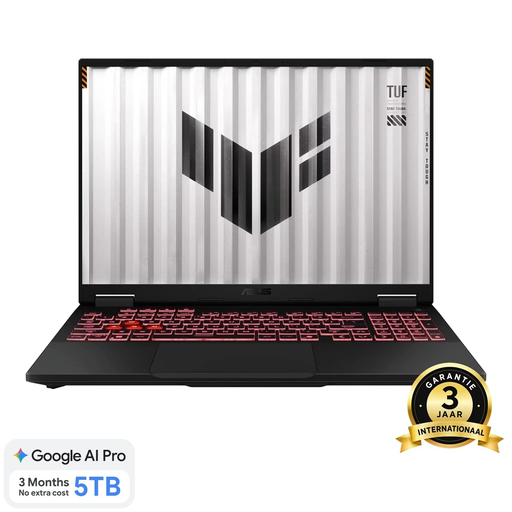
ASUS TUF Gaming A18 FA808UM-S8132W
The description lists a matte, anti-glare screen and a backlit keyboard. This model has 16 GB of RAM; compare that with the requirements of your specific design programme.
Specifications: AMD Ryzen 7 260, RTX 5060 with 8 GB of video memory, 16 GB RAM and 512 GB SSD. The 18-inch WUXGA screen has a 144 Hz refresh rate.
View at Joybuy
Frequently asked questions
Do you always need 32 GB of RAM for a virtual garden?
No. 32 GB is the recommended amount for Blender, not a general requirement for every garden design programme. Check your software’s system requirements and the size of your projects before choosing extra RAM.
How can you make an OLED laptop suitable for long design sessions?
On an OLED model, adjust the brightness to suit the room and avoid leaving high-contrast elements on screen for long periods. ASUS describes screen protection and maintenance for supported OLED models; check which features are available on your model.
Who can help if your laptop is faulty, and how long do you have to return one bought online?
In the Netherlands, the seller must offer a solution if a product is faulty; there is no fixed statutory time limit for the legal guarantee. For a standard online consumer purchase, you generally have a legal 14-day cancellation period from delivery, with some exceptions. The cancellation period for a change of mind is separate from your rights if a product is faulty.
Do you have to hand in your old laptop when buying a new one?
No, but as a private buyer you can hand in an old, similar device to the seller free of charge under the Dutch government’s old-for-new scheme. This scheme also applies to online purchases; arrangements are in place for handling the return if the device cannot be collected at the time of purchase.


