
Mostly designing 2D menus
You’re mainly creating a simple 2D menu and want to match the specifications to the needs of your software and workflow. Godot Engine sets out the requirements for simple projects in version 4.4.


Start by considering your software and the scope of your project. For a simple 2D menu, your editor’s requirements are a more useful starting point than maximum gaming performance. If you’re also building and testing in Unreal Engine, compare the RAM and graphics memory with Epic’s recommendations; they don’t guarantee performance for every project. For a dedicated home workspace, the screen space and ports on the exact laptop configuration matter too.
You’re mainly creating a simple 2D menu and want to match the specifications to the needs of your software and workflow. Godot Engine sets out the requirements for simple projects in version 4.4.
You’re building and testing the menu as part of an Unreal project. Epic Games’ recommendations for Unreal Engine 5.8 give you a useful benchmark for RAM and graphics memory.
You use the built-in screen to view your editor, previews and controls side by side. Lenovo Netherlands and ASUS Netherlands list different screen sizes for the configurations mentioned here.
Start with your software and project scope, then compare the memory and screen options that suit your home workspace.
Suitable for: a simple 2D project in Godot 4.4.
Bear in mind: these project requirements don’t automatically apply to larger projects, other software or demanding games.
Suitable for: work that involves Unreal Engine as part of your development process.
Bear in mind: for Unreal Engine 5.8 on Windows, Epic Games recommends 32 GB of RAM and at least 8 GB of graphics memory. These are benchmarks, not a guarantee of performance in every project.
| What to consider | What should you check? | Who is this important for? |
|---|---|---|
| Choosing the right configuration | Compare the requirements of your editor and design software with the laptop’s full specifications. Godot Engine sets out the requirements for a simple project specifically for version 4.4. | If I’m mainly creating a simple 2D menu, I want to match the laptop to that software rather than a different workflow. Around 37% of consumers prioritise a suitable configuration without unnecessarily demanding requirements. |
| Memory for an engine | For Unreal Engine 5.8 on Windows, Epic Games recommends 32 GB of RAM and at least 8 GB of graphics memory. Check both figures for the exact model code. | If I’m building and testing in Unreal, I want to compare RAM and graphics memory separately. Around 27% of consumers prioritise demanding engine workloads. |
| Built-in screen space | Compare both the screen size and pixel resolution of the exact configuration. A larger screen doesn’t automatically mean a higher resolution. | If I’m working at home using only the laptop screen, I want to view my editor and previews clearly side by side. Around 18% of consumers prioritise the built-in workspace. |
| Ports and accessories | Check that the ports are suitable for your monitor and peripherals, and find out which power supply and accessories are included. | If I’m connecting the laptop to my home workspace, I want to know whether my monitor and peripherals are compatible with the ports and included accessories. Around 18% of consumers prioritise their workspace setup. |
Godot Engine sets out the requirements for a simple project, while Epic Games provides recommendations for Unreal Engine 5.8. This information relates to different uses.
Choose your software and project scope first, then compare the relevant requirements. Also check the requirements of any programmes you’ll use at the same time.
Specifications can vary between configurations with similar model names. For example, Lenovo Netherlands lists 32 GB of RAM and an RTX 5070 laptop GPU for the LOQ 15AHP11 configuration 83TN00C3MH. These specifications don’t automatically apply to other configurations.
Compare the full manufacturer code with the specifications on offer, particularly for RAM, graphics card and storage.
Screen size and resolution are different specifications. ASUS Netherlands lists an 18-inch screen with a resolution of 1920 × 1200 pixels for the TUF Gaming A18 FA808UM-S8112W.
Check both figures for the exact configuration and decide whether the screen space suits the way you work.
The LOQ 15AHP11 83TN00C3MH configuration is a useful benchmark if you’re weighing up engine capability and a built-in screen.
The HyperX OMEN 16 E12F8EA#ABH configuration provides a benchmark for a 16-inch screen with a stated resolution of 2560 × 1600 pixels.
The TUF Gaming A18 FA808UM-S8112W is worth considering if a large built-in screen is important for your home workspace.
The Cyborg 15 B13W family is another useful benchmark for a gaming laptop with a 15.6-inch screen.
These models offer useful points of comparison for gaming laptops suited to menu design, engine work and a home workspace. Check that the stated specifications for each model suit your software and project.
 No image available
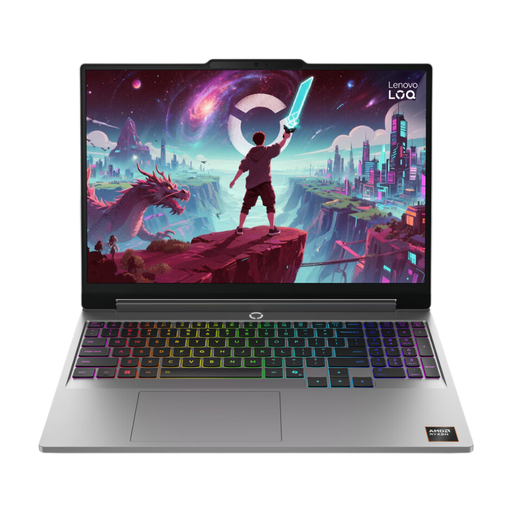
Compare this configuration with your editor’s requirements and any engine projects you plan to work on.
The product name lists a Ryzen 7 250, RTX 5070, 16 GB of RAM, a 512 GB SSD and a QWERTY keyboard. The product description also mentions 8 GB of graphics memory and a 15.3-inch WUXGA screen. Epic Games recommends 32 GB of RAM for Unreal Engine 5.8 on Windows, so the stated 16 GB is below that recommendation.
 No image available
An option to compare if you use the built-in screen at your home workspace.
The product name lists a Ryzen 7 260, RTX 5070, 16 GB of RAM, a 1 TB SSD and an 18-inch screen. According to the product description, the charger must be purchased separately.
 No image available
Compare this configuration with the screen and memory requirements of your menu work.
The product name lists a Ryzen 9 8940HX, RTX 5060, 16 GB of RAM and a 1 TB SSD. The product description mentions 8 GB of graphics memory and an 18-inch WQXGA screen with a resolution of 2560 × 1600 pixels. According to the product description, the charger is sold separately.
 No image available
Compare the stated memory and screen specifications with the software you plan to use.
The product name lists 32 GB of RAM, an RTX 5070, a 1 TB SSD and a 16-inch IPS screen with a resolution of 2560 × 1600 pixels. The title also mentions a 240 Hz refresh rate and a QWERTY keyboard.
 No image available
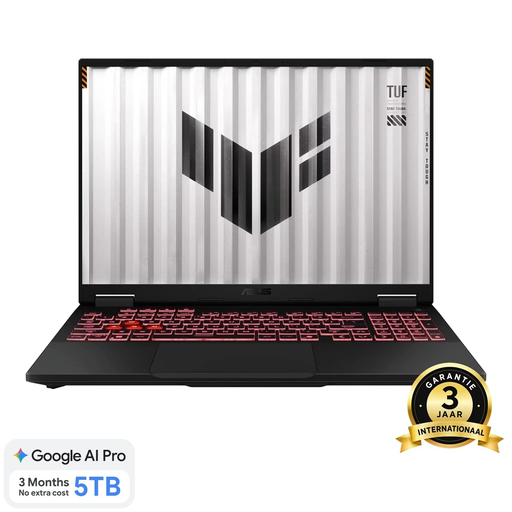
A large built-in screen could be useful if you work at home without an external monitor.
The product name lists a Ryzen 7 260, RTX 5060, 16 GB of RAM and an 18-inch WUXGA screen with a resolution of 1920 × 1200 pixels. Check the SSD capacity of this exact configuration before comparing it with other models.
No, not solely for that use. For a simple 2D or 3D project in version 4.4, Godot Engine also lists integrated graphics that support the required graphics API. Check the requirements for other software and the project you want to test separately.
Check the video output on the exact laptop configuration and the input on your monitor. Also check whether any required cables or adapters are included; the series name alone doesn’t confirm which connections are available.
No. According to ACM ConsuWijzer, your statutory rights apply alongside any retailer’s or manufacturer’s warranty. If a product breaks sooner than you could reasonably expect under normal use, the retailer must offer an appropriate solution free of charge.
According to ACM ConsuWijzer, consumers who buy online generally have a statutory 14-day cooling-off period after delivery. Check the applicable terms and exceptions; this right is separate from your warranty if the product is faulty.
No. Don’t assume the consumer cooling-off period applies automatically to a business purchase. ACM ConsuWijzer’s guidance on the cooling-off period is for consumers; check the applicable contract terms for a business order.