For 2D painting in particular, start with the screen, enough memory for your software and a drawing setup that works with the available connections. A more powerful GPU isn’t automatically the top priority. Check the power requirements of both your laptop and drawing device: ASUS says that a smaller USB-C adapter is suitable only for supported models and less demanding use.
Who is this choice relevant to?
Painter with limited access to sockets
You want to work on a 2D game character in different places, so you need to consider the power requirements of your laptop and drawing equipment together. For example, Wacom says the Cintiq 22 needs a power adapter and a mains socket.
Painter who cares about colour
You assess colours and details on your laptop screen. Compare the screen specifications of the exact model, and check what your painting software requires. Adobe recommends 16 GB RAM or more for Photoshop 27.x or later.
Creator who also works in 3D
You paint characters, but also render or view 3D work. In that case, the requirements of your chosen rendering software may carry more weight. For example, Blender Foundation sets out the GPU requirements for Cycles rendering.
What should you look for when choosing?
First, work out how your drawing equipment connects and gets its power. Then compare the screen and configuration with your software requirements. Give extra GPU capacity more weight if you also work in 3D or play demanding games.
| Concern |
What to look for |
Who is this most relevant to? |
| Limited access to sockets |
Check the charging support and included adapter for the exact laptop configuration. Also check whether your drawing display needs its own power supply. |
If sockets are in short supply, I want to know whether my laptop and drawing device will both work in my space. Around 36% of consumers say that limiting the number of sockets they need is their main buying concern. |
| Screen and memory |
Compare the screen specifications of the exact configuration and check its memory against your software requirements. Adobe recommends 16 GB RAM or more for Photoshop 27.x or later. |
When I assess colours and details on my laptop screen, I want a screen that suits my work and enough memory for my software. Around 29% of consumers put the screen and painting work first. |
| Extra 3D work or gaming |
First check the requirements of the programmes you use, then compare the GPU and memory in the exact configuration. |
If I do 3D rendering or play demanding games as well as painting, I want the graphics hardware to suit that extra use. Around 21% of consumers cite additional 3D work or gaming as their main concern. |
| Connections for drawing equipment |
Check the laptop’s ports and video features, the cables you need and the power requirements of your chosen drawing device. Wacom specifies an adapter for the Cintiq 22; XPPen says the Artist 16 3rd can receive power and data over USB-C when connected to a compatible host. |
If I want to work directly on a drawing display, the full connection setup needs to be compatible with my laptop. Around 14% of consumers prioritise compatibility with drawing equipment. |
Common buying mistakes
-
Assuming every model in a range has the same configuration
A model name can refer to versions with different specifications. The Notebookcheck.nl listing for the ASUS ROG Zephyrus G14 GA403WW specifies 64 GB of memory, while the Joybuy listing for the GA403WW-QS075W specifies 32 GB.
Compare the full model number and configuration before applying test information to a particular version.
-
Assuming every USB-C charger supplies enough power
Whether USB-C charging is supported, and how much power it can deliver, depends on the exact laptop and workload. ASUS describes a smaller adapter for supported models when they aren’t under heavy CPU or GPU load.
Check the charging support and power supply of the configuration you’re considering for the way you plan to use it.
-
Planning for your laptop’s power needs alone
A drawing display may need its own power supply. Wacom specifies a mains-powered adapter for the Cintiq 22; other drawing devices may connect differently.
Plan in advance how your laptop, display and power supply will all connect.
-
Assuming the adapter is always included
The product information for the Lenovo Legion 5 15IAX10 on Joybuy Netherlands says that the charger must be bought separately. This applies to that configuration and not necessarily to other models.
Check which accessories are included with the exact laptop and which adapter you’ll need.
You may need to buy a separate adapter for this Lenovo configuration. Check before you finalise your setup.
Brands to consider as a reference
ASUS
The TUF Gaming A14 (2025) is a compact gaming laptop range worth comparing if portability and USB-C power delivery are important to you.
- For the 2025 A14, ASUS specifies a weight of 1,46 kg and USB-C power delivery.
- Specifications vary by configuration. ASUS describes a smaller adapter for supported models under lighter workloads, so check the exact configuration and workload.
HP
The OMEN Transcend 14 range is a useful reference if you’re comparing gaming laptops with screens suited to creative work.
- HP specifies a 2,8K OLED screen with 100% DCI-P3 for the range described.
- This range specification isn’t an independent colour measurement and doesn’t necessarily apply to every configuration.
Lenovo
The Legion Slim 5 Gen 9 is a 16-inch gaming laptop range worth looking at if screen space and connections are important.
- Lenovo specifies a 16:10 screen for this generation.
- Screen, charging and GPU specifications vary by configuration, so check the version you’re considering.
Acer
The Predator Helios Neo 16 range is worth comparing if you’re looking for hardware for gaming or 3D work as well as painting.
- Acer lists configurations for the range with screens up to 180 Hz and GPUs up to the RTX 5070 Laptop GPU.
- These are the range’s maximum specifications, not confirmation of the specs of every configuration, its colour accuracy or its battery life.
Gaming laptops at Joybuy
This selection focuses on gaming laptops for digital painting, with a range of screen sizes, memory capacities and graphics configurations.
 No image available
MSI Stealth 16 AI+ B3WF-011NL
An option to compare if you paint on your laptop screen and want to factor in the memory needed for your software.
16-inch QHD+ OLED screen, 16 GB DDR5, 1 TB SSD, NVIDIA GeForce RTX 5060 and Windows 11 Home.
For Photoshop 27.x or later on Windows, Adobe recommends 16 GB RAM or more; this configuration has 16 GB.
View at Joybuy
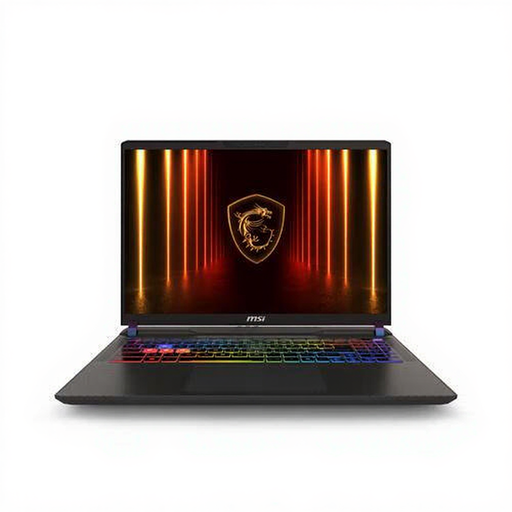 No image available
MSI Vector A16 HX A8WIG-025NL
Compare this configuration if you’re considering a 16-inch screen and graphics hardware for painting or additional 3D work.
16-inch Quad HD+, 16 GB DDR5, 1 TB SSD, NVIDIA GeForce RTX 5080 and QWERTY keyboard.
For Photoshop 27.x or later on Windows, Adobe recommends 16 GB RAM or more; this configuration has 16 GB.
View at Joybuy
 No image available
MSI Titan 18 HX AI A2XWJG-492NL
An 18-inch configuration to compare if a large screen and extra graphics capacity suit your work, such as additional 3D use.
18-inch UHD+ Mini LED screen, 64 GB DDR5, 6 TB SSD, NVIDIA GeForce RTX 5090 24 GB and Windows 11 Pro.
For Photoshop 27.x or later on Windows, Adobe recommends 16 GB RAM or more; this configuration has 64 GB.
View at Joybuy
Frequently asked questions
Is USB-C charging enough to keep working during demanding 3D work or gaming?
Not necessarily: check the charging support and power supply of the exact laptop. ASUS describes a smaller adapter for supported models specifically for use without intensive CPU or GPU workloads.
Does a drawing display always need a second mains socket?
No, it depends on the display and the computer port. Wacom specifies a mains-powered adapter for the Cintiq 22; XPPen says the Artist 16 3rd can receive power and data over USB-C when connected to a compatible host.
How do I work out how much memory I need for my painting software?
Check the requirements for the version you use. For Photoshop 27.x or later on Windows, Adobe lists 8 GB RAM as the minimum and recommends 16 GB or more. This guidance doesn’t necessarily apply to every painting or 3D programme.
What are my rights in the Netherlands when I buy a laptop online?
ACM ConsuWijzer says that online consumer purchases generally come with a 14-day cooling-off period after delivery, subject to applicable exceptions. If a product is faulty, the seller is responsible for providing an appropriate solution free of charge; your statutory warranty isn’t automatically limited to the manufacturer’s warranty.


