
Player with one free socket
If you want to play without powering a separate screen, start with a laptop with a built-in display. The Netherlands Fire Service advises using undamaged extension blocks and not connecting extension leads to one another.


If you have just one free socket and don’t need a separate screen, a gaming laptop is the easiest setup: the computer and screen share a single power connection. A desktop also needs power for the monitor, so only choose this option if you can plan your connections safely. For either option, compare the exact specification with your games’ requirements; a small case alone tells you nothing about power consumption.
If you want to play without powering a separate screen, start with a laptop with a built-in display. The Netherlands Fire Service advises using undamaged extension blocks and not connecting extension leads to one another.
If you play a demanding simulation, compare the processor, graphics card and memory in the exact model with the game’s requirements. Paradox Interactive, for example, recommends 16 GB of RAM for Cities: Skylines II.
If you don’t want to choose hardware your current games don’t require, start by checking their recommended system requirements. Requirements vary by game and target settings; Ubisoft Help, for example, links its recommended requirements for Anno 1800 to high settings at 1080p and 60 fps.
| What to consider | What should you check? | Who should pay particular attention? |
|---|---|---|
| Connections and a safe setup | Count the PC, screen and any other devices. Check how they are powered and the permitted load of the extension block; the Netherlands Fire Service advises against connecting extension leads to one another. | When I play with only a few sockets available, I want to know how many devices need power and how to connect them safely. That’s why around 36% of consumers prioritise the number of connections and a safe setup. |
| Performance for simulations | Compare the CPU, GPU, video memory and RAM in the exact model with your game’s recommended requirements, as published by Paradox Interactive for Cities: Skylines II or Ubisoft Help for Anno 1800. | When I play a large-scale simulation, I want to check the full specification against the game’s requirements. Around 29% of consumers prioritise performance for demanding simulations. |
| Hardware to suit less demanding games | Make a note of the games you play and check each one’s recommended system requirements before choosing extra hardware. | If my games don’t call for a high-end setup, I don’t want to pay for components I don’t need. Around 21% of consumers prioritise a suitable specification for less demanding games. |
| Screen and display settings | Check the screen resolution and connections. A desktop needs a separate screen; match your preferred game settings to the PC’s specifications. | If screen and display settings matter to me, I want to know whether a laptop’s built-in screen will do or whether a separate monitor would be a better fit. Around 14% of consumers prioritise image quality. |
A gaming laptop combines the screen and computer, but still needs its own power connection. A desktop and a separate monitor both need to be connected to a power supply. The name of a GPU alone doesn’t prove that laptop and desktop versions deliver the same performance.
A smaller case doesn’t include a built-in screen. The desktop and monitor therefore each need their own power supply.
Count your devices and power connections before choosing. Use undamaged extension blocks and don’t connect extension leads to one another, as advised by the Netherlands Fire Service.
With a desktop, you’ll also need to factor a suitable screen and a safe power setup into your choice.
Recommended system requirements vary between city-building games, so a powerful specification isn’t automatically necessary for every title.
Compare the exact CPU, GPU and amount of RAM with the recommendations for the games and settings you actually plan to use.
The product page for the specific Lenovo Legion 5 15IAX10 model states that a charger isn’t included. This doesn’t necessarily apply to other models or configurations.
Check what’s included in the box for the exact model and what power specification the laptop requires.
If a charger isn’t included, you’ll need to arrange a compatible one before you can use the laptop.
Lenovo’s models described here include both laptops with built-in screens and desktops that need a separate screen.
The OMEN 16L is a desktop range for those who want to use a separate screen in a relatively compact case.
The MPG Trident AS 14th is a compact desktop range with several configuration options.
ROG NUC is a mini desktop range for those with limited space for the PC itself.
The Predator Orion is a larger desktop range for situations where space for the PC is less of a constraint.
These Joybuy products are gaming laptops with built-in screens, for anyone who doesn’t want to connect a separate monitor. Compare the exact specification with your games’ requirements and check which accessories are included.
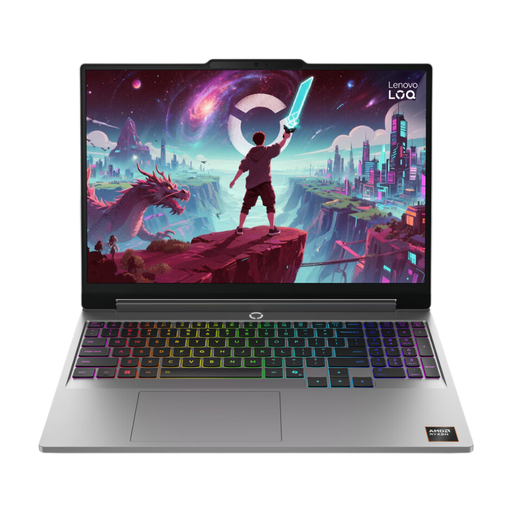 No image available
The built-in screen could be a good fit if you don’t want to connect a separate monitor.
Ryzen 7 250, RTX 5070 laptop GPU, 16 GB RAM and 512 GB SSD. The screen is WQXGA OLED.
Paradox Interactive recommends 16 GB of RAM for Cities: Skylines II; that fact alone doesn’t show that this laptop meets all the recommended system requirements.
 No image available
The built-in 18-inch screen is worth considering if you want to play without a separate monitor.
Ryzen 7 260, RTX 5070 laptop GPU, 16 GB RAM and 1 TB SSD. The screen is WUXGA.
According to the product description, the charger is sold separately; check that you have a suitable charger.
 No image available
The built-in 18-inch screen could remove the need for a separate monitor in this setup.
Ryzen 9 8940HX, RTX 5060 laptop GPU, 16 GB RAM, 1 TB SSD and a WQXGA screen.
According to the product description, the charger is sold separately; check that you have a suitable charger.
 No image available
The built-in screen is worth considering if you want to play without a separate monitor.
Ryzen 7 250, RTX 5060 laptop GPU, 16 GB DDR5 and 512 GB SSD. The 15.3-inch screen is WQXGA OLED with a 165 Hz refresh rate. This configuration has a Belgian AZERTY keyboard.
Paradox Interactive recommends 16 GB of RAM for Cities: Skylines II; check the game’s other requirements too.
 No image available
The built-in 15.6-inch screen suits a setup without a separate monitor.
Ryzen 9 270 with 8 cores, RTX 5070 laptop GPU with 8 GB of memory, 16 GB DDR5 and 512 GB SSD. The screen is Full HD with a 144 Hz refresh rate.
Compare the full specification with your games’ requirements and the settings you want to use.
No. Compare the exact specification with the game’s recommended system requirements. For Windows, Paradox Interactive lists, among other things, 16 GB of RAM, an Intel Core i5-12600K or AMD Ryzen 7 5800X, and an RTX 3080 with 10 GB or RX 6800 XT with 16 GB; this doesn’t guarantee the performance of a laptop with different components.
The Netherlands Fire Service advises against connecting extension leads to one another and recommends using undamaged extension blocks. Also check the permitted load of your power supply.
Fully unwind the cable reel when you use it. According to the Fire Service, a coiled cable can get hot. It’s best to plug high-power appliances, such as an electric heater, directly into a socket.
CE marking is required for products covered by the applicable harmonised EU rules. According to the European Union, the mark is the manufacturer’s declaration of compliance, not a certificate issued by a central EU body.