What should you look for?
Start with the system requirements for the games you actually play. Then decide whether you’re looking for a more modest laptop for lighter games or want room for more demanding titles too. Assess noise and size separately.
| What to consider |
What should you check? |
Who should give this more weight? |
| Noise for your flatmate |
Where available, look for a measurement of the exact configuration and check the measurement distance, workload and performance mode. Also check which modes you can set. |
If someone else is resting while you play, focus on limiting fan noise without assuming that a quiet mode will be inaudible. Around 36% of consumers prioritise avoiding noise disturbance. |
| Suitability for your games |
Compare the system requirements for each title with the processor, graphics chip, memory and operating system listed for the full model code. |
If you first want to know whether your own board games and any other titles will run, it’s better to check each game than to judge by genre. Around 29% of consumers prioritise suitability for the games they’ve chosen. |
| Playing together and desk space |
Measure the space for your laptop and mouse, keep the vents clear, and compare the screen size of the exact configuration. |
If you’re sharing the screen with someone else, you’ll want enough screen space without overcrowding your shared desk. Around 21% of consumers prioritise this combination of playing together and limited space. |
| Storage and portability |
Compare the weight and dimensions of the configuration, and allow for the charger. First decide whether you want to play more demanding games as well as board games. |
If you often put your laptop away or take it with you, a manageable size and suitable configuration may matter more than extra gaming power. Around 14% of consumers prioritise storage, portability and avoiding unnecessary spending. |
Joybuy products
These Joybuy products are gaming laptops with a dedicated graphics chip and 15.3- or 16-inch screens, for anyone who wants to play more demanding games as well as digital board games. Compare screen space and noise in your preferred performance mode separately.
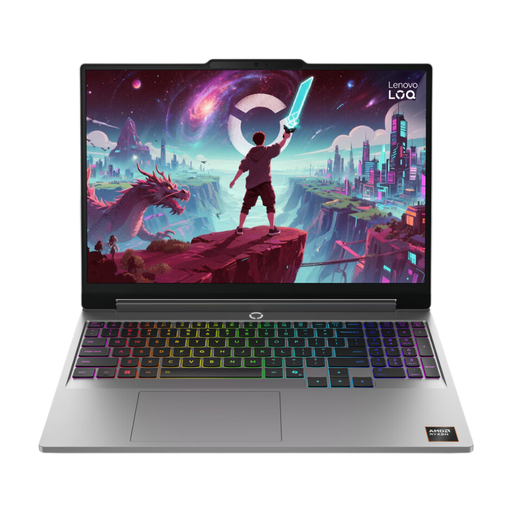 No image available
Lenovo LOQ 15AHP11 – Ryzen 7 250, RTX 5070, 16 GB, 512 GB SSD
An option to compare if you want to play graphically demanding games as well as board games, and are considering a 15.3-inch screen.
According to the product information: 15.3-inch WUXGA screen with 165 Hz, RTX 5070 Laptop GPU, 16 GB RAM, 512 GB SSD and Windows 11 Home. The keyboard is QWERTY.
View at Joybuy
 No image available
ASUS ROG Strix G16 G614FR-S5252W – Ryzen 9 9955HX, RTX 5070 Ti, 16 GB, 1 TB SSD
Worth comparing if you want to play more demanding games and need to decide whether a 16-inch screen will fit your shared setup.
According to the product information: 16-inch WQXGA screen with 240 Hz, RTX 5070 Ti Laptop GPU, 16 GB DDR5 and 1 TB SSD. The charger must be purchased separately. The keyboard is QWERTY.
View at Joybuy
 No image available
ASUS V16 FX3607VP-RP061W – Core 7 240H, RTX 5070, 16 GB DDR5, 1 TB SSD
An option to include in your comparison if you want to play more demanding games and weigh up screen size and weight against the space available.
According to the product information: 16-inch WUXGA screen with 144 Hz, NVIDIA GeForce RTX 5070 8GB, 16 GB DDR5, 1 TB SSD and Windows 11 Home. It weighs approximately 1.95 kg. The keyboard is Dutch QWERTY.
View at Joybuy
 No image available
ASUS ROG Strix G16 G615LR-S5396W – Core Ultra 9, RTX 5070 Ti, 32 GB DDR5, 1 TB SSD
Worth comparing if you want to play more demanding games and are considering a 16-inch screen for playing together.
According to the product information: 16-inch WQXGA screen, 32 GB DDR5 and 1 TB SSD. The title lists an RTX 5070 Ti and a QWERTY keyboard.
View at Joybuy
 No image available
Lenovo Legion 5 15AHP11 – Ryzen 7 250, RTX 5060, 16 GB DDR5, 512 GB SSD
An option to compare if you want to play other graphically demanding games and assess how much screen space you have on a shared desk.
According to the product information: 15.3-inch WQXGA OLED screen with 165 Hz, RTX 5060 Laptop GPU, 16 GB DDR5, 512 GB SSD and Windows 11 Home. The product title lists a Belgian AZERTY keyboard.
View at Joybuy
Frequently asked questions
Do I need a dedicated graphics card for every digital board game?
No, the genre alone doesn’t tell you that. Compare the system requirements for the games you play with the laptop’s full configuration, and focus on extra graphics power if you also want to play other, more demanding games. Consumentenbond and Steam provide context for choosing a laptop and for the game Wingspan, but they don’t guarantee performance for an unspecified combination of game and laptop.
Can I use my laptop on the bed if I share a bedroom?
It’s best to use your laptop on a firm, flat surface and keep the vents clear. ASUS warns in its care advice that soft surfaces, such as beds and pillows, can hinder heat dissipation.
What can I do if the fan turns out to be too loud after I buy the laptop?
First, compare the noise levels in the available performance modes during your own use. According to ACM ConsuWijzer, consumers who buy online generally have a statutory 14-day cooling-off period from delivery; exceptions may apply. This is separate from your statutory rights if a product is faulty.
Do I need to buy an extra warranty package to have a statutory guarantee?
No, you don’t need a paid warranty package to have a statutory guarantee. ACM ConsuWijzer states that the seller is responsible if a product, when used normally, doesn’t do what you could reasonably expect; the appropriate solution depends on the circumstances. A paid package also comes with its own terms and conditions.
Can headphones stop my flatmate from hearing the laptop?
No, headphones reduce game noise for you, but they won’t block fan noise for someone else. So also compare noise measurements for the exact laptop configuration, and check the test workload, measurement distance and performance mode.


