
Designer with limited desk space
You want to leave enough room for your mouse without automatically losing keys you use to navigate a design. RTINGS.com and Coolblue describe the trade-off between a compact layout and having keys within easy reach.


Choose based on the keys you actually use when designing and gaming. A 65% layout usually includes arrow keys in a compact format, while a 75% layout may also have a dedicated function row. A 60% keyboard frees up more space, but many commands then require key combinations. TKL removes the number pad, but usually takes up more desk space than more compact layouts. Before you choose, compare the dimensions and the exact key layout of the version you’re considering.
You want to leave enough room for your mouse without automatically losing keys you use to navigate a design. RTINGS.com and Coolblue describe the trade-off between a compact layout and having keys within easy reach.
You use the arrow or function keys often enough to want them readily accessible. RTINGS.com and Coolblue explain that some commands on more compact layouts require key combinations.
As well as the size, you consider the feel of the keys and whether the connection suits your computer and workspace. SteelSeries and Keychron describe features of specific models, so always check the version you’re considering.
Choose this if: mouse space is your priority and you rarely use separate arrow, navigation or function keys.
Bear in mind: many commands may require an Fn key combination, which can slow down repeated navigation. RTINGS.com describes this as a trade-off with 60% layouts.
Choose this if: you want a compact keyboard but still want direct access to the arrow keys when designing. Coolblue describes arrow keys as a standard feature of the 65% format.
Bear in mind: check which navigation and function keys are available separately on each model, and which require a combination.
Choose this if: you use the arrow keys and a dedicated function row, but don’t need a full-size keyboard. RTINGS.com describes 75% layouts as having their key clusters close together, although models can vary.
Bear in mind: width varies between versions. Check the dimensions and exact layout before you order.
Choose this if: you can do without a number pad but want to keep separate keys and a more spacious layout.
Bear in mind: TKL can take up more desk width than more compact layouts. Measure the space available before choosing a model.
RTINGS.com and Coolblue describe the trade-off between desk space and having keys within easy reach. So start by choosing the layout that suits the actions you perform when designing, then check the dimensions of the specific model.
| What to consider | What should you check? | Who is this important for? |
|---|---|---|
| Space for your keyboard and mouse | Measure the available width, including the space you want to leave for your mouse. Compare it with the dimensions of the version you’re considering. | If I have limited desk space, I want to move my mouse without losing keys I use for design work. Around 36% of consumers say space for a keyboard and mouse is their main reason for buying. |
| Design keys within easy reach | Check the shortcuts you use and see which keys are available separately on the version you’re considering. | If I often use the arrow or function keys when designing, I want to be able to use them directly. Around 29% of consumers prioritise accessible design keys. |
| Typing noise in a shared workspace | Check the switch type on the exact version. Don’t judge the sound based only on terms such as ‘mechanical’ or ‘quiet’ in a product name. | In a shared workspace, I consider how the keys sound and feel, so the keyboard suits my surroundings. Around 21% of consumers say quiet use is their main reason for buying. |
| Connectivity and customisation | Check that the USB, receiver or Bluetooth mode you want, and any software, are compatible with the exact version. | If I want to reduce cables or switch between devices, I need connectivity that suits my setup. Around 14% of consumers prioritise flexible connectivity options. |
Design tasks may call for different keys from the ones you usually use for gaming. On a 60% layout, commands that often require arrow, navigation or function keys may need key combinations.
Make a note of the keys you use for your most important design tasks and compare them with the model’s layout. You may also want to consider 65% and 75% options.
Features can vary between versions. Keychron lists hot-swap support for the RGB version of the K3 Max that comes equipped for it; Corsair lists K65 PLUS product numbers without iCUE support. A barebones version of the Razer BlackWidow V4 75% may also come equipped differently from what you expect.
Check the full version name, product number and box contents before you order.
If you want to replace the switches, you may need compatible parts. First check whether the version you’ve chosen supports hot-swapping.
A US and a UK keyboard can both be QWERTY, but have different Enter and Shift key shapes. Coolblue describes this difference between the physical layouts.
Check the physical keys and set your operating system’s keyboard settings to match.
The K3 Max is a low-profile 75% model for anyone looking for a compact setup with several connectivity options.
The BlackWidow V4 75% is designed for anyone looking for a dedicated function row and arrow keys.
The G515 LIGHTSPEED TKL is a low-profile TKL model without a number pad, with wired and wireless connectivity options.
The Apex 3 TKL is a TKL option for anyone who can do without a number pad and is interested in the typing noise described.
According to Corsair, the K65 PLUS WIRELESS TACTILE combines a 75% layout with arrow keys, a rotary dial and replaceable switches.
These Joybuy options range from 60% and 65% to 75% and TKL. Compare the layout and connectivity of the exact version with the design tasks you perform and the space on your desk.
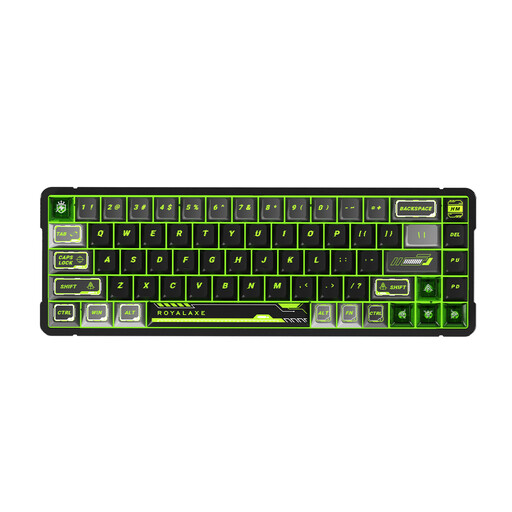 Image unavailable
The 65% layout is one way to save space; check that the specific layout includes the arrow keys you need.
68 keys; Gateron HE Magnetic Switch; wired; US layout; Rapid Trigger.
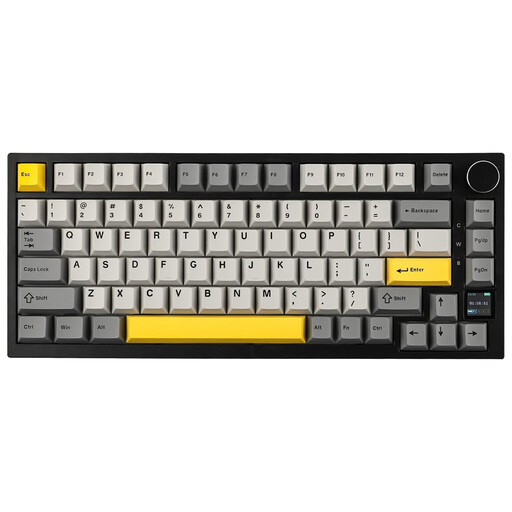 Image unavailable
The 75% layout is designed for anyone who wants a compact size with separate navigation and function keys.
82 keys with arrow and function keys according to the product description; wired, Bluetooth and 2.4 GHz; hot-swappable.
 Image unavailable
The 75% layout is an option if you want direct access to navigation keys without a number pad; check the layout of the version you’re considering.
83 keys; wired; US layout; hot-swappable linear switches; volume dial.
 Image unavailable
TKL removes the number pad. Measure the available desk width, as TKL can take up more space than more compact layouts.
Low profile; optical switches; HyperSpeed Wireless and Bluetooth 5.0 according to the product description; US layout.
 Image unavailable
A 60% layout can free up space. If you often use separate arrow, navigation or function keys, key combinations may mean extra steps.
61 keys; wired; dimensions 29,2 × 10,1 cm according to the product description.
First, make a note of the arrow, navigation and function keys you use, then compare that list with the layout of the exact version. On a typical 60% keyboard, several commands may require Fn combinations, as RTINGS.com explains.
Check whether the physical layout is US or UK and set your operating system’s keyboard settings to match. QWERTY alone doesn’t tell you the shape of the Enter and Shift keys. Coolblue describes this difference between the layouts. If you’re choosing a wireless model, also check which connection modes the version you’ve chosen supports.
Check which wireless modes the version offers and remember that you’ll need to recharge it. If you want to replace the switches, check whether that particular version supports hot-swapping. For example, Keychron says this depends on the version for the K3 Max.
When you buy online from a business, you generally have a 14-day cooling-off period, subject to exceptions described by the Dutch government. You’re also entitled to a product that works as it should. According to the Dutch government, there is no fixed statutory warranty period in the Netherlands, and the seller is your point of contact if something is faulty. Before buying, check who the seller is and which returns conditions apply to your purchase.