
Racer sharing a room at night
You want to avoid disturbing your roommate with repeated keystrokes. RTINGS describes membrane keys as generally among the quieter options, although the sound of a complete keyboard also depends on its design.


In a shared bedroom, a membrane keyboard is a sensible choice if quiet keys and a compact size are your priorities. A dampened mechanical model may suit you if key feel matters too. Analogue keys can make the accelerator and brake respond gradually, but check that your racing game supports this type of input. A manufacturer’s ‘quiet’ label is not a comparable sound measurement.
You want to avoid disturbing your roommate with repeated keystrokes. RTINGS describes membrane keys as generally among the quieter options, although the sound of a complete keyboard also depends on its design.
You’re looking for gradual input from the keys. Wooting describes this capability on the Two HE, but game support still matters: check whether your racing game handles keyboard and controller input together properly.
You want to leave enough room for mouse movement and need to decide whether you can do without the number pad. RTINGS points out that compact layouts can omit keys you might need for other uses.
Choose this if: keeping things quiet for your roommate and making more room for your mouse are your priorities.
Bear in mind: TKL means you’ll be without a number pad; a ‘quiet’ label doesn’t guarantee a silent keyboard.
Choose this if: you want mechanical keys and need to save desk space.
Bear in mind: dampening doesn’t prove that a model is quieter than a particular membrane keyboard; Logitech lists several switch options for the wired G515 TKL.
Choose this if: you want to control the accelerator or brake gradually with a key in a supported racing game.
Bear in mind: Wooting describes possible issues with combined keyboard and controller input; this feature doesn’t prove the keyboard is quieter.
Choose this if: you also use the number pad, media controls or macro keys outside racing games.
Bear in mind: a full-size model takes up more desk space; Corsair’s description of quiet keys is not a comparative sound measurement.
| What to consider | What to look for when buying | Who should prioritise this |
|---|---|---|
| Key noise | Compare the exact model and the sound of the complete keyboard; consider the switches, case and stabilisers. | If I’m playing while someone else is resting in the bedroom, I want to know how much noise the whole keyboard makes. Around 36% of consumers prioritise keeping things quiet for their roommate. |
| Gradual control | Check whether your racing game supports analogue input and handles keyboard and controller commands together properly. | If I want to control the accelerator or brake gradually with a key, my game needs to process that input. Around 29% of consumers prioritise adjustable racing controls. |
| Desk space | Decide whether you need the number pad, function row and separate arrow keys; then compare TKL with full-size layouts. | At a shared desk, I want to leave enough room for my mouse without losing keys I use often. Around 21% of consumers prioritise keeping desk space clear. |
| Connection and extra controls | Check which connection you’ll use and whether separate media or macro keys would be useful to you. | If I want quick access to media or other functions outside racing games too, I look at the connection and extra keys. Around 14% of consumers make this their main consideration. |
What you hear depends not only on the switches, but also on the case and stabilisers. A manufacturer’s label doesn’t compare complete models.
Look for a review or demonstration of the exact model, and judge its sound in the room where you’ll be playing.
A racing game may handle analogue input differently from regular keyboard commands, so the controls you want might not work as expected.
Check the input support and settings for your specific game before choosing analogue controls.
Otherwise, you could spend time configuring a feature that doesn’t work as you’d like in your game.
The wired Logitech G515 TKL and the G515 LIGHTSPEED TKL are separate versions, so check that the connection and variant match what you’re looking for.
Before ordering, read the full product name and check the connection, layout and latest product information on the product page.
The Apex 3 TKL is an example of a compact membrane keyboard for anyone considering noise and desk space.
The Two HE is an example of a full-size keyboard with analogue input for racing controls.
The wired G515 TKL is a mechanical TKL option; the G515 LIGHTSPEED TKL is a separate wireless version.
The K55 RGB PRO is a full-size option for anyone who values a number pad and extra controls.
The GXT 833 Thado is a TKL option for anyone looking for a compact keyboard.
This selection includes compact TKL, 60% and 68-key layouts, as well as a model with a number pad. Focus on the desk space you need, the layout and the connection.
 No image available
The TKL layout may suit you if you want to leave room for mouse movements.
Wired; TKL; PC/PS5; QWERTY; black.
 No image available
The TKL layout is an option if you’re after a more compact design and can do without a number pad.
TKL; US QWERTY.
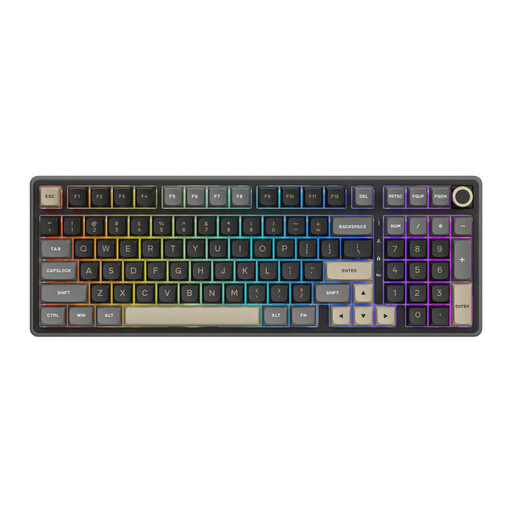 No image available
This model may suit you if you’re looking for a mechanical keyboard with a number pad and volume knob.
Wired; number pad; volume knob; Phantom Color, Beige Switch; MDA-profile PBT keycaps.
 No image available
The compact layout may work well if you have limited desk space.
68 keys; magnetic switches; adjustable actuation; Rapid Trigger; 8000 Hz polling rate; US layout.
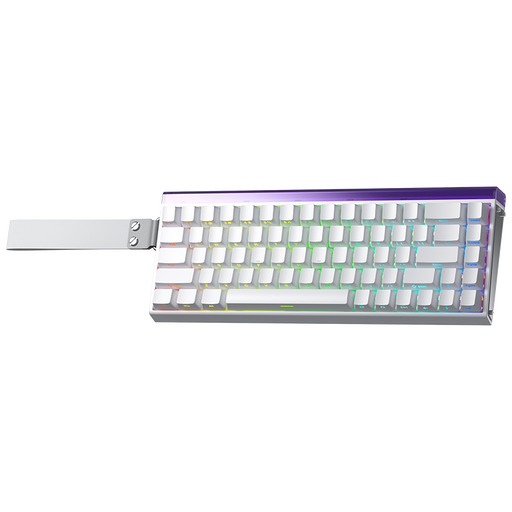 No image available
The 60% layout is an option if you’re looking for a compact keyboard and can do without the keys it omits.
Hall Effect magnetic switches; adjustable actuation from 0.01 mm; Rapid Trigger; 8K polling; cable; US layout; White&Black King Magnetic Switch.
No, don’t assume so. Wooting describes this capability on the Two HE, but also notes that some games don’t handle combined keyboard and controller input properly. Check your game’s support and settings.
First, choose a layout that leaves enough room for your mouse without removing keys you need. Then decide which connection you’ll use. RTINGS says a wired connection or wireless receiver is more suitable than Bluetooth when low latency matters; adjust the lighting and volume to suit the shared space.
In the Netherlands, you’re entitled to a product that meets the terms of the sale, and you can contact the seller if there’s a fault. According to the Dutch government, there’s no fixed statutory two-year warranty period; what you can expect from a product depends, among other things, on the product itself and the information provided by the seller. A manufacturer’s warranty may offer additional cover.
For eligible distance purchases from a business, you generally have a 14-day cooling-off period, according to the Dutch government. Check who the seller is and what returns information applies to your order; these rules don’t necessarily apply to a purchase from a private seller.
Take a discarded electric keyboard to a suitable collection point or use an applicable take-back scheme. The Dutch government describes options through shops and online retailers; check in advance which scheme applies to your device and seller.