
Student with a small desk
Designs and studies at the same desk, and wants more room for a mouse without automatically giving up all the navigation keys.


For a desk that doubles as a study space, a TKL or 75% keyboard is a sensible starting point if you want direct access to the arrow or function keys. Consider a 60% model only after checking the shortcuts you use. A wired keyboard never needs charging, while a wireless one gives you more freedom to rearrange your desk. Before buying, check the physical layout, connection and exact switch variant; a manufacturer’s description such as ‘quiet’ is not a comparative sound measurement.
Designs and studies at the same desk, and wants more room for a mouse without automatically giving up all the navigation keys.
Considers typing noise when using the keyboard in the evening, but doesn’t mistake a label such as ‘quiet’ for a measured sound level.
Switches between digital design and studying; the key layout and connection both affect how useful the keyboard is.
First compare the layout with the keys you need every day, then consider the sound and connection.
| What to consider | What to look for | Who is this relevant to? |
|---|---|---|
| Desk space and size | Measure the available space and check whether you need direct access to the arrow keys and a function row. | If I also use my desk for studying, I want room for my mouse without losing keys I use often. Around 33% of consumers prioritise this balance between saving space and having keys readily accessible. |
| Typing noise | Check the exact switch variant and, if possible, try the keyboard yourself; a manufacturer’s claim is not a comparative measurement. | In a shared room, I want to type without unnecessarily disturbing my housemates, but I also want to judge the sound for myself. This is the main concern for around 27% of consumers. |
| Keys for design and studying | Check the shortcuts in your own software and the physical key layout of the version on offer. | If I use the same keyboard for design and studying, I want direct access to the arrow and function keys I use. Around 27% of consumers prioritise this layout over maximum compactness. |
| Connection and portability | Check whether your device supports the required USB connection, receiver or Bluetooth, and whether the version is genuinely wireless. | If I regularly rearrange my desk or switch between devices, I want a connection that suits my needs. Around 13% of consumers prioritise this flexibility. |
A more compact layout may mean that the arrow keys and other keys aren’t available separately. You may need to use extra Fn key combinations.
Compare the shortcuts you use for design and studying with the physical layout. If necessary, compare it with a 75% or TKL model.
With a 60% layout, accessing frequently used functions via key combinations can take extra steps.
Manufacturer descriptions such as ‘Whisper-Quiet’ are not comparable decibel measurements of keyboards.
Check the exact switch type and, if possible, judge the sound for yourself before choosing based on a noise claim.
A wired G515 version is not automatically the same variant as the G515 LIGHTSPEED TKL, which Logitech describes as offering several connection options. Razer also distinguishes between a complete version and a barebones version without switches and keycaps.
Before buying, compare the full model name, connection, physical layout and box contents.
A barebones version may not include parts you need to use it, so check exactly what’s in the box.
The GXT 833 Thado is an example of a wired TKL keyboard, while the GXT 872 Xyra is a TKL model with mechanical switches.
The Apex 3 TKL is worth considering if you’re looking at a compact layout and switches the manufacturer describes as quiet.
The BlackWidow V4 75% is worth considering if you’re looking for a compact mechanical layout with a function row, arrow keys and hot-swappable switches.
The G515 LIGHTSPEED TKL is worth considering if you’re looking at a compact, low-profile keyboard with several connection options.
The Alloy Origins 60 is an example for anyone who values maximum compactness over separate navigation keys.
These product picks include compact TKL and 75% keyboards for a desk that’s also used for studying. Check the layout and connection for each version.
 No image available
A wired TKL version for anyone who can do without a number pad and doesn’t want to charge their keyboard.
The product name specifies a QWERTY layout; check that the physical layout suits your needs.
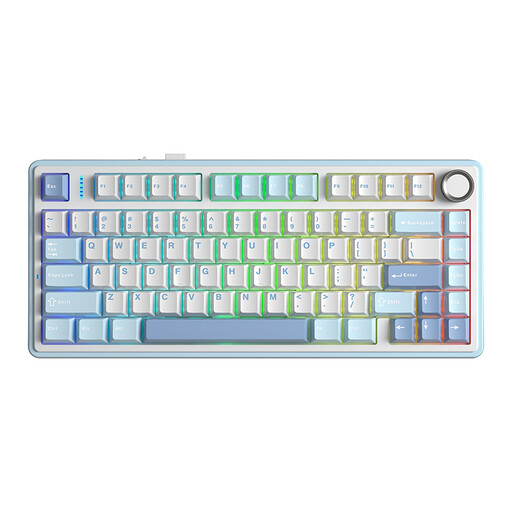 No image available
A 75% layout for anyone looking for a compact keyboard and considering several connection options.
The product name specifies a mechanical keyboard, three-mode wireless operation, PBT keycaps and a US QWERTY layout. Check that the layout suits you.
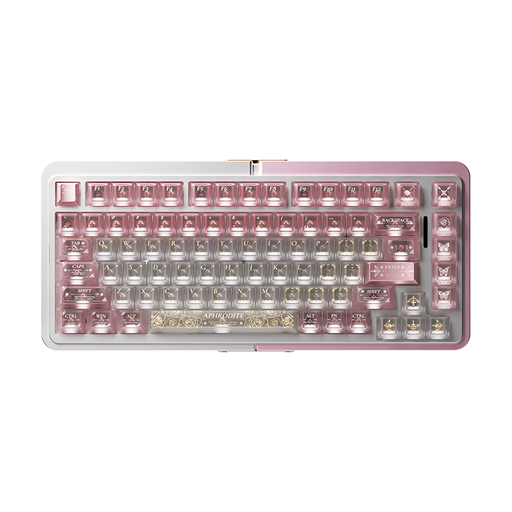 No image available
A compact 75% version for anyone considering a wired model with replaceable switches.
The product name specifies Hall Effect switches, hot-swappable operation and a wired mode. Check the connection method and physical layout of the version on offer.
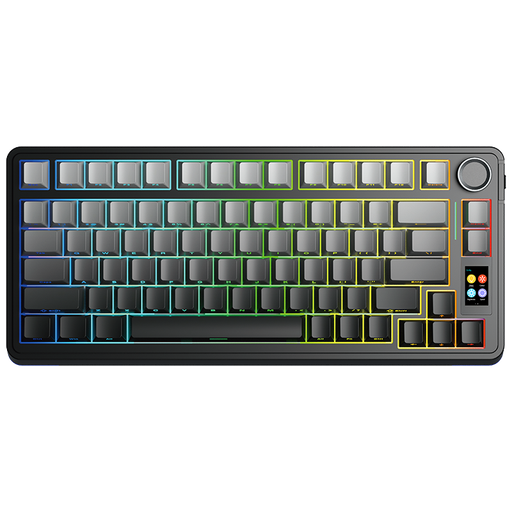 No image available
A 75% model for anyone looking for a compact layout and several connection options.
The product name specifies a wireless mechanical keyboard with three modes, a TFT screen, a rotary knob and hot-swappable switches. Check which version and parts are included.
 No image available
A compact keyboard for anyone considering a 75% layout and several connection options.
The product name specifies a wireless mechanical keyboard with tri-mode connectivity, hot-swappable switches and a US QWERTY layout. Check that the layout and connection suit your devices.
Choose based on the keys you actually use. A 60% layout typically lacks separate arrow keys; the 75% layout described by Razer retains the arrow keys and a function row, while TKL mainly leaves out the number pad. Check the shortcuts in your own software before prioritising compactness.
For many standard online consumer purchases from a business, the Dutch government says you have a 14-day cooling-off period. Whether these rules apply to your order depends on the circumstances of the purchase.
Not automatically. According to the Dutch government, the seller must offer a solution if a product doesn’t meet expectations under a consumer purchase; the Netherlands has no fixed statutory guarantee period. Check whether an extended warranty genuinely offers anything extra under its terms and conditions.
Electrical and electronic equipment sold in the Netherlands must comply with the relevant EU rules. According to the Dutch Business Portal, the manufacturer is responsible for providing the required CE marking and EU declaration of conformity; if the keyboard has Bluetooth or a radio-frequency module, the relevant radio equipment rules also apply. CE marking is not a quality mark.