
Gamer with housemates
Plays story-driven games while someone nearby is studying or sleeping, so considers sound leakage and isolation. Turtle Beach explains how sound can leak in and out of open-back headsets.


If you share a student room, a closed-back headset is a sensible choice if you want to keep sound from disturbing your housemates. In a quiet, private room, you could consider an open-back model if you prefer a more open sound to better isolation. Turtle Beach explains that open-back headsets let sound escape and allow background noise in. Then choose based on fit and your device: a wired connection means no charging, while wireless gaming requires a compatible connection and charging.
Plays story-driven games while someone nearby is studying or sleeping, so considers sound leakage and isolation. Turtle Beach explains how sound can leak in and out of open-back headsets.
Wants to listen to dialogue and ambient sounds for long periods without an uncomfortable fit. The Consumers’ Association (Consumentenbond) emphasises that the right choice depends on personal preference and use, so try the headset on yourself if possible.
For example, switches between a PC and console, and checks that the audio and microphone work with each device and connection for the model in question. HyperX, SteelSeries and Logitech G describe different connections and platform options for their models.
Choose this option: if someone nearby is studying or sleeping and you want to limit the sound that escapes.
The trade-off: a closed-back design blocks more sound than an open-back one, but doesn’t offer the same open sound. Turtle Beach describes the difference between these designs.
Choose this option: if you play in a quiet, private room and want to try a more open, spacious sound.
The trade-off: sound can escape and room noise can get in more easily. That’s why Turtle Beach says this design is less suitable when someone nearby is studying or sleeping.
| What to consider | What to look for | Who it matters to |
|---|---|---|
| Sound in the room | Decide whether an open-back or closed-back design suits your room and how much sound you’re happy to let escape. Turtle Beach describes the sound leakage from open-back headsets. | If someone next to me is studying or sleeping, I want to avoid disturbing them with game audio. Around 36% of consumers say sound isolation is their top priority. |
| Comfort | Look at the space around your ears, pressure from the headband and whether the headset is comfortable to wear with glasses. The Consumers’ Association (Consumentenbond) points out that fit and preference are personal. | During long adventure gaming sessions, I don’t want a headset that presses uncomfortably, and I want to be able to judge the fit for myself. Comfort comes first for around 29% of consumers. |
| Connection | Make a note of your device and its available ports; check that both the audio and microphone work with the exact model. Manufacturers list different connections and platforms for each headset. | If I want to use the headset with my PC or console, the connection needs to be compatible and the microphone needs to work too. Around 21% of consumers put compatibility first. |
| Wireless gaming | Check that your device supports the included receiver or Bluetooth connection, and find out how to charge the headset. Connection options vary by model. | If I want to move around freely without a cable, I want to know which connection will work and when I’ll need to charge it. Wireless gaming is the top priority for around 14% of consumers. |
With open ear cups, game audio can escape and room noise can get in. This can be disruptive if someone nearby is studying or sleeping.
Choose an open-back model only if the room is quiet and sound leakage won’t be a problem.
Supported connections vary by headset, device and model version. Wireless doesn’t automatically mean the headset will work with your console straight away.
Before you buy, check the full model name, the included receiver and compatibility with your device.
The material or a comfort rating doesn’t prove that the headset will feel comfortable on your head; fit is a personal thing.
Try the headset on yourself if possible, and check the terms and conditions that apply to your order when buying online.
The wired Cloud III is worth a look if you want a choice of 3.5 mm and USB connections.
The Arctis Nova 5 is a wireless option with a USB-C dongle and the ability to switch between connections.
The G435 is a wireless option for PC and PlayStation, among other platforms.
The PC38X is an open-back, wired option for a quiet room.
These Joybuy picks are gaming headsets for use with PCs and consoles. Check the connection and device support for each model.
 No image available
Consider this model if you’re looking for a headset for PC or PS4 gaming; check that the connection works with your device.
The listed connection is wired via USB. The stated 7.1 surround feature is for Windows.
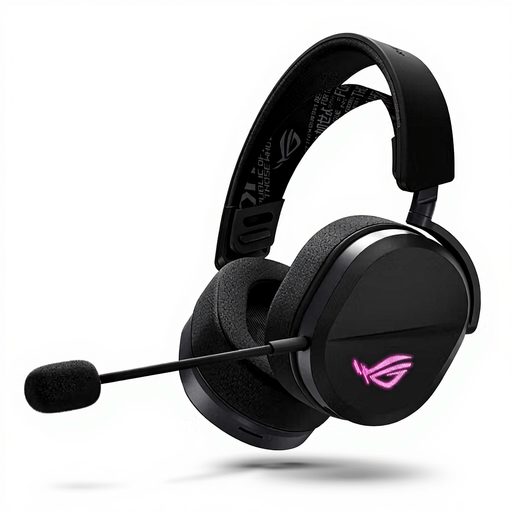 No image available
Worth a look if you want the choice of wired or wireless; check which connection works with your PC or console.
Wireless use requires charging.
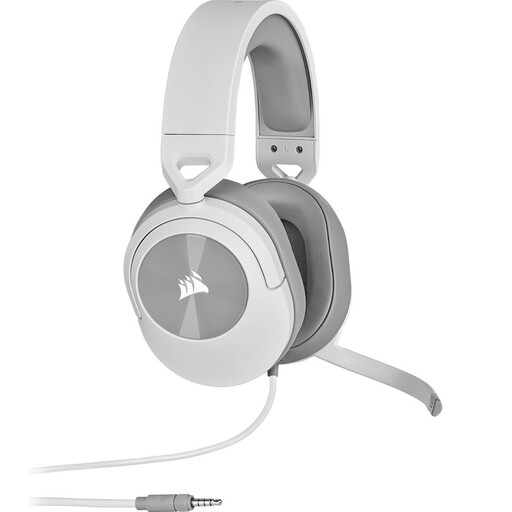 No image available
A wired option for devices with a 3.5 mm connection; check beforehand whether your PC needs a Y-splitter.
The product information lists a Y-splitter for PCs with separate headphone and microphone connections.
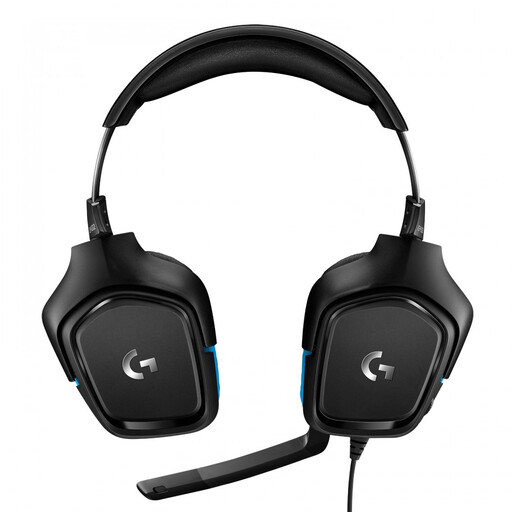 No image available
A wired gaming headset to compare if you’re looking for a model with 7.1 surround sound; check the connection for your device.
Logitech G HUB is required for full access to 7.1 surround sound.
 No image available
A wired option to consider if you’re looking for a multi-platform headset with a 3.5 mm connection; check compatibility with your device.
The 7.1 surround feature requires software and an activation code.
No, don’t assume that you can. Check the connection for both the headset and your device: for example, SteelSeries lists a USB-C dongle for the Arctis Nova 5 for use with PC and PlayStation, among other platforms, while Logitech G lists LIGHTSPEED for the G435 on PC, Mac, PS4 and PS5.
HyperX specifies 3.5 mm, USB-C and USB-A connections. Choose one supported by your device, then check the audio settings to make sure both the sound and microphone work through the device you want to use.
Keep the volume moderate and limit your total exposure. The World Health Organization gives an average of 80 dB for up to 40 hours per week as an example of safe listening. This is general health advice, not a recommended volume level for these headsets.
For distance purchases, the Dutch government says you generally have a 14-day cooling-off period, although you should check the applicable terms and exceptions. You are also entitled to a product that works properly under the legal guarantee, regardless of any manufacturer’s warranty.