
Player with limited charging options
This player wants to practise a map repeatedly without having to charge their headset as well. So, the connection on their PC or controller is an important place to start.


A wired headset is a sensible choice if you don’t want to charge a headset battery, but check that your device’s 3.5 mm or USB connection supports the microphone too. Wireless gives you more freedom to move, but check how the headset, receiver and any base station connect and charge. Spatial audio doesn’t guarantee that you’ll be better at pinpointing in-game sounds: compare the settings available on your own platform.
This player wants to practise a map repeatedly without having to charge their headset as well. So, the connection on their PC or controller is an important place to start.
This player wants to pinpoint in-game sounds and compare settings while learning routes. The spatial audio available depends in part on the platform and game.
This player needs clear team chat and easy-to-reach microphone controls while practising.
Choose this if: your controller or device has a suitable combined port and you don’t want to keep track of a headset battery.
Bear in mind: the cable limits how freely you can move; a PC with separate audio and microphone ports may need a splitter.
Choose this if: your device has a free, suitable USB port and you’d rather not charge a headset battery.
Bear in mind: you’re still tethered by a cable, and not every feature works on every platform.
Choose this if: freedom to move matters more than planning when to charge, and you can connect the required receiver or base station.
Bear in mind: the headset needs charging, and a receiver or base station may also need a port and space.
| What to consider | What should you look for? | Who should pay particular attention? |
|---|---|---|
| Playing without an extra charging session | Check the connection and cable length, and make sure both the audio and microphone work with your device. | If I want to practise a map for a long time without charging my headset part-way through, I need a connection that suits my device. Around 33% of consumers say avoiding an extra charging session is their main concern when buying. |
| Pinpointing in-game sounds | Compare stereo with the spatial audio setting supported by your platform and game. | If I want to learn routes by listening to in-game sounds, I want to be able to compare settings in my own game. Around 27% of consumers give the ability to recognise and pinpoint in-game sounds their highest priority. |
| Clear team chat | Check that the microphone works through your chosen connection and find out where the mute control is. | If I communicate with my team a lot while practising, a working microphone and an easy-to-reach mute control matter. Around 20% of consumers prioritise team communication. |
| Fit and device connection | Check the connection for your platform and decide for yourself how the headband and ear cushions feel. | If I play for a long time, I want my headset to feel comfortable and connect to my device; I also keep the volume moderate. Around 20% of consumers say fit and device compatibility are their main concern. |
A wireless headset doesn’t have a cable running to your head, but it still needs charging, and a receiver or base station may need a connection too.
Before buying, check how the headset, receiver and any base station connect and charge.
The spatial audio available depends in part on the platform and game. A label alone doesn’t tell you how the settings will sound in your game.
While playing, compare stereo with the spatial audio setting available, keeping the volume moderate.
For a PC without a combined audio port, Trust says the GXT 498 Forta needs a splitter or adapter to connect.
Before buying, check both the audio output and microphone input on your device, as well as the cables supplied with the version you’ve chosen.
ACM ConsuWijzer explains that your statutory rights exist alongside any warranty offered by the retailer or manufacturer.
Keep your proof of purchase and contact the retailer if there’s a fault. Also consider what you could reasonably expect from the product under normal use.
The wired Cloud III is an example of a range with several connection options.
The GXT 498 Forta is an example of a wired 3.5 mm headset designed to connect to a PS5 controller.
The Arctis Nova range includes wired and wireless models.
The ASTRO A50 Gen 5 is a wireless option for anyone who switches between several gaming systems.
The INZONE H9 II is a wireless model for anyone weighing up wireless features and noise cancelling.
These picks focus on wired gaming headsets for players who don’t want to charge a headset battery. Check which connections and features work with your platform for each model.
 No image available
A wired option for anyone who doesn’t want to charge a headset battery while playing. The product name mentions a flip-up microphone; check whether your device’s connection supports chat too.
According to the product information, QuantumSURROUND is only available on PC.
 No image available
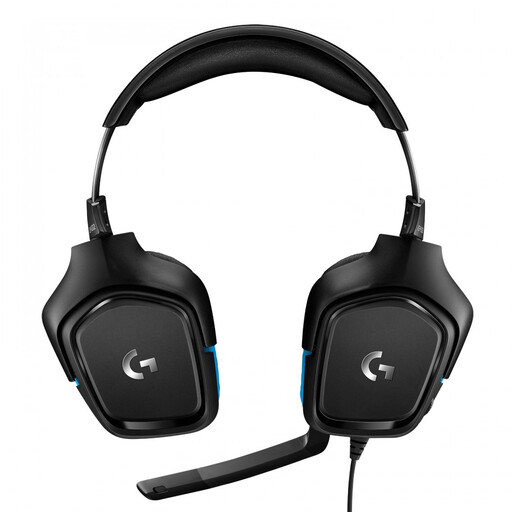
A wired option to consider if you don’t want to charge a headset battery and use team chat while practising.
The product name mentions 7.1 surround sound; according to the product information, the full 7.1 surround experience requires Logitech G HUB software.
 No image available
A wired headset for anyone who wants to use team chat while practising without charging a headset battery.
The product name mentions 7.1 surround sound; according to the product information, software is required for the full surround experience.
 No image available
A USB wired option to consider if you don’t want to charge a headset battery while practising. The product name mentions PC and PS4; the product information says this model isn’t for Xbox.
The product name mentions 7.1 surround sound; check which audio features work with your device.
 No image available
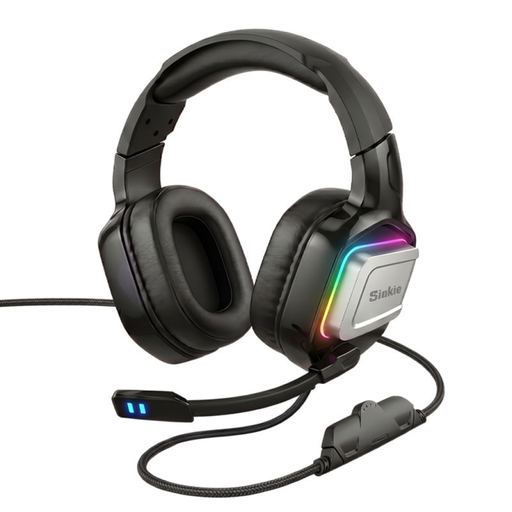
A wired option for anyone who doesn’t want to charge a headset battery and needs a microphone while practising.
The product name mentions USB and 3.5 mm connections. Check which connection supports both audio and chat on your platform.
No. According to PlayStation, you can try 3D audio with compatible headphones connected via USB or the 3.5 mm jack on the DualSense controller. Set up a profile in the PS5 sound settings and compare the available options; support and results also depend on the game.
No. Xbox says the Xbox One console doesn’t have Bluetooth for a direct connection. You can connect a compatible wired headset to an Xbox controller with a 3.5 mm port; for wireless use, check whether the specific model is supported.
Trust says you’ll need an audio splitter or adapter to use the GXT 498 Forta with a PC that doesn’t have a combined audio port. Check your PC’s ports and the connection options on the headset you choose.
Not by itself: you’ll need to charge the headset, and a receiver or base station may also need a connection. Check the whole setup; a wired headset connected to a suitable controller port doesn’t need a separate charging point.
According to ACM ConsuWijzer, online purchases generally come with a statutory cooling-off period of up to 14 days after delivery, although exceptions may apply. Your statutory rights are separate from any manufacturer’s warranty; contact the retailer if there’s a fault and check the terms that apply to your purchase.