
Online screen pilot
You practise formation flying on a monitor and want to match the full specification to your simulator and missions. Eagle Dynamics publishes recommendations for DCS at high graphics settings.


First decide whether you’ll be flying on a screen or in VR, then compare the desktop’s full specification with your simulator’s requirements. For DCS, Eagle Dynamics recommends 32 GB of RAM and 500 GB of free SSD space at high graphics settings, plus additional space for paid content. This doesn’t guarantee a particular frame rate, noise level or consistently stable performance during a long session.
You practise formation flying on a monitor and want to match the full specification to your simulator and missions. Eagle Dynamics publishes recommendations for DCS at high graphics settings.
You want to fly with a headset, so you’ll need to consider headset compatibility and controls as well as the desktop. Microsoft lists VR and head tracking as options for a more advanced flight setup.
You pay attention to the desktop’s position, cooling and maintenance access, without treating a product description as proof that it will be quiet or deliver consistent performance.
Best for: you fly on a single screen and want to match the desktop to your simulator, controls and storage needs.
Consider: meeting the published system requirements doesn’t prove that your specific mission will run smoothly or quietly over a long session.
Best for: you’ll actually be using a compatible headset and want to match your entire flight setup to it.
Consider: you’ll also need to check headset connections and controls; DCS pages in different languages give varying VR recommendations for video memory.
| What to consider | What to look for | Who should consider this? |
|---|---|---|
| Simulator performance | Compare the exact CPU, GPU and amount of RAM with the requirements for your simulator and settings. For DCS at high settings, Eagle Dynamics recommends 32 GB of RAM and 500 GB of free SSD space, plus space for paid content. | If your main priority is matching the specification to your simulator and missions, focus on the complete PC; around 36% of consumers prioritise simulator performance above all else. |
| Use during long sessions | Check the case, space for ventilation and access for maintenance. A manufacturer’s description of its cooling system isn’t a measurement of noise or sustained performance. | If you fly for long periods, you’ll want to know how the desktop will fit into your space and how easy it is to maintain; around 29% of consumers prioritise practical use during long sessions. |
| VR and controls | Check your simulator’s requirements, the headset’s connections and compatibility, and the flight controls you’ll need. Don’t assume VR performance based on the VRAM figure alone. | If you want to fly with a headset, the desktop needs to work with both the headset and the controls; around 21% of consumers say VR is their top priority when choosing. |
| Complete flight setup | Check which controls are included and allow for a possible headset, pedals and simulator content. Eagle Dynamics specifies additional SSD space for paid DCS content. | If you still need components for your setup, look beyond the desktop itself; around 14% of consumers put the complete flight setup first. |
Desktops with similar names can differ in RAM, storage and graphics card. Lenovo’s Legion Tower models show why the full model code matters.
Compare the model code and specifications of the exact version you’re planning to buy.
DCS requirements give recommendations for certain graphics settings; they don’t tell you how your particular combination of mission, headset, desktop and surroundings will perform.
Use the requirements as a starting point. If noise or sustained performance is crucial, look for measurements of the exact model.
A headset, head tracking, flight controls and simulator content may also be relevant. The connections and compatibility need to suit the devices you’ve chosen.
Make a note of the simulator and peripherals you’ll be using, then check what’s included with the desktop.
The Legion Tower 5 Gen 10 range includes several configurations, so compare the full model code and specification.
The OMEN 35L GT16-0606nd is a specific model and shouldn’t be confused with other GT16 model codes.
The MPG Infinite X3 AI 2nd is a product range with different processor and graphics card options.
The ROG G700 range includes several variants, each with its own full model code.
The Predator Orion 3000 is a more compact desktop range; Acer gives the case a volume of 28 litres.
These desktops are points of comparison for the PC part of a flight setup. Check the exact specification against your simulator’s requirements and any headset you plan to use.
 Image unavailable
The listed 32 GB of RAM matches the DCS recommendation for high graphics settings, but doesn’t guarantee a particular level of performance.
Specifications: Intel Core Ultra 7, 32 GB DDR5, 1 TB SSD and NVIDIA GeForce RTX 5070.
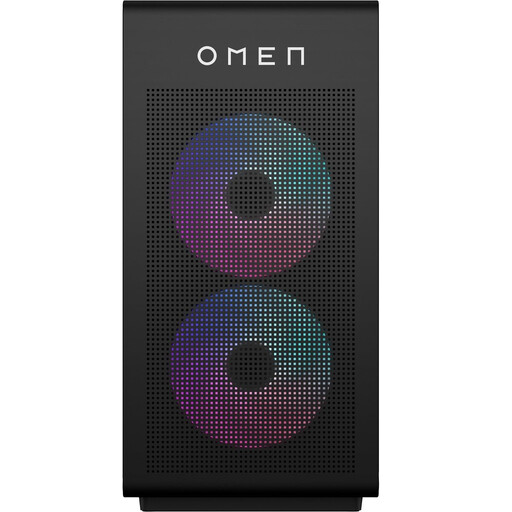 Image unavailable
This model needs extra consideration if you want to play DCS at high settings: its listed 16 GB of RAM is below Eagle Dynamics’ recommendation.
Specifications: Intel Core i7-14700F, NVIDIA GeForce RTX 5060, 16 GB DDR5 and 1 TB SSD.
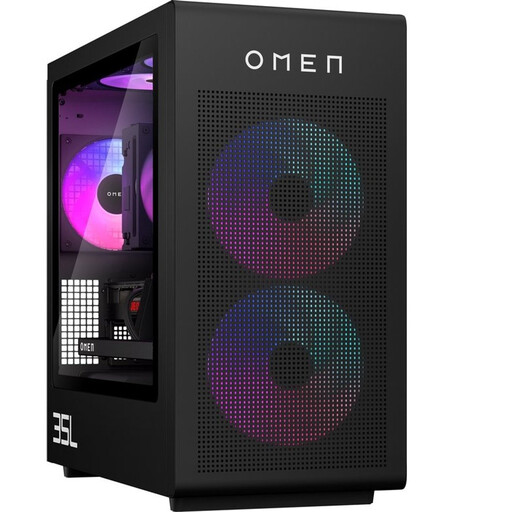 Image unavailable
If you’re considering this desktop for DCS at high settings, bear in mind that its listed 16 GB of RAM is below Eagle Dynamics’ recommendation.
Specifications: Intel Core i7-14700F, NVIDIA GeForce RTX 5060, 16 GB DDR5 and 1 TB SSD. The product description mentions air and liquid cooling, but no independent test of sustained performance or noise.
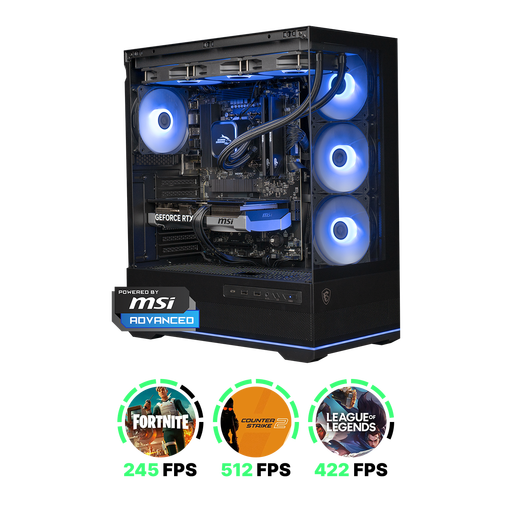 Image unavailable
Compare this configuration with your simulator’s requirements; its listed 16 GB of RAM is below the DCS recommendation for high settings.
Specifications: AMD Ryzen 7 7800X3D, NVIDIA GeForce RTX 5070, 16 GB DDR5 and 1 TB NVMe storage. The product description mentions a 360 mm liquid cooler; this isn’t an independent test during a session.
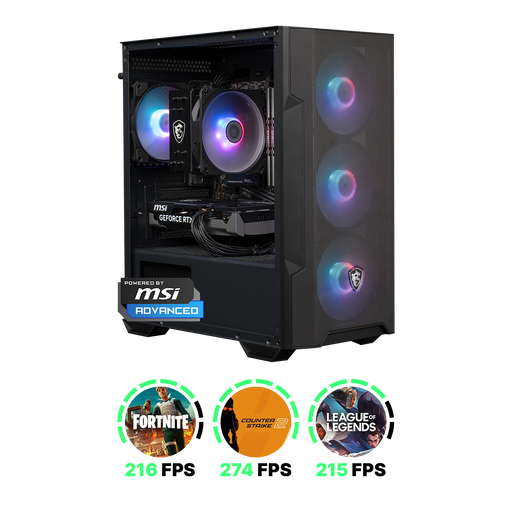 Image unavailable
Compare this model carefully with the DCS requirements: its listed 16 GB of RAM is below the recommendation for high graphics settings.
Specifications: AMD Ryzen 5 5500, NVIDIA GeForce RTX 5060, 16 GB DDR4 and 1 TB NVMe storage. The product description mentions a CPU cooler and case airflow, but gives no measured results for long sessions.
First, make a note of the simulator, joystick or HOTAS, any pedals and headset you plan to use. Microsoft lists compatible flight controls, head tracking and VR as parts of a flight setup; check the connections and support for the specific devices you have in mind.
Check the space around the air intakes and exhausts, and look at the maintenance access for the exact model. A manufacturer’s mention of cooling or tool-free access doesn’t prove how quietly the desktop will run in your room.
According to ACM ConsuWijzer, online consumer purchases generally come with a 14-day cooling-off period, which ends 14 days after delivery. Your statutory guarantee is separate from any commercial warranty. If a product doesn’t meet what you could reasonably expect, contact the seller. Terms and exceptions may apply.
No. For products that must carry a CE mark, it indicates that the manufacturer considers the product to comply with the applicable EU product rules. A CE mark isn’t a benchmark, noise measurement or proof of performance in a flight simulator.