
Group coffee drinkers
You serve several black coffees in a row during a baking session. Compare the cup function with the water tank and grounds container; Consumentenbond distinguishes between making two coffees and two cappuccinos at once.


If your baking group mainly drinks black coffee, compare simple fully automatic machines with models that have a manual milk frother for the occasional cappuccino. If milk-based coffee is a regular order, an automatic milk system may be more convenient, but remember that it needs cleaning after use. Also check that the machine suits the order in which you want to make drinks, and agree who will keep an eye on the water, coffee grounds and milk components.
You serve several black coffees in a row during a baking session. Compare the cup function with the water tank and grounds container; Consumentenbond distinguishes between making two coffees and two cappuccinos at once.
You regularly order milk-based coffee and want to decide how much milk you’ll froth yourself and who will clean up afterwards. For example, Philips describes different milk frothers for the EP2220/10 and EP2230/10.
You share limited worktop space and maintenance with housemates. Check how easy it is to access the components and whether everyone can follow the cleaning routine; Siemens says the EQ300 has front access to its components.
Choose this option: if the group mainly drinks black coffee and someone occasionally wants to froth milk themselves. Philips lists a classic milk frother for the EP2220/10.
Bear in mind: frothing milk is a separate step. Check the cup function and cleaning instructions for the exact model, too.
Choose this option: if several people in the group regularly order cappuccinos and individual controls matter. Philips lists espresso, coffee and cappuccino with LatteGo for the EP2230/10.
Bear in mind: Philips recommends cleaning LatteGo after every use, so agree who will do it.
Choose this option: if almost everyone drinks black coffee and the group doesn’t want to maintain a milk function.
Bear in mind: even without a milk function, components such as the brew group and drip tray need maintenance. Check that the model suits the order in which you want to make drinks.
| Point to consider | What should you check? | Who should give this more weight? |
|---|---|---|
| Making several cups | Check which drinks the double-cup function applies to, and look at the capacity of the water tank and grounds container. De'Longhi lists a 1,8 l water tank and a grounds container for 14 portions for the Magnifica S ECAM20.110.B. | If you serve several black coffees in a row during a baking session, you’ll want to know when the machine needs refilling or emptying. Consumers who see serving several cups to the group as their main concern are estimated to account for around 31% of consumers in this baking-group situation. |
| Milk and black coffee | Check which drinks the exact model makes, what type of milk frother it has and what cleaning is needed after use. Philips recommends rinsing LatteGo after every use. | If different milk-based coffees are ordered regularly, compare the ease of use with the extra cleaning involved. Consumers who prioritise milk-based coffee are estimated to account for around 25% of consumers in this situation. |
| Sharing the cleaning | Check the manual for access to the brew group and the cleaning steps for the milk system. Siemens says the EQ300 has front access to its components. | If housemates take turns using the machine, you’ll want cleaning arrangements that everyone can stick to. Consumers who prioritise a shared maintenance routine are estimated to account for around 25% of consumers in this situation. |
| Space and running costs | Measure the space available and check that you can reach the water tank and components. Check the manual to see which cleaning products and regular maintenance tasks are required for the exact model. | With limited shared worktop space and a tight household budget, it’s worth working out the space and ongoing costs in advance. Consumers who prioritise space and ongoing expenses are estimated to account for around 19% of consumers in this situation. |
Consumentenbond distinguishes between functions for making two coffees and two cappuccinos at once. The function may therefore vary depending on the drink.
Check the information for the full model number to see which drinks the double function applies to.
Philips recommends cleaning LatteGo after every use. Without an agreed division of tasks, the next person to use the machine may be left to clean it.
Before you buy, agree who will clean the milk components after a baking session and follow the instructions for your chosen model.
According to Rijksoverheid, a manufacturer’s warranty is in addition to your right to a product that works properly; it doesn’t replace that right.
Keep your proof of purchase and contact the seller if you think a product is faulty.
The Magnifica S ECAM20.110.B is a model worth comparing for espresso and long coffee. De'Longhi Nederland lists a 1,8 l water tank.
The 2200 Series includes several versions: Philips says the EP2220/10 has a classic milk frother, while the EP2230/10 comes with LatteGo.
The EQ300 Series is worth comparing for a shared kitchen where ease of use and access to components matter.
Solo & Perfect Milk takes a different approach to milk: according to Melitta, the Cappuccinatore uses a tube placed in the milk.
This selection includes fully automatic machines for black coffee and models with a milk function, including versions with manual and automatic milk preparation.
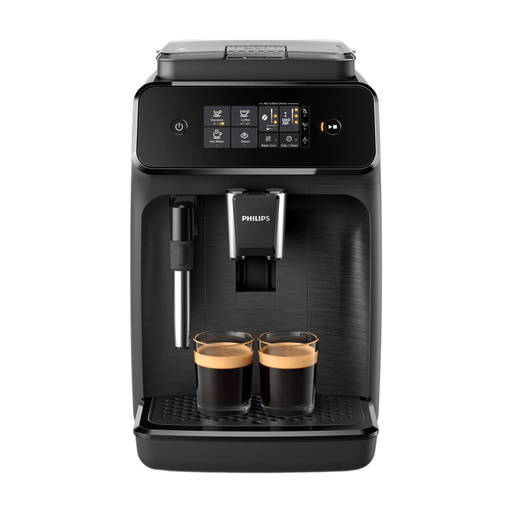 No image available
An option to compare if the group mainly drinks bean-to-cup coffee and someone occasionally wants to froth milk themselves.
The product name mentions a Pannarello steam wand.
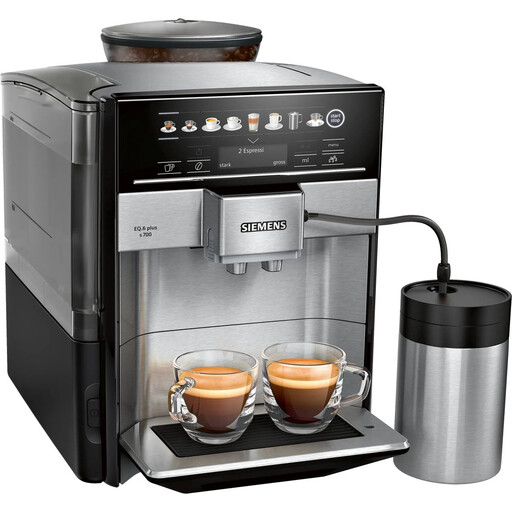 No image available
Worth comparing if people in the group order different coffee drinks; check the drink functions you want and the cleaning requirements in the manual for this exact model.
 No image available
An option to compare if the group regularly orders milk-based coffee as well as black coffee. Check which drinks this exact version makes and what cleaning the milk system requires.
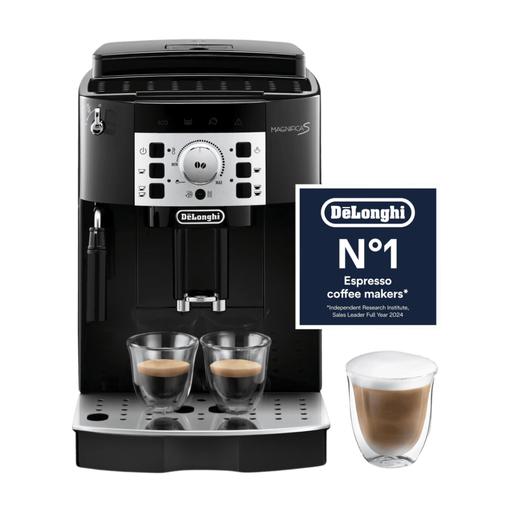 No image available
An option for a group that mainly drinks black coffee and someone occasionally wants to froth milk themselves.
You’ll need to use the steam wand separately to froth milk. For this model, De'Longhi Nederland lists a 1,8 l water tank and a grounds container for 14 portions.
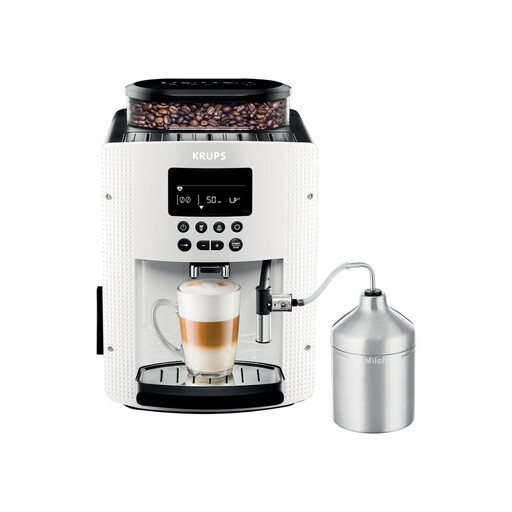 No image available
Worth comparing if the group wants to make both espresso and milk-based coffee.
The product information says the milk system must be cleaned by hand after every use, so bear that in mind when sharing maintenance tasks.
Put chilled milk back in the fridge promptly after use. Voedingscentrum advises not leaving perishable products such as milk out of the fridge for more than two hours, and then discarding them. Clean the milk components according to your machine’s instructions.
Follow the maintenance instructions for the exact model. Philips recommends emptying the drip tray daily or when the indicator tells you to, rinsing the brew group weekly, and rinsing LatteGo after every use or washing its two parts.
No. According to Rijksoverheid, a manufacturer’s warranty is in addition to your right to a product that works properly. If a product is faulty, contact the seller; the Netherlands has no fixed statutory warranty period that applies to all products.
NVWA states that CE marking is compulsory for electrical products, and that the manufacturer uses it to indicate that the product meets the relevant European requirements. A CE mark doesn’t compare the coffee’s taste or how easy machines are to use.
Follow the coffee machine’s electrical specifications and manual. Brandweer advises plugging high-power appliances, such as electric deep-fat fryers and heaters, directly into a socket rather than into an extension lead. These examples don’t, by themselves, establish a separate connection rule for every coffee machine.