
Organiser planning for a coffee rush
You want to serve visitors and repairers at the same event, and find out whether refilling or waiting could disrupt the coffee service.


Choose a domestic fully automatic machine if demand at your Repair Café is modest and spread out, and volunteers can refill and clean it. If you regularly expect a larger rush, look into professional machines too; the reservoir size or recommended daily capacity alone won’t tell you how many cups it can make per hour. Automatic milk drinks are worthwhile mainly if visitors want them and someone can clean the milk components consistently.
You want to serve visitors and repairers at the same event, and find out whether refilling or waiting could disrupt the coffee service.
You want to know in advance how much daily work is involved in emptying the coffee grounds and drip trays, and cleaning any milk components.
You’re looking for a machine that fits the available space and is useful outside the Repair Café too. Check the dimensions and the terms for your intended use.
Start with the expected rush and the help available for cleaning. Then decide which drink features and size will suit your shared kitchen.
| Consideration | What to look for | Who is this important for? |
|---|---|---|
| Coffee during busy periods | Estimate the number of cups per event and during the busiest hour. Ask about the recommended usage load; don’t infer brewing speed from reservoir size. | If visitors mainly want coffee at the same time, I want to know how much refilling and waiting will be involved. Around 28% of consumers prioritise handling peak demand. |
| Cleaning and sharing tasks | Check how the coffee grounds container, drip tray, brew group and any milk components should be cleaned according to the manual. Agree on who will do this after the event. | If different volunteers use the machine, I want the cleaning tasks to be easy to share. Around 22% of consumers prioritise cleaning requirements. |
| Features you need | Decide which drinks and features visitors actually need. Also compare the maintenance tasks required for each model variant. | I don’t want to choose extra features that will rarely be used in the shared kitchen. Around 17% of consumers prioritise a straightforward choice without unnecessary extras. |
| Milk-based coffee | Compare the milk system for the exact model code and arrange for someone to clean the parts that come into contact with milk. | If visitors want cappuccinos or other milk drinks, I want to know whether someone can look after the milk system. Around 17% of consumers prioritise milk drinks. |
| Fit and ease of use | Measure the width, depth and height, allowing space to open the reservoirs. Also check whether different users will be able to operate it. | In a shared student kitchen, I want the machine to fit and be accessible to different users. Around 16% of consumers mainly choose based on space and ease of use. |
The capacity of the water reservoir and coffee grounds container tells you about supplies and waste collection, not how quickly the machine can make drinks one after another. De’Longhi lists a 1,8 l water reservoir and a coffee grounds container for 14 portions for the ECAM220.20.W; Siemens lists a 1,7 l water reservoir and a 300 g bean container for the TE651319RW. JURA gives the professional W8 a recommended maximum of 50 preparations per day. These are manufacturer specifications, not measured brewing speeds for a Repair Café.
Make a note of how many cups you expect during the event and at the busiest time. Ask about the recommended load for continuous use of the exact model code.
During a rush of visitors, refilling, emptying and waiting can take up extra volunteer time.
Milk residue needs cleaning, even if the machine has a rinsing programme. The Consumentenbond recommends cleaning parts that come into contact with milk every day.
Choose the milk system together with the person who will clean the machine after use, and follow the manual for the exact model variant.
Parts that come into contact with milk mean extra cleaning work on a regular basis.
A manufacturer’s or seller’s warranty is separate from your statutory rights. The Dutch government explains that the Netherlands has no fixed statutory warranty period; what you can expect depends, among other things, on the product and normal use.
Keep your proof of purchase, discuss any fault with the seller and check separately whether the terms cover the intended use by an organisation.
The Magnifica Start range includes domestic fully automatic machines for anyone who mainly wants espresso or regular coffee. Check the full ECAM model code, as features can vary between versions.
The 5500 LatteGo range is worth considering if automatic milk drinks and easy-to-clean milk components matter.
The EQ6 plus range is another option to compare if you’re looking for a domestic fully automatic machine with adjustable features and milk drinks.
The Evidence One EA895E is worth considering if drink choice and saving preferences are important.
The professional W8 is an alternative to consider if expected usage makes you rethink choosing a domestic machine.
This selection includes domestic fully automatic machines for mainly black coffee, as well as models with features for milk drinks, to suit different needs in a shared kitchen.
 No image available
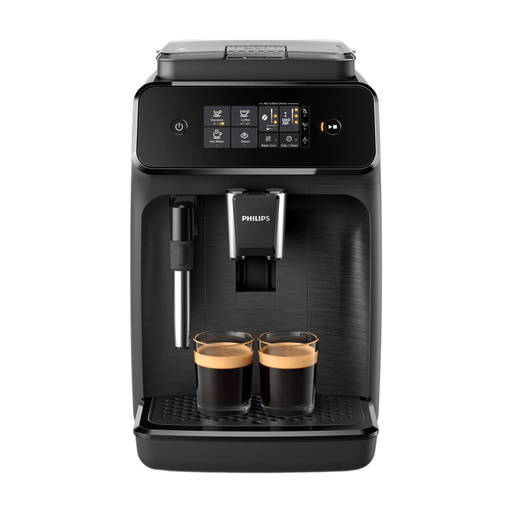
A domestic fully automatic machine for anyone who mainly wants to make coffee from beans; the product title mentions a manual Pannarello steam wand for frothing milk.
The steam wand requires you to do a few things when making milk drinks. Remember to clean the milk frother and drip tray too.
 No image available
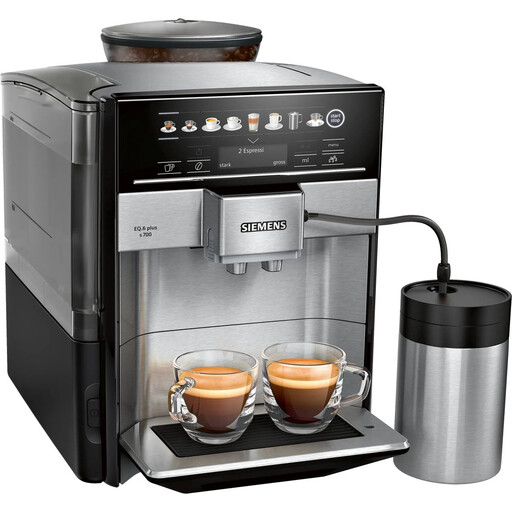
A domestic option for anyone who wants to serve coffee and milk drinks and save users’ preferences.
Automatic steam cleaning doesn’t replace daily cleaning of parts that come into contact with milk.
 No image available
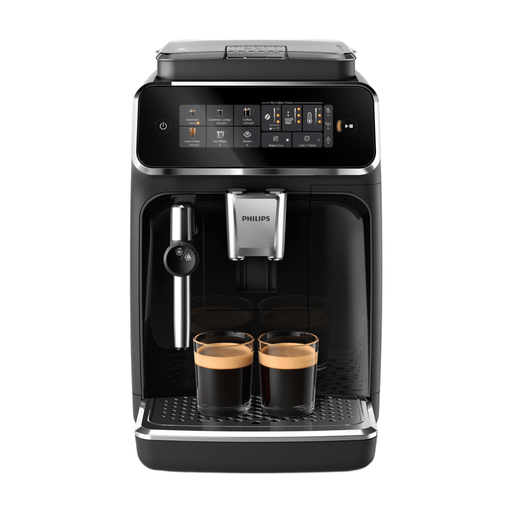
A domestic machine for anyone comparing different drink options; the product name lists four coffee varieties and hot water.
Milk is frothed manually using the classic milk system.
 No image available
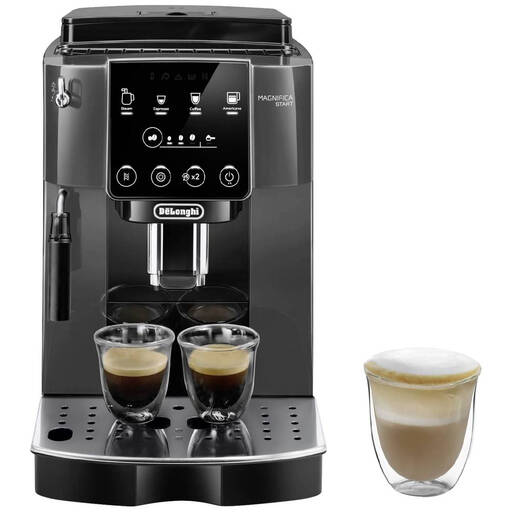
A domestic fully automatic machine to compare if coffee and spread-out demand are your main considerations.
Milk is frothed manually using the steam wand; the machine also needs regular maintenance and descaling.
Estimate the number of cups you’ll need per event and during the busiest hour, then compare that with the work involved in refilling and emptying the machine. A reservoir size or recommended daily capacity isn’t a measured brewing speed; JURA’s maximum of 50 preparations per day for the W8 is a manufacturer’s recommendation.
Clean the parts that come into contact with milk as instructed in the model manual, and don’t forget the coffee grounds container and drip tray. The Consumentenbond recommends cleaning the milk components every day.
For a consumer purchase, contact the seller about your statutory rights. The Dutch government states that the Netherlands has no fixed statutory warranty period; what you can expect depends, among other things, on the product and normal use. Check separately which terms apply if an organisation buys or uses the machine.