Start by measuring the space available on your desk, then decide whether you need to see more spreadsheet rows, more columns or simply want a compact set-up. WUXGA (1920 × 1200) offers 200 more vertical pixels than Full HD (1920 × 1080), while QHD (2560 × 1440) provides more pixels in both directions. Also check that text is easy to read from your viewing distance and that the monitor will connect to your laptop.
Who is this choice relevant to?
Working with limited desk space
You want to check survey data on an external screen without the monitor stand taking up too much room for your keyboard, mouse and paperwork. Compare the stand’s dimensions and the monitor’s depth with the space available.
Spreadsheet users who want to see more rows
You work with spreadsheets for long periods and want to scroll less. Compare the vertical resolution and check whether text remains easy to read from your viewing distance.
Laptop users looking to reduce cable clutter
You’re considering USB-C for video and charging. Check that your laptop supports the required video output and that the monitor’s charging power is suitable for your laptop.
What should you consider when choosing?
Compact Full HD, 1920 × 1080
A good fit if: you mainly use one spreadsheet or window at a time and need a screen that fits the measured space on your desk.
Bear in mind: this resolution has fewer vertical and horizontal pixels than the WUXGA and QHD options discussed here.
16:10 WUXGA, 1920 × 1200
A good fit if: seeing extra rows matters more to you than having more horizontal pixels.
Bear in mind: WUXGA has 200 more vertical pixels than Full HD, but fewer horizontal pixels than QHD. Also check the dimensions and connections of the exact model.
Compact QHD, 2560 × 1440
A good fit if: you want to see more spreadsheet information in both directions on a compact screen and your laptop supports the required connection.
Bear in mind: more pixels don’t automatically make small text more comfortable to read; check the text scaling from your viewing distance.
| What to consider |
What should you check? |
Who should pay particular attention? |
| Desk space |
Measure the available width and depth, then compare them with the monitor’s dimensions, including the stand. |
I need the monitor and stand to fit on my small desk without taking up space for my keyboard and paperwork; around 36% of consumers put physical fit first. |
| Visible spreadsheet area |
Compare 1920 × 1080, 1920 × 1200 and 2560 × 1440 with your usual spreadsheet and viewing distance. |
I want to see more rows or columns at once when checking survey data; around 29% of consumers prioritise the visible spreadsheet area. |
| Adjustability |
Check how the exact model can be adjusted and assess the screen position as part of your complete workspace. |
I want to be able to position the screen comfortably during longer work sessions; around 21% of consumers choose adjustability as their main consideration. |
| Connecting a laptop |
Check your laptop’s video output, the monitor connection, and the charging power required and available. |
I want to connect and, if possible, charge my laptop with as few cables as possible; around 14% of consumers prioritise connectivity. |
Common mistakes when choosing
-
Measuring only the screen diagonal
The diagonal doesn’t tell you whether the stand and monitor depth will fit alongside your input devices.
Compare the monitor’s dimensions, including the stand, with the available width and depth on your desk.
-
Assuming more pixels make spreadsheet work more comfortable
Resolution alone doesn’t determine how much spreadsheet information you can read; text scaling and viewing distance also matter.
Check a typical spreadsheet from the distance at which you plan to use the monitor.
-
Assuming every USB-C port supports video and charging
Your laptop port must support suitable video output. Charging also depends on the power delivered by the monitor and your laptop’s requirements.
Check the laptop port, monitor connection and charging specifications for both exact models.
If the devices aren’t compatible, you may need a different cable or adapter to connect them.
Brands to consider
Dell
According to Dell Netherlands’ model specifications, the Dell Pro 24 Plus P2425DE is a compact 23.8-inch QHD monitor with a USB-C hub.
- Dell specifies a 2560 × 1440 resolution and USB-C power delivery of up to 90 W for the P2425DE.
- Check that your laptop supports USB-C video and that the charging power is suitable for it.
Philips
According to Philips Netherlands, the Philips Business Monitor 24B2U3301D/00 has a 24.1-inch WUXGA screen with a 16:10 aspect ratio.
- Philips specifies 1920 × 1200 pixels and an IPS panel for this model.
- Check the dimensions of the stand, adjustability and connections on the exact version to make sure it suits your desk and laptop.
HP
According to HP Netherlands, the HP Series 7 Pro 724pu combines a 24-inch WUXGA screen with USB-C.
- HP lists four types of adjustment and USB-C charging up to 100 W for the 724pu.
- The maximum charging power doesn’t guarantee compatibility with every laptop; check compatibility and physical dimensions.
Monitors on Joybuy
This selection includes compact monitors for spreadsheet work, with Full HD, WUXGA and QHD models to compare. Consider the resolution, desk space and laptop connection that suit your needs.
 No image available
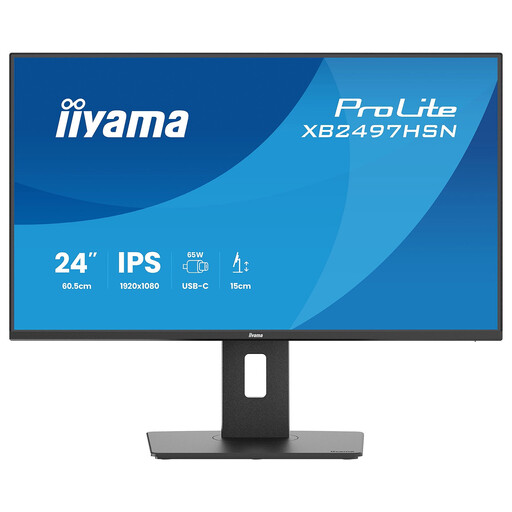
iiyama ProLite XB2497HSN-B1 24-inch Full HD 100Hz IPS monitor
A compact Full HD option to compare if you have limited desk space.
24 inches; Full HD; 100Hz; IPS.
View at Joybuy
 No image available
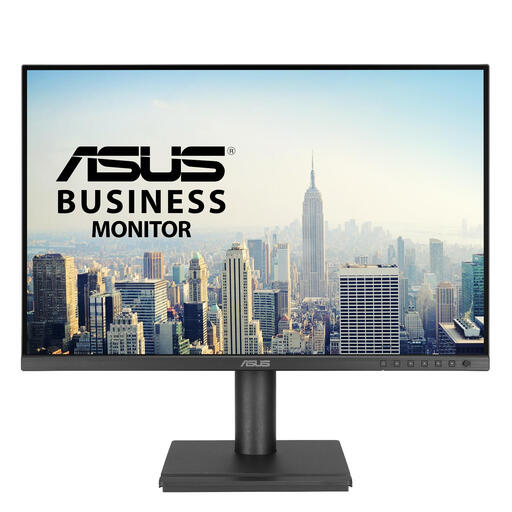
ASUS BE248CFN 24.1-inch WUXGA monitor
A WUXGA option to compare if extra vertical space is important for your spreadsheet work.
24.1 inches; 1920 × 1200 pixels; WUXGA.
View at Joybuy
 No image available
Dell Pro Plus P2425DE 24-inch QHD monitor
A compact QHD option to compare if you want to see more spreadsheet information in both directions.
24 inches; 2560 × 1440 pixels; QHD.
For USB-C video and charging, check that your laptop offers the required support and suitable charging power.
View at Joybuy
 No image available
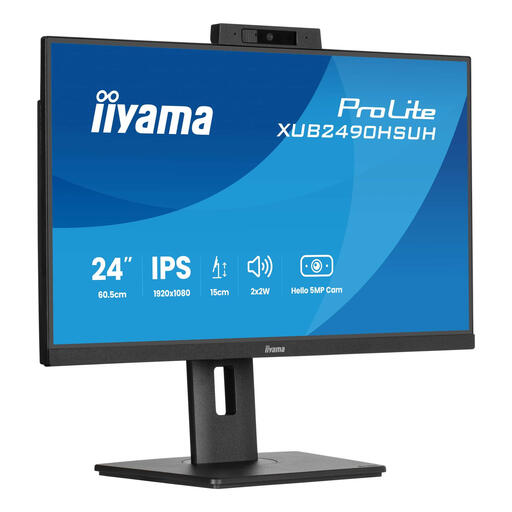
iiyama 24-inch IPS monitor with Windows Hello camera and microphone
An option to compare if an IPS panel and built-in camera and microphone suit your work set-up.
24 inches; IPS; built-in Windows Hello camera and microphone.
View at Joybuy
 No image available
ASUS ProArt Display PA24ACRV 23.8-inch QHD monitor
A compact QHD option to compare if you want to see more spreadsheet information on a smaller screen.
23.8 inches; 2560 × 1440 pixels; QHD.
For USB-C video and charging, check that your laptop has the required port support and suitable charging power.
View at Joybuy
Frequently asked questions
Should I choose Full HD, WUXGA or QHD for survey data on a small desk?
Choose according to your main constraint: physical space, visible spreadsheet rows or visible columns. WUXGA (1920 × 1200) has 200 more vertical pixels than Full HD (1920 × 1080); the QHD option discussed here has 2560 × 1440 pixels. Check whether text scaling is easy to read from your viewing distance.
Can I connect a USB-C monitor to my laptop with a single cable?
Only if the laptop port supports suitable video output, such as DisplayPort Alt Mode or Thunderbolt, and the monitor and laptop are compatible with the charging power you need. Check the specifications of both exact devices; otherwise, you may need a separate video connection.
How should I set up a screen for long periods of data work?
Check whether the monitor is adjustable, reduce distracting reflections and take breaks from prolonged screen work. Arboportaal explains that specific workplace rules apply to employees who work at a screen for more than two hours a day; the rules that apply depend on the working situation.
Do monitors in the Netherlands always come with just a two-year warranty?
No. According to ACM ConsuWijzer, statutory consumer guarantee rights mean that a product must meet what you can reasonably expect from it; there is no fixed statutory warranty period. Any manufacturer’s warranty is separate from these rights.
Can I return a monitor after receiving it if I bought it online?
For a typical online consumer purchase, you usually have a statutory cooling-off period of up to 14 days after delivery, according to ACM ConsuWijzer. Check the applicable terms and any exceptions before buying; this doesn’t automatically apply to business purchases.


