
Vandaag of morgen in huis

Kwaliteit gegarandeerd

Welkomstaanbiedingen ontgrendelen: GRATIS bezorging | Tot 80% korting | Gratis 30 dagen JoyPlus-proefperiode
Download de app
A frying pan gets a lot of use every day. Yet many shoppers focus mainly on appearance, a striking coating or a low price. As a result, a pan can quickly end up at the back of the kitchen cupboard. The right choice starts with your hob, the material and the way you usually cook.
A pan may have an induction layer but still work less effectively on your cooking zone. So don’t just check whether the pan is suitable for induction; also check the diameter of the magnetic base. A base that is too small will heat less evenly, while a pan that is too large may extend beyond the cooking zone.
If you cook on gas, ceramic, electric or halogen, you will generally have more choice. A pan for all hobs is practical if you move house later or use different heat sources.
A non-stick frying pan can be useful for eggs, pancakes and delicate fish. However, the coating depends on how the pan is used. Do not overheat an empty pan, use wooden or silicone utensils where possible and avoid abrasive sponges. Also check whether the pan is dishwasher-safe. “Easy to clean” does not automatically mean dishwasher-safe pan.
Uncoated steel has different properties. A stainless steel frying pan often needs preheating and enough fat to reduce sticking. On the other hand, according to the product information for various models, 304 stainless steel is resistant to corrosion and suitable for everyday use. This is not a guarantee against discolouration or sticking; temperature and maintenance remain important.
Terms such as “healthy”, “non-toxic” or “PFAS-free” deserve a check of the product specifications. A brand claim is not automatically an independently verified result. According to Brabantia’s own information, the Onyx sauté pan has a PFAS-free ceramic coating. Other models only state “non-stick”. So do not treat these two descriptions as meaning the same thing.
Also look out for contradictory information. Some product pages state both “dishwasher-safe” and recommend hand washing. In that case, hand washing is the cautious choice, and you should check the current care instructions before buying.
According to the product description, a three-layer construction with stainless steel, aluminium and stainless steel combines heat conduction with a robust exterior. The aluminium core helps distribute heat, while stainless steel is suitable for everyday cooking. This type of stainless steel frying pan is interesting for searing, vegetables and sauces, but requires more technique than a coated pan.
Aluminium is lightweight and heats up quickly. A coating can make it easier to release food, but it requires more careful maintenance. Ceramic coatings are sometimes marketed as a ceramic frying pan or PFAS-free pan. Always check whether this property is clearly stated in the product information.
A lid is useful when you want to stew, reduce a sauce or limit splattering. A frying pan with lid is therefore more versatile, but it does take up more space.
Check whether the pan is oven-safe and up to what temperature. The PURECOOK pan with a 28 cm diameter and lid states oven resistance up to 220 °F in the product name; that is approximately 104 °C. Do not use this information as an indication that the pan is suitable for higher oven temperatures. A pan with a wooden or plastic handle is often less suitable for oven use.
Allow a hot pan to cool before washing it. With stainless steel, white spots or rainbow-like discolouration can develop due to minerals in the water, salt or overheating. This does not automatically affect usability, but gentle heating and thorough drying can help.
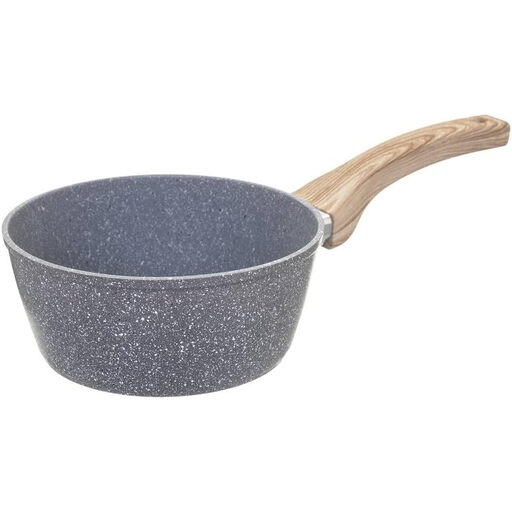
Why it suits this profile: The 2.5-litre capacity and 18 cm diameter are practical for smaller households, sauces, vegetables and porridge. According to the product information, the pan is suitable for gas, induction, ceramic and electric hobs.
The induction disc is listed separately. Before buying, check the current cleaning instructions, as the product information mentions both dishwasher use and careful hand washing.
2.5-litre capacity; aluminium pan with stainless steel induction disc; suitable for several types of hob.

Why it suits this profile: This 28 cm stainless steel frying pan with glass lid is designed for everyday frying, stir-frying and stewing for several people.
The three-layer construction and compatibility with gas, induction, ceramic, electric and halogen hobs are stated in the product information. The pan does not have a traditional non-stick coating, so preheating is still necessary.
28 cm cooking surface; 304 stainless steel with aluminium core according to the product description; glass lid included.
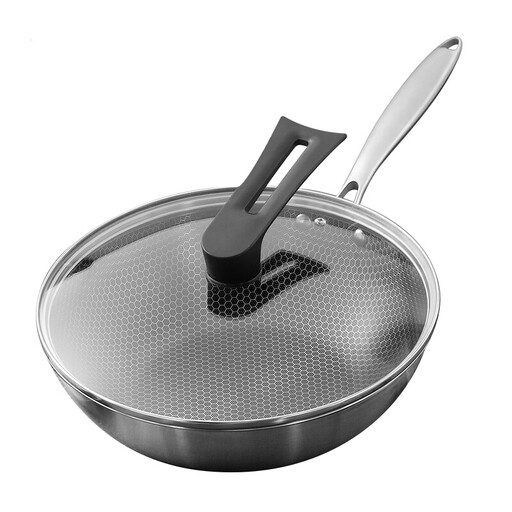
Why it suits this profile: The tall, spacious shape is designed for stir-frying, sautéing and deep-frying. The included lid is useful for dishes that need a short cooking time.
The product information explicitly mentions gas, induction and electric hobs. The claim of reduced smoke and a non-stick cooking experience comes from the product description and should not be viewed as a guaranteed result.
30 cm size; stainless steel construction according to the product information; lid included; suitable for several cooking methods.
We have put together a complete, up-to-date list of products that fully meet these strict selection criteria and the applicable European safety regulations.
Choose a model that explicitly states induction compatibility. Also check the diameter of the magnetic base and match it to the cooking zone. A pan for all hobs is useful if you use several heat sources.
That depends on the material, use and maintenance. An uncoated stainless steel pan can remain usable for a long time if you avoid overheating and harsh cleaning. With a non-stick pan, the condition of the coating is decisive. Replace the pan when the coating becomes visibly damaged or food consistently sticks to it.
For anyone who regularly prepares sauces, vegetables, fish or stews, usually yes. A lid helps retain heat and moisture in the pan. If you mainly cook eggs, pancakes or meat quickly, a shallow frying pan without a lid will often be sufficient.
