
Vandaag of morgen in huis

Kwaliteit gegarandeerd

Welkomstaanbiedingen ontgrendelen: GRATIS bezorging | Tot 80% korting | Gratis 30 dagen JoyPlus-proefperiode
Download de app
A frying pan with lid might seem straightforward to choose at first glance. However, differences in material, base, coating and care can have a big impact on everyday use. A pan that works well for a quick omelette isn’t automatically suitable for stir-frying or slow braising.
For British kitchens, hob compatibility, size and how easy it is to clean are particularly important. Below, you’ll find out what to look out for, which marketing claims to view with a critical eye, and which models suit different cooking styles.
A pan for induction needs a magnetic base. So, when looking at a frying pan for all hobs, check whether the product information explicitly mentions induction, gas, electric and ceramic cooking. Also pay attention to a flat base. A pan that wobbles heats less evenly and is awkward on a ceramic hob.
A non-stick frying pan can be great for eggs, fish and pancakes, but coatings usually require careful use. Check whether metal utensils, high temperatures, the oven and the dishwasher are allowed. For some models, hand washing is recommended, even if the pan is officially dishwasher-safe.
Claims such as “PFAS-free”, “non-toxic” or “healthy cooking” should come from verifiable product information. According to USELUCK’s own information, the Ti-Ceramic coating on their ceramic pan is PFAS-free. That is a product claim from the brand; always use the pan according to the supplied instructions and check the current specifications on the product page.
A glass lid is handy for keeping an eye on the cooking process, but pay attention to the handle, the rim and any temperature limits. A lid should fit snugly without steam escaping uncontrollably around the handle. Also check whether the lid is oven-safe; that isn’t always the case.
An aluminium pan is usually light and heats up quickly. That makes aluminium suitable for everyday frying and sautéing. A stainless steel frying pan is generally resistant to scratches and wear, but food can stick more easily if the pan isn’t preheated properly.
A model with a tri-ply or three-layer construction combines, according to the product description, stainless steel with an aluminium core. For the PURECOOK and MAXCOOK models, the construction consists of 304 stainless steel with an aluminium middle layer. The stated material specification tells you something about the build, but it isn’t a guarantee that every dish will cook without sticking.
Carbon steel, as with a traditional wok, requires a different approach. According to the product information from wangyuanji, this wok needs to be seasoned before first use and lightly oiled after cleaning. That requires more maintenance, but it suits high temperatures and stir-frying.
A 28 cm frying pan is a practical size for multiple portions, but it also has more weight and needs enough space on the hob. For one or two people, 20 to 24 cm can be more manageable. A deep frying pan or sauté pan with lid is better suited to sauces, vegetables, stews and dishes with a lot of liquid.
Alongside the diameter, pay attention to the capacity and height. A 28 cm pan can have a relatively low frying edge, whereas a deep sauté pan reduces splashing and offers more room for stirring.
A ceramic frying pan is often chosen for its smooth cooking surface. According to the product information from USELUCK, the pan is suitable for all the listed hobs, but not for the oven and not for the dishwasher. That makes the pan practical for hob cooking, as long as you wash it by hand.
With an uncoated stainless steel pan, preheating and the right amount of oil are important. For the MAXCOOK wok, the product information states that the pan is dishwasher-safe, while hand washing is recommended to preserve its lifespan and appearance.
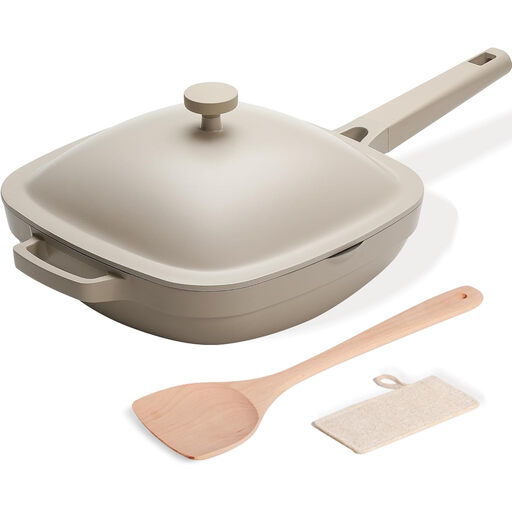
Why this fits the profile: According to the product information, this ceramic sauté pan has a capacity of 3.8 qt, a lid and a design for frying, sautéing, braising and stir-frying. The pan is suitable for various hobs and comes with a wooden spatula and scouring sponge.
The product information clearly states that the pan is not dishwasher-safe and not oven-safe. This means you know the care limitations in advance.
PFAS-free according to USELUCK’s own information; 3.8 qt capacity; includes lid and accessories.

Why this fits the profile: This large pan is designed for everyday cooking for multiple people. According to the product description, the pan has a three-layer construction, a glass lid and compatibility with gas, induction, ceramic, electric and halogen hobs.
No non-stick coating is specified. This means you don’t have to follow coating rules for metal spatulas, although careful cleaning is still sensible.
304 stainless steel; three-layer construction; 28 cm; dishwasher-safe according to the product information.
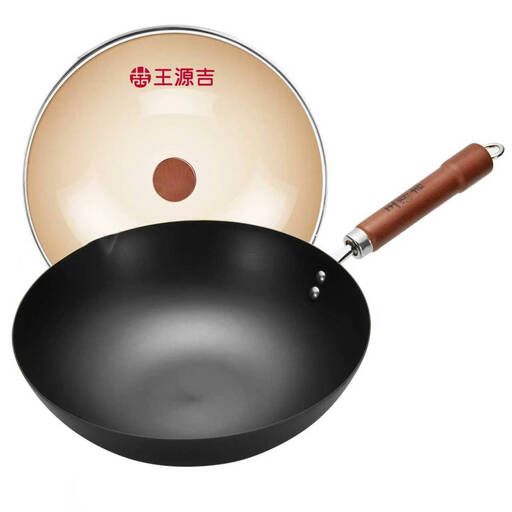
Why this fits the profile: According to the product information, the flat base is suitable for gas, induction, electric and ceramic hobs. The wok is designed for stir-frying and portions for one to three people.
The care requirements are clear: season first, wash by hand, dry thoroughly and lightly oil. The wok is not dishwasher- or oven-safe.
Carbon steel with no stated chemical coating; flat base; glass lid; suitable for four types of hob.
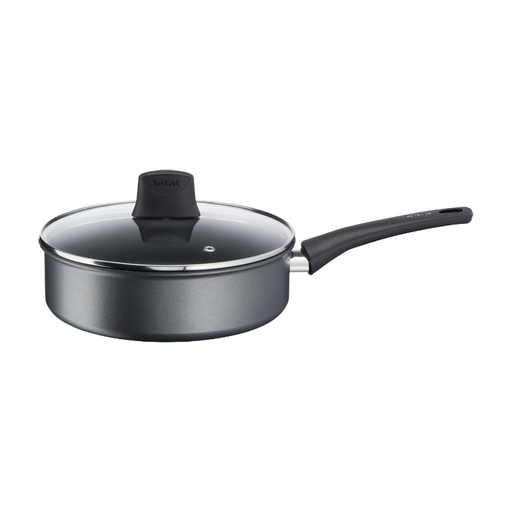
Why this fits the profile: The 24 cm size is suitable for everyday portions. According to the product information, this sauté pan with lid has a titanium-reinforced non-stick coating, a glass lid and an oven limit of 175 °C.
The product details explicitly state the oven limit and recommend hand washing and non-metal utensils. This makes the usage limits clear.
24 cm; suitable for all listed hobs; glass lid; two-year manufacturer’s warranty according to the product information.
We’ve put together a full, up-to-date list of products that fully meet these strict selection criteria and current European safety regulations.
For two to four people, 26 to 28 cm is often practical, especially for stir-frying and one-pot meals. A 24 cm pan takes up less space and is suitable for smaller portions. Always check the flat base diameter, because the stated diameter refers to the top rim.
Only if the manufacturer states induction compatibility and the base is magnetic. With an induction frying pan, the base must sit flat on the cooking zone. The models in this selection list induction as a suitable heat source, but check the current product information before purchasing.
No. A PFAS-free ceramic frying pan can still be sensitive to scratches, high temperatures and thermal shock. According to certain brands’ own product information, PFAS-free doesn’t automatically mean the pan can go in the dishwasher or oven. So always follow the specific care instructions for the model you choose.
