
Vandaag of morgen in huis

Kwaliteit gegarandeerd

Welkomstaanbiedingen ontgrendelen: GRATIS bezorging | Tot 80% korting | Gratis 30 dagen JoyPlus-proefperiode
Download de app
A frying pan with a lid is useful for far more than just frying an egg. You can use it for frying, stir-frying, browning, braising and simmering. Yet it can be tricky to compare offers properly. A shiny coating, a large size or the term “healthy cooking” doesn’t automatically tell you how practical it will be in daily use.
So pay particular attention to the construction, hob compatibility and maintenance. Below you’ll find out which features matter and which popular choices suit different cooking habits.
A pan is only suitable for induction if the base is magnetic. So check whether the product description explicitly mentions induction, gas, electric and ceramic hobs. For halogen or infrared hobs, you may need to do additional checks.
Also look at the diameter of the base. A 28 cm frying pan can have a smaller actual heating zone. This means you won’t always be using the full hob surface.
A frying pan with a non-stick coating still needs to be used correctly. Preheating it empty on a high heat, using metal spatulas and abrasive scouring pads can all damage the coating. With a ceramic frying pan, it’s usually recommended to cook at low to medium heat and to use wooden, silicone or nylon utensils.
A stainless steel frying pan has no chemical non-stick coating, but food can stick more easily if you don’t preheat the pan properly. The “hot pan, cold oil” method and moderate heat will help with this.
A glass lid is practical if you want to keep an eye on your dish without letting steam and heat escape every time. Check that the lid fits snugly, has a heat-resistant handle and is suitable for the oven. With some pans, the lid must be removed before putting the pan in the oven.
A stainless steel frying pan is generally durable and has no non-stick coating. 304 stainless steel is often described in product descriptions as food-contact-safe steel. Always check the full material specification though; a marketing term alone doesn’t give you the complete picture.
An aluminium pan often heats up quickly and is relatively light. For induction, it will need a magnetic base. A ceramic frying pan is usually a metal pan with a ceramic coating, not a pan made of solid ceramic.
A tri-ply frying pan often consists of stainless steel, an aluminium core and another layer of stainless steel. According to the relevant brands’ product descriptions, this construction is designed to distribute heat more quickly and evenly. In practice, heat distribution will still depend on the thickness of the pan, the hob and the temperature you choose.
A 28 cm frying pan offers space for larger portions, vegetables and stir-fry dishes. For three to four people, this is often a practical size, but a larger pan also takes up more space and can be heavier.
A deep frying pan with raised sides is suitable for sauces, stews and stir-frying with multiple ingredients. For single-person meals or breakfast, 20 to 24 cm is often more practical. In addition to the diameter, look at the capacity and the height of the sides.
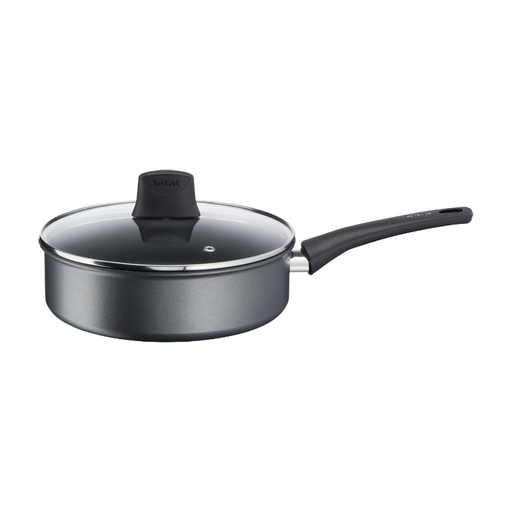
Why this fits the profile: The size is suitable for smaller households and everyday cooking. According to the product description, the pan has a non-stick coating, a glass lid and compatibility with induction, gas, electric, ceramic and halogen hobs.
The specifications list several compatible hob types and a maximum oven temperature of 175 °C. This means you can match your purchase to your own kitchen.
24 cm size, glass lid, Thermo-Signal according to the product information and a phenolic resin handle.
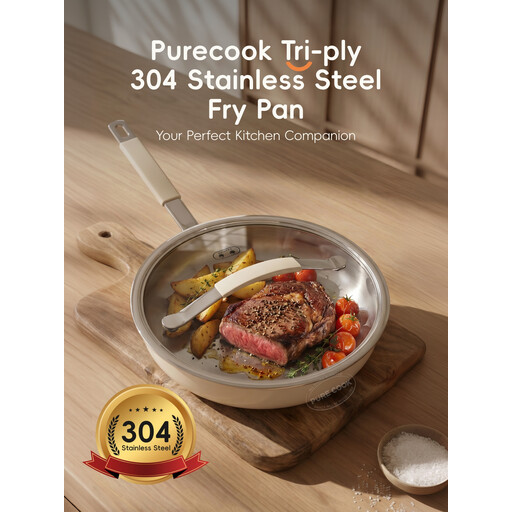
Why this fits the profile: This stainless steel frying pan is aimed at families looking for a pan without an internal chemical non-stick coating. The product description mentions a 26 cm cooking surface for three to four people.
The materials list mentions 304 stainless steel, a three-layer construction and a glass lid. Do check the current hob and maintenance information before purchasing.
Tri-ply construction, 26 cm cooking surface, suitable for induction and gas, with a lid for braising and simmering.
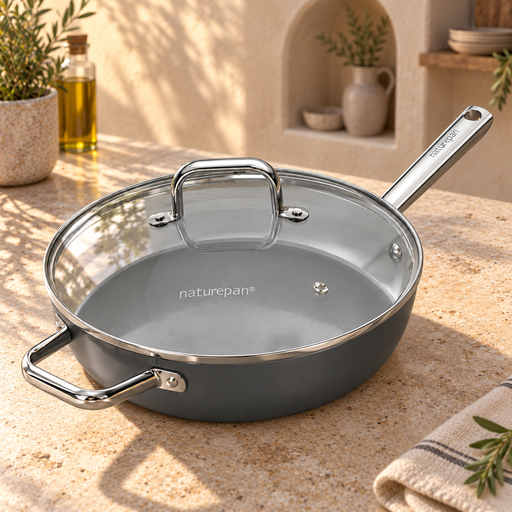
Why this fits the profile: The high sides and lid are practical for sauces, one-pot meals, stir-frying and simmering. According to the product information, the pan is suitable for induction, gas, electric and ceramic hobs.
The specifications state that the lid must be removed before oven use and that hand washing is recommended to preserve the coating.
28 cm diameter, deep shape, ceramic coating with diamond and titanium reinforcement according to the product description, and an included lid.
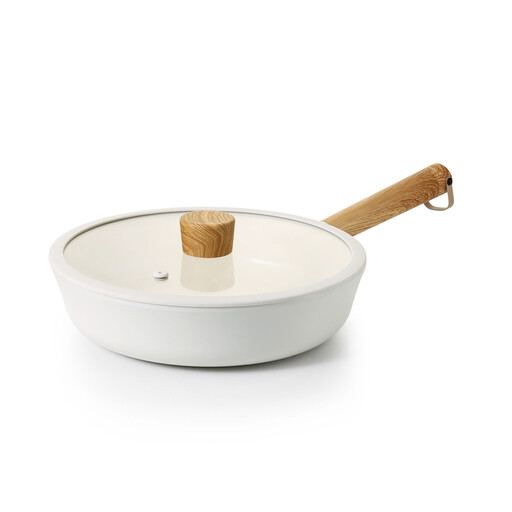
Why this fits the profile: This deep pan combines an aluminium body with a magnetic stainless steel base. According to the brand description, the ceramic coating is free from PFAS, PTFE, cadmium and lead.
The coating claims come from SENSARTE’s product information. Check the packaging and instruction manual on receipt for the exact material details.
28 cm size, lid, suitable for gas, induction, halogen, ceramic and electric hobs according to the product description.
We’ve put together a full, up-to-date list of products that fully meet these strict selection criteria and comply with current European safety regulations.
For three to four people, 26 to 28 cm is often practical. A 24 cm pan is better suited to smaller portions and takes up less space. Also look at the internal diameter, capacity and the height of the sides.
It can be, but always check the product specifications. A magnetic base or an explicit mention of induction compatibility is important. Don’t keep lifting the pan while cooking; with induction, the heat stops as soon as there’s no longer good contact.
Not automatically. According to brand or product information, a pan may be PFAS-free, but its lifespan also depends on temperature, utensils, cleaning and storage. A coating-free stainless steel pan has no coating that can wear away, but it does require a different cooking technique to prevent sticking.
