
Vandaag of morgen in huis

Kwaliteit gegarandeerd

Welkomstaanbiedingen ontgrendelen: GRATIS bezorging | Tot 80% korting | Gratis 30 dagen JoyPlus-proefperiode
Download de app
A frying pan with a lid is useful for frying, stir-frying, simmering and preparing one-pan meals. However, a pan that looks versatile in the product photo may disappoint in practice. A rim that is too low can cause splashes, an unsuitable base may not work well on induction, and a non-stick coating can sometimes require more care than expected.
Use these checks to compare a standard frying pan, sauté pan with lid, wok with lid and deep frying pan based on features that really matter to households in the Netherlands.
Check whether the product information explicitly mentions induction, gas, electric, ceramic and halogen. An induction frying pan requires a magnetic base in particular. A pan may be made from aluminium, but without a suitable induction plate it will not work on an induction hob.
Also pay attention to the diameter of the cooking surface. A 28 cm frying pan does not always have a 28 cm base. The effective heating zone may be smaller.
A non-stick frying pan makes it easier to release eggs, pancakes and fish. However, its lifespan depends on temperature, utensils and cleaning. Do not use sharp metal utensils if the manufacturer advises against them, and avoid heating an empty pan unnecessarily at high temperatures.
You should also check the care instructions for a ceramic frying pan. Some models are not dishwasher-safe and should not be placed under cold water immediately after being removed from a hot hob.
The maximum temperature may vary between the pan and its individual components. A glass lid, plastic handle or silicone sleeve may have a lower temperature limit than the pan itself. Always check the product specifications before using the pan in the oven.
An stainless steel frying pan generally has no non-stick coating and, when properly preheated, can be suitable for searing and roasting. Stainless steel is sturdy and able to withstand a great deal of everyday use. With uncoated models, however, food can stick more easily. The Maxcook wok’s product information therefore recommends using a hot pan, cold oil and medium-low heat.
A three-layer construction, such as stainless steel-aluminium-stainless steel, combines an aluminium core with stainless steel. According to PURECOOK’s product description, the 304 stainless steel layer is intended to provide structural strength, while the aluminium core ensures heat conduction. These are product specifications and do not guarantee identical cooking results on every hob.
Cast aluminium is often used for a lightweight, deep pan with even heat distribution. This makes it suitable as a sauté pan with a lid for sauces, stews and larger portions.
A deep frying pan helps to reduce splashes and provides room for sauces or vegetables. A wok with a lid is primarily designed for stir-frying, while a wide sauté pan is often better suited to simmering and stewing.
A glass lid lets you keep an eye on your dish without repeatedly losing heat. Check that the knob and handle are heat-resistant and that the lid fits securely.
Dishwasher-safe cookware is convenient, but hand washing can help keep the finish and non-stick coating looking good for longer. For an uncoated pan, dishwasher use may be permitted according to the product information, while the manufacturer may still recommend hand washing with a soft sponge.
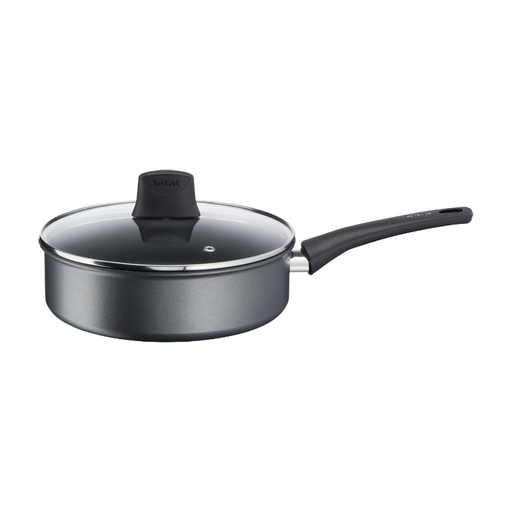
Why it suits this profile: The 24 cm size and lightweight aluminium construction are practical for smaller households and everyday cooking. According to the product information, this pan is suitable for induction and other common hobs.
The product information specifies hob compatibility, a glass lid and a maximum oven temperature of 175 °C. This makes the key usage limits clear.
24 cm diameter, titanium-reinforced non-stick coating according to the manufacturer, and a Thermo-Signal temperature indicator.

Why it suits this profile: This pan is aimed at anyone looking for a spacious, uncoated pan for roasting, stir-frying and simmering. Its three-layer construction and 28 cm diameter make it well suited to family cooking.
The product description mentions 304 stainless steel, an aluminium core, compatibility with all hobs and dishwasher safety. Before using it in the oven, check the stated limit of 220 °F.
28 cm size, three-layer base, glass lid and, according to the product information, suitability for gas, induction, ceramic, electric and halogen hobs.
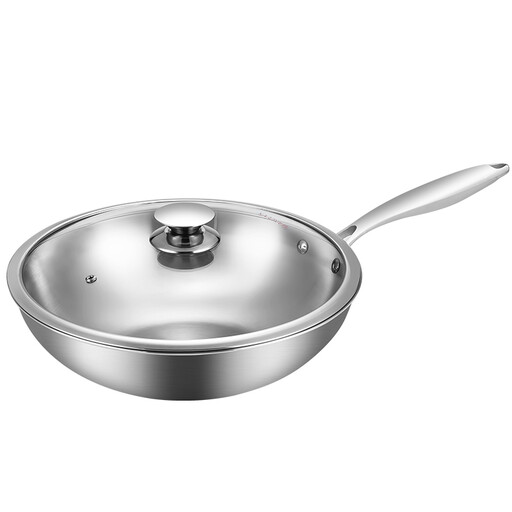
Why it suits this profile: The wok shape is designed for stir-frying, searing and everyday cooking, with high sides. According to the product information, this pan works on induction, gas, electric and ceramic glass hobs.
The product information clearly states that there is no non-stick coating. This means you know in advance that preheating and the correct oil technique are important.
Uncoated 304 stainless steel, glass lid and dishwasher safety according to the product description.
A ceramic frying pan may suit users who mainly prepare eggs, vegetables and light meals. The SENSARTE set with ceramic coating states that the coating is free from intentionally added PFAS and PTFE. This is a claim from the brand’s product information and should not be confused with a general guarantee applying to every ceramic pan.
A cookware set can be a cost-effective choice if you need both a small omelette pan and a larger pan with a lid. Do check whether both pans are oven- and dishwasher-safe. The product specifications for this set state that it should be hand washed and give a maximum temperature of 550 °F.
We have put together a complete, up-to-date list of products that fully meet these strict selection criteria and the applicable European safety regulations.
For one or two people, 20 to 24 cm is often sufficient. For a family, 26 to 28 cm are practical sizes. If you regularly stir-fry large portions, you may want to consider a wok measuring 30 cm or more. Always check the available cooking zone and storage space.
Only if the manufacturer states that it is induction-compatible. Aluminium pans generally require a magnetic induction base. Also consider the weight and flatness of the base, as an induction hob can be sensitive to these factors.
Use moderate temperatures, avoid leaving an empty pan over high heat, and choose wooden, silicone or plastic utensils when specified in the product information. Allow the pan to cool before cleaning it. Hand washing with a soft sponge is often gentler than using a dishwasher, even when dishwasher use is permitted.
