
Vandaag of morgen in huis

Kwaliteit gegarandeerd

Welkomstaanbiedingen ontgrendelen: GRATIS bezorging | Tot 80% korting | Gratis 30 dagen JoyPlus-proefperiode
Download de app
Choosing a frying pan set might seem straightforward: just look at the number of pans, the coating and the price. Yet problems often only appear after a few weeks of use. A pan turns out not to be suitable for induction, the handle doesn’t fit in the oven, or the non-stick coating quickly loses its effectiveness.
For home cooks, families and those with a compact kitchen, there are three main pitfalls to watch out for:
For an induction frying pan set, a magnetic base is essential. Aluminium conducts heat well, but won’t work on induction by itself. Manufacturers therefore often combine aluminium with a magnetic stainless steel base.
Also check whether the set is suitable for gas, electric hobs, ceramic hobs and halogen. Broad compatibility is practical if you move house or use a second cooking point. Pay attention to the base diameter too: a 24 cm pan may have a smaller effective base than the top rim suggests.
A non-stick frying pan is handy for eggs, pancakes and dishes with little oil. Ceramic coatings are often marketed as a PFAS-free frying pan, while other products are explicitly labelled PFOA- or PFOS-free. These are different claims. So read the full product information and check which substances are specifically mentioned.
For the Redchef and Brabantia models in this selection, the product information states that the ceramic coating is free from PFAS, PTFE and PFOA. For the SENSARTE set, the product description says it uses a Swiss ILAG coating that is described as PFOA- and PFOS-free. This information comes from the product documentation of the respective brands; it is not a general statement about all non-stick coatings.
A stainless steel frying pan does not have a classic non-stick coating. You can use high temperatures with it, but the cooking technique is more important: heat the pan gradually, add oil and let the food sear before turning it. A stainless steel model can therefore be interesting for those who want to sear and are less bothered by ingredients sticking.
The most practical sizes for British households are:
A dishwasher-safe frying pan saves time, but dishwasher detergent, high temperature and abrasive movements can wear down a coating more quickly. Manufacturers therefore often recommend hand washing, even when a pan is officially dishwasher-safe. Use a soft sponge, let the pan cool down and avoid metal spatulas with ceramic or traditional non-stick coatings.
With a frying pan set with a detachable handle, you save storage space. However, check that the handle locks securely before lifting the pan. For oven use, the handle usually needs to be removed. The stated temperature limit always remains the key factor; “oven-safe” does not mean every temperature is suitable.
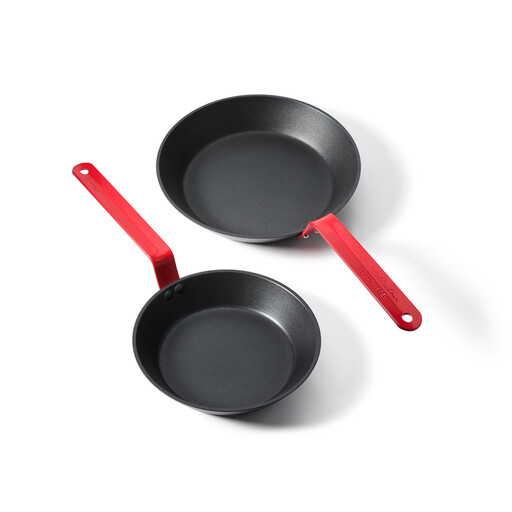
Why this fits the profile: The set includes 8 and 10 inch pans, comparable to compact everyday sizes. According to the product information, they are suitable for induction and other hobs.
The magnetic stainless steel base is explicitly mentioned. The oven limit of 450 °F and the recommendation to hand wash make the usage limits clear.
Two sizes, induction compatibility and a coating described as PFOA- and PFOS-free according to the product description.

Why this fits the profile: The combination of 20 and 24 cm suits cooking for one to three people. The set appeals to those who value material origin and clear temperature information.
The product information mentions induction, an oven limit of 200 °C and a PFAS-free ceramic coating. This makes key claims verifiable.
100% recycled forged aluminium according to the product description, two sizes and dishwasher safety. Hand washing is recommended for a longer lifespan.
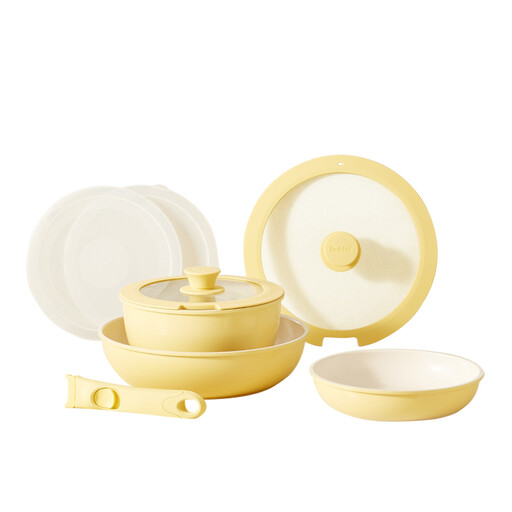
Why this fits the profile: The set combines a 20 cm pan, a 26 cm pan, a saucepan, lid and detachable handle. This suits compact kitchens, campervans and households that use multiple cooking methods.
The manufacturer states PFAS-, PFOA- and PTFE-free material and indicates that the handle can be removed for oven use. Following the instructions remains essential.
Stackable design, suitable for induction and dishwasher-safe after removing the handle. The product information mentions heat resistance up to 450 °C.
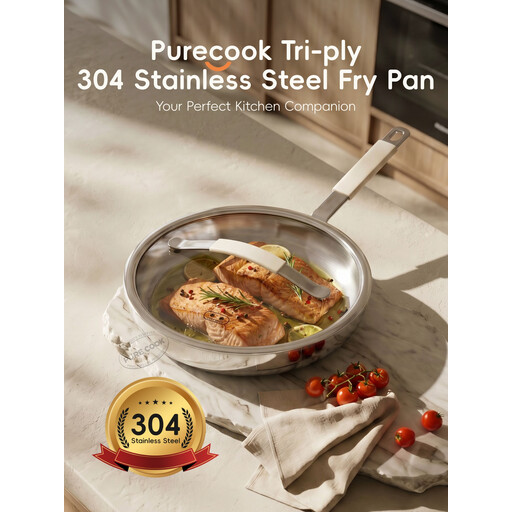
Why this fits the profile: The 26 cm pan is aimed at meals for three to four people. The three-layer design, glass lid and heat-insulating silicone sleeve suit frying, sautéing, braising and simmering.
The product information specifies 304 stainless steel, a three-layer base and compatibility with induction and gas. There is no non-stick claim to confuse with coating maintenance.
26 cm cooking surface, glass lid and a construction that, according to the product description, distributes heat evenly.
We have compiled a full, up-to-date list of products that fully meet these strict selection criteria and comply with current European safety regulations.
For one person or small portions, 20 cm is practical. A 24 cm frying pan is suitable for everyday meals for one to three people. Choose 26 cm when you are cooking for several people or don’t want to overcrowd ingredients.
That depends on the base, not just the ceramic coating. Look in the product information for “induction suitable” or “induction compatible”. Also check that the base makes flat contact with the hob.
Do not heat a coated pan empty for long periods, use wooden or silicone utensils and let the pan cool down before washing it. Hand washing with mild washing-up liquid is often gentler than the dishwasher. Always follow the manufacturer’s care instructions.
