
Vandaag of morgen in huis

Kwaliteit gegarandeerd

Welkomstaanbiedingen ontgrendelen: GRATIS bezorging | Tot 80% korting | Gratis 30 dagen JoyPlus-proefperiode
Download de app
A frying pan with a lid is useful for much more than frying an egg. With the right model, you can fry, stir-fry, sauté, braise and simmer in one pan. However, not every pan is equally suited to everyday use. A smart-looking coating, a large size or a claim that it works with “all heat sources” doesn’t tell you everything you need to know.
Keep an eye out for these common pitfalls:
Choose a size to suit your household and the dishes you cook:
A deep frying pan or sauté pan with a lid helps stop ingredients spilling over the sides when you’re stir-frying. A deeper model is also suitable for simmering and lighter braises. Check the weight too, as aluminium and stainless steel pans can differ considerably.
An aluminium pan usually heats up quickly. A magnetic stainless steel base makes an aluminium pan suitable for induction. When choosing an induction frying pan, don’t rely on the title alone: check that induction is explicitly listed in the product information.
A stainless steel frying pan without a non-stick coating can last a long time and is suitable for high temperatures, but you’ll need to pay more attention to preheating and the amount of fat you use. A multi-layer construction, such as stainless steel-aluminium-stainless steel, is designed to distribute heat more evenly.
For a ceramic frying pan or another non-stick frying pan, check:
According to SENSARTE’s product information, its ceramic models are free from PTFE and PFAS. This is a product specification provided by the brand, not an independent assessment of performance or lifespan.
A glass lid lets you keep an eye on your food without letting heat and moisture escape every time. Check that the lid fits securely and has a steam vent. Use oven gloves: handles, rims and lids can all get hot.
Check the cleaning instructions too. Some pans are dishwasher-safe, while hand-washing is recommended to help the coating last longer. A pan that isn’t oven-safe is less suitable for dishes that you sear first and then finish cooking in the oven.
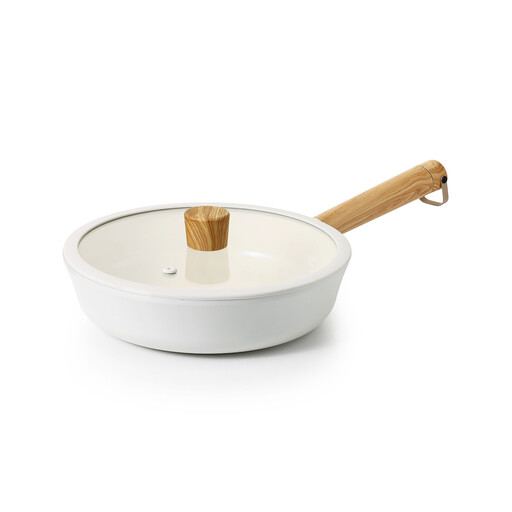
Why it suits this type of cook: The 24 cm size is easy to manage for everyday portions, while its deep shape also makes it suitable for stir-frying and sautéing.
The product description lists compatibility with gas, induction, ceramic, electric and halogen hobs. Hand-washing is recommended, and metal utensils should not be used.
Ceramic coating stated to be free from PTFE and PFAS in the product information; magnetic stainless steel base and glass lid.
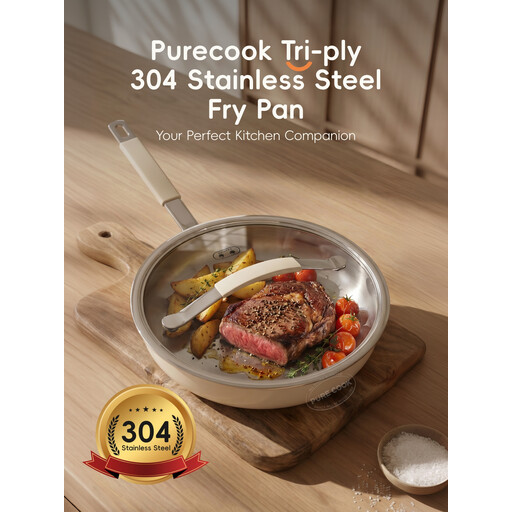
Why it suits this type of cook: Its 26 cm cooking surface is designed for family meals for around three to four people, as well as frying, sautéing, braising and simmering.
The three-layer construction and 304 stainless steel are clearly specified. The pan has a glass lid and an insulated silicone sleeve; metal utensils and abrasive cleaners are not recommended.
Multi-layer construction, 26 cm diameter, suitable for induction and gas, with a glass lid.
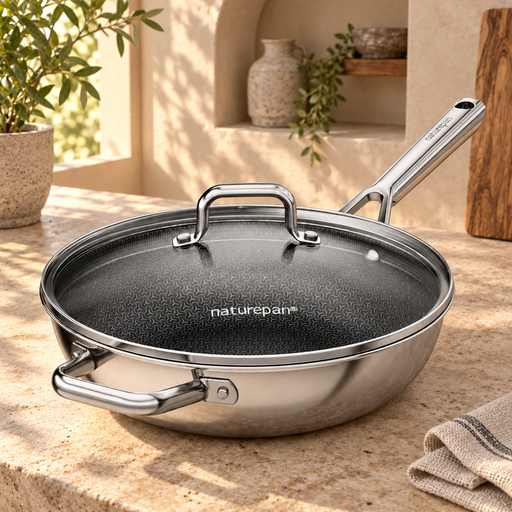
Why it suits this type of cook: This deep 28 cm pan is designed for larger portions, stir-fries, sauces and dishes that continue cooking under a lid.
The product information explicitly lists induction, gas, electric and ceramic hobs. For oven use, remove the lid; check compatibility with halogen hobs beforehand.
Hybrid cooking surface, aluminium core and lid included; according to the specifications, oven-safe up to 230 °C without the lid.
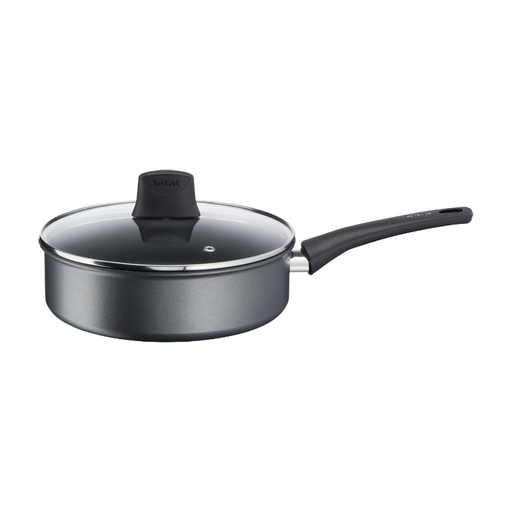
Why it suits this type of cook: A 24 cm non-stick frying pan with a lid is practical for everyday use when you use different hobs at home or elsewhere.
According to the product specifications, this pan is suitable for induction, gas, electric, ceramic and halogen hobs. The oven limit is 175 °C.
Glass lid, titanium-reinforced non-stick coating according to the manufacturer, and product specifications covering all the hobs listed.
We’ve put together a complete, up-to-date list of products that meet these strict selection criteria and the applicable European safety regulations.
For one or two people, 20 to 24 cm is usually enough. For a family or larger stir-fries, 26 to 28 cm is a better choice. As well as the diameter, check the base diameter and capacity.
That depends on the base. Look for an explicit mention of induction compatibility or a magnetic stainless steel base. Always check the product specifications when a pan is described as suitable for “all heat sources”, especially if you also want to use it in the oven.
Don’t leave an empty pan on a high heat for a long time. Use wooden, silicone or nylon utensils, let the pan cool before washing it, and avoid wire wool or abrasive cleaners. Even if a model is dishwasher-safe, hand-washing may help the coating last longer, as stated in the product description.
