
Vandaag of morgen in huis

Kwaliteit gegarandeerd

Welkomstaanbiedingen ontgrendelen: GRATIS bezorging | Tot 80% korting | Gratis 30 dagen JoyPlus-proefperiode
Download de app
A frying pan may seem like a straightforward purchase, but the differences in materials, coatings, sizes and maintenance can be significant. For example, a pan described as versatile in an advert may not actually be suitable for induction. A dishwasher-safe pan may also wear out more quickly if you repeatedly clean the coating in the dishwasher.
Joybuy Product Recommendation Officer helps you work through the most important product specifications. This prevents you from choosing based solely on an eye-catching coating, low price or general marketing claim.
Always check whether the pan is genuinely suitable for your hob. Induction hobs in particular require a magnetic base. An aluminium pan without a suitable induction base will not work, even though the material is lightweight and heats up quickly.
For example, the Tefal Easy Cook & Clean is suitable for gas, electric and ceramic hobs, but according to the product information it is not suitable for induction. For an induction frying pan, models with a magnetic base, such as the Brabantia Onyx or WMF Durado, are a more logical choice.
PFOA-free does not automatically mean that a pan is completely PFAS-free. PFOA is one specific substance within the PFAS group. If you are deliberately looking for a PFAS-free frying pan, look for an explicit statement such as “100% PFAS Free” or “PFAS-free” in the product information.
According to the product information, Brabantia describes the Onyx range as having a 100% PFAS-free ceramic coating. Other pans sometimes only state that no intentionally added PFOA or PFOS is used. This is different wording and should not be treated as the same as a fully PFAS-free claim.
A non-stick frying pan will remain usable for longer if you follow the care instructions. High temperatures, metal utensils, abrasive sponges and sudden changes from hot to cold can all put stress on the coating.
Even when a pan is dishwasher-safe, washing it by hand with a soft sponge may be the wiser option. This applies, for example, to several ceramic and non-stick models in this overview.
An aluminium frying pan generally heats up quickly and is relatively lightweight. According to the product description, a cast aluminium body can provide strength and resistance to warping. A stainless steel frying pan is often a good choice for anyone who values a coating-free cooking surface and long-term use.
Tri-ply pans generally combine stainless steel with an aluminium core. According to their product information, the PURECOOK models made from 304 stainless steel use a three-layer construction. The aluminium layer is designed to conduct heat, while the stainless steel layers provide structural strength. Always check the care instructions, though: a smooth steel pan requires more attention to preheating and the use of oil than a pan with a non-stick coating.
A ceramic frying pan can be an alternative to traditional non-stick coatings. The Brabantia Onyx and WMF Durado feature a ceramic coating; according to the product information, Brabantia’s coating is also described as PFAS-free.
A mineral- or granite-style coating, as found on some aluminium pans, can help food release easily. However, the terms “granite” and “stone” do not, by themselves, tell you enough about the exact composition. Check the coating type, care instructions and warnings regarding metal utensils.
Do not only look at the diameter of the rim. The actual cooking base may be smaller, particularly with a deep or heavily rounded pan. A frying pan with a lid is practical for simmering, reducing sauces and keeping food warm. Also check whether the lid is included, as it is not standard with every model.
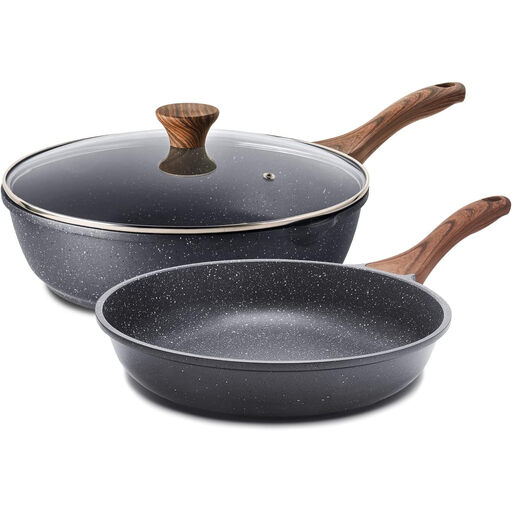
Why it suits this profile: The set combines a 9.5-inch frying pan with a 5-quart deep sauté pan and a glass lid. According to the product information, both pans are suitable for induction, gas and electric hobs.
The product description states which hobs the pans are compatible with and recommends low to medium heat. Hand washing is recommended, even though the set is described as dishwasher-safe.
Cast aluminium, a Swiss ILAG granite coating according to the product information, a stay-cool handle and a glass lid for the sauté pan.
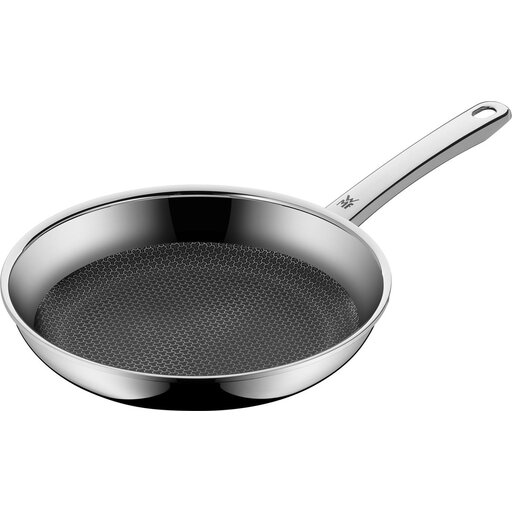
Why it suits this profile: This pan is designed for larger portions and cooking methods where searing is important. According to WMF, its three-layer construction consists of aluminium, stainless steel and a chrome exterior.
The specifications state that it is compatible with induction, withstands temperatures of up to 260 °C and should be washed by hand. The pan is therefore not automatically dishwasher-safe.
28 cm size, a TransTherm base according to the product information and a honeycomb structure around the PermaDur coating.
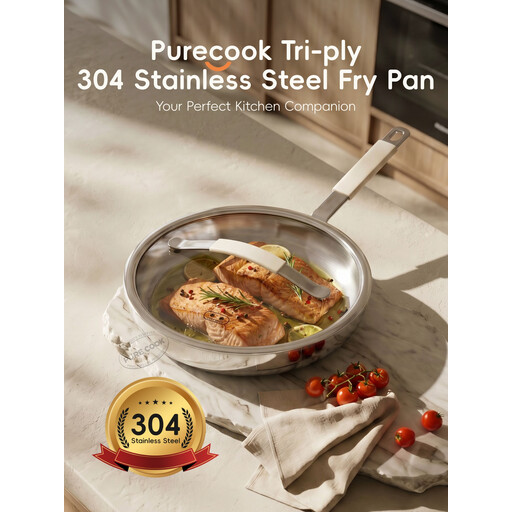
Why it suits this profile: According to the product information, this pan is intended for frying, sautéing, braising and simmering meals for three to four people. The glass lid and raised rim are practical for everyday family meals.
There is no non-stick coating that can be damaged by metal utensils. However, the product information recommends using a soft sponge and avoiding abrasive cleaners.
304 stainless steel, a three-layer base, glass lid, induction compatibility and, according to the product information, dishwasher suitability.
A durable frying pan is not determined by the material alone. Follow these basic rules:
We have put together a complete, up-to-date list of products that fully meet these strict selection criteria and the applicable European safety regulations.
For one person or small portions, 20 cm is often sufficient. A 24 cm pan is suitable for everyday cooking for one or two people. For a family or several ingredients at once, 28 cm provides more room. Also consider the diameter of the cooking zone, as an oversized pan may not heat as evenly.
It varies from product to product. Check whether the manufacturer explicitly states “PFAS-free”. According to the product information, the Brabantia Onyx models are described as 100% PFAS-free. A statement that a product is PFOA-free only refers to PFOA and is not the same as a complete PFAS-free claim.
The service life depends on the coating, temperature, utensils and cleaning method. Using low to medium heat, soft utensils and hand washing can help the pan last longer. Once the coating is visibly damaged or starting to come away, replacing the pan is advisable. A coating-free stainless steel frying pan does not have a non-stick layer that can wear out, but it does require a different cooking technique and regular care.
