
Vandaag of morgen in huis

Kwaliteit gegarandeerd

Welkomstaanbiedingen ontgrendelen: GRATIS bezorging | Tot 80% korting | Gratis 30 dagen JoyPlus-proefperiode
Download de app
A frying pan might seem like a simple purchase, but differences in the base, coating and size determine how much you’ll enjoy using it. A pan that cooks beautifully in the shop can disappoint at home if the base doesn’t sit properly on your induction hob, the handle gets hot, or the non-stick coating wears out quickly.
Three common pitfalls keep cropping up:
For induction, gas, ceramic and electric hobs, the base construction is the most important factor. An induction frying pan must have a magnetic layer or a suitable stainless steel base. Where possible, place the pan on a cooking zone that roughly matches the base diameter. A zone that is too small will heat less evenly; a zone that is too large can cause temperature differences with some pans.
A multi-layer base can distribute heat more effectively. With a 3-ply frying pan, the construction often consists of stainless steel on the outside layers with aluminium in the middle. Aluminium conducts heat quickly, while stainless steel offers strength and corrosion resistance. That doesn’t automatically mean every 3-ply pan cooks the same: also pay attention to the thickness, flatness and the actual contact surface.
A ceramic coating is known for its smooth cooking surface and the ability to cook with little oil. Claims such as PFAS-free, PTFE-free or PFOA-free should come from the product information. According to the product information from Redchef, their ceramic pans are free from PTFE, PFOA and PFAS. With other brands, the wording may differ, for example “without intentionally added PFAS”. That is not automatically the same claim.
With a ceramic non-stick frying pan, it’s best to use wooden, silicone or plastic spatulas. Metal can cause scratches. Also avoid heating an empty pan on a high setting, and let a hot pan cool down before rinsing it. Check whether the pan is genuinely suitable for the dishwasher; the product information for the WMF Durado, for example, recommends hand washing.
A stainless steel frying pan typically doesn’t have a classic non-stick coating. That makes it suitable for searing, deglazing and building up fond for sauces. The cooking technique is more important, though: preheat the pan gently, add oil and only place the food in the pan once the surface is hot enough.
A 304 stainless steel construction with an aluminium core can, according to the product description, provide fast and even heat distribution. With this type of pan, pay attention to the weight, the handle and the cleaning instructions. “Easy to clean” doesn’t mean that burnt-on residue will disappear by itself without temperature control.
A frying pan with a lid is useful for braising, simmering and keeping dishes warm. When frying at a high temperature, a lid is less often needed. Check whether the lid is made of glass, metal or a combination of materials, and whether the handle is oven-safe.
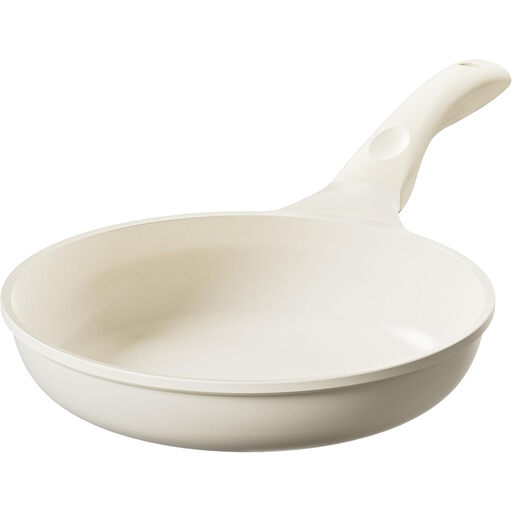
Why this fits the profile: The 24 cm size is practical for everyday portions for one or two people. According to the product information, this pan has a ceramic coating and a base suitable for induction, gas and electric hobs.
The product information explicitly mentions the coating materials, hob compatibility and a warning against metal utensils. This makes the key purchase information verifiable.
24 cm diameter; ergonomic bakelite handle; according to the product information, PFAS-, PTFE- and PFOA-free ceramic coating.
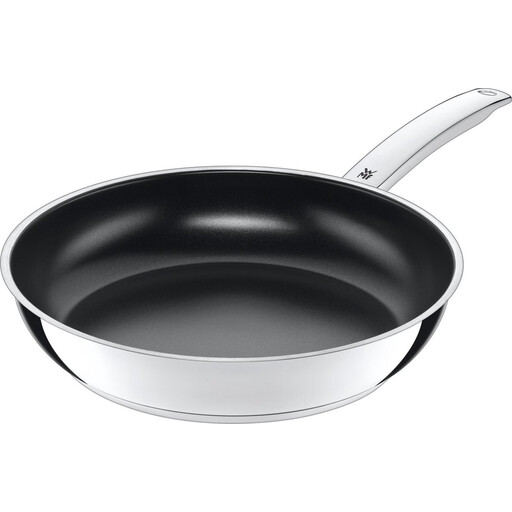
Why this fits the profile: This pan combines 18/10 Cromargan stainless steel with a ceramic coating and is, according to the product information, suitable for all heat sources, including induction.
The maintenance limitation is clearly stated: according to the product information, this pan is not suitable for the dishwasher. This prevents a wrong expectation.
24 cm; ceramic non-stick coating; according to product information, PFAS-free and suitable for high temperatures on the hob and in the oven.

Why this fits the profile: The 28 cm cooking space and the glass lid suit families and dishes where frying and braising are combined.
The 3-ply construction, the material and the compatibility with induction, gas, ceramic, electric and oven use are mentioned in the product information.
304 stainless steel with aluminium core; glass lid; according to product information, dishwasher-safe.
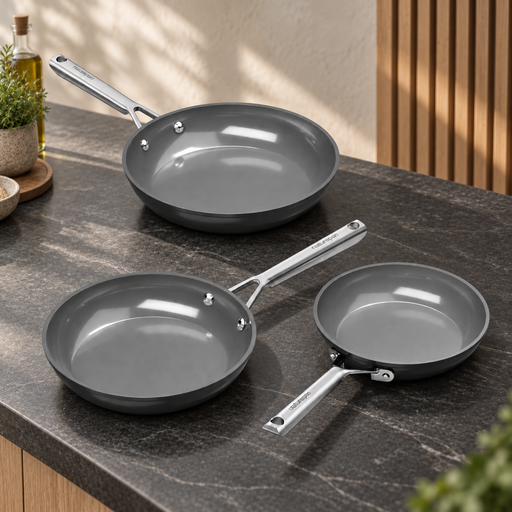
Why this fits the profile: Three sizes offer flexibility for single-person meals, everyday portions and cooking for several people.
The set states the individual diameters and hob compatibility. It also indicates that metal utensils and very high heat are best avoided.
20, 24 and 28 cm; according to product information, ceramic coating without PTFE, PFAS and PFOA; suitable for dishwasher and oven up to 260 °C.
We’ve put together a full, up-to-date list of products that fully meet these strict selection criteria and comply with current European safety regulations.
Choose a pan whose product information explicitly mentions induction. A stainless steel or aluminium pan is not automatically suitable for induction. Also look for a flat, magnetic base that makes good contact with the hob.
The lifespan depends on temperature, utensils and cleaning. Don’t use metal spatulas, don’t heat the pan empty on a high setting and avoid temperature shocks. When food starts sticking more often or the coating becomes visibly damaged, it’s wise to replace it.
A lid can retain heat and moisture better, especially when simmering and braising. This can shorten the cooking time in some situations. When crisping or frying, the lid is usually left off, because steam affects the cooking result.
