
Vandaag of morgen in huis

Kwaliteit gegarandeerd

Welkomstaanbiedingen ontgrendelen: GRATIS bezorging | Tot 80% korting | Gratis 30 dagen JoyPlus-proefperiode
Download de app
Choosing a new frying pan might seem straightforward – until you have to consider material, size, heat source and maintenance. A pan that works well on gas isn't automatically suitable for induction. And a non-stick coating that starts off nicely often requires different care than a stainless steel or cast iron pan.
For British households, these are the most common pitfalls to watch out for:
Always look at the stated compatibility. For induction, the base must be magnetic and make good contact with the cooking zone. An induction frying pan usually has a magnetic base made of steel or a composite base.
Pay attention to the difference between:
The 5Five Steel Wok Pan, 35 cm, for example, is suitable for gas, ceramic and electric hobs, but according to the product specifications it is not suitable for induction. That makes this wok suitable for certain kitchens, but unsuitable if you only use induction.
Each pan has a different usage profile.
Claims about a non-stick coating or material safety come from the manufacturer's product information. According to Redchef's own product description, the Gemstone coating is free from, among other things, PFAS, PTFE, PFOA, lead and cadmium. Always check the current product details and usage instructions at the time of purchase.
A practical guide:
A deep frying pan is handy for sauces, stews and larger quantities. A wok pan has extra capacity thanks to its high sides, but needs enough space on the hob. Also check the weight: cast iron and multi-layer stainless steel pans can be considerably heavier than aluminium.
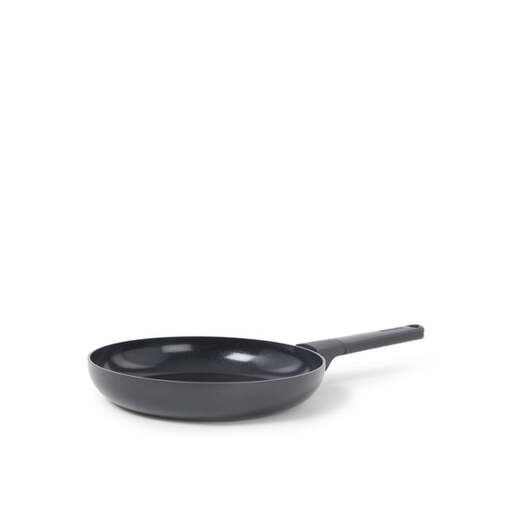
Why this fits the profile: The size is suitable for everyday portions and the pan works on electric, gas, induction and ceramic hobs according to the product specifications.
The heat source compatibility is clearly stated, so you don't have to rely on a general marketing term alone. According to the product information, the pan is dishwasher-safe.
24 cm diameter, ceramic PFAS-free coating according to the product description and a three-year manufacturer's warranty.
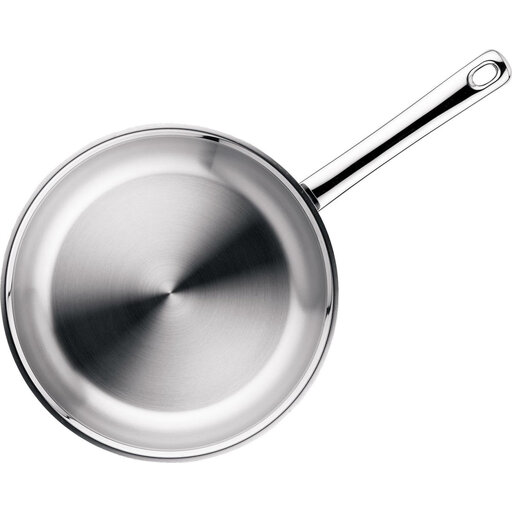
Why this fits the profile: This stainless steel frying pan is designed for anyone looking for a pan without a non-stick coating for searing and regular use on all common heat sources.
The specifications explicitly mention 18/10 stainless steel, a TransTherm base, induction compatibility, oven use up to 250 °C and dishwasher use.
Rigid stainless steel, 24 cm diameter and a base that distributes heat evenly according to the product information.
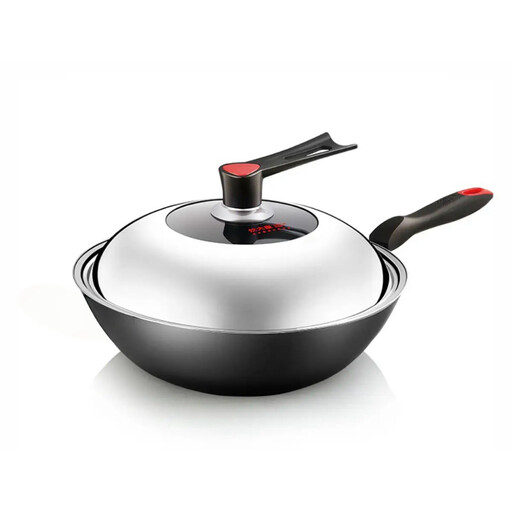
Why this fits the profile: A carbon steel wok is ideal for stir-frying on gas and at high temperatures, provided you're willing to dry the pan thoroughly and maintain it regularly.
The instructions clearly state: suitable for gas, hand wash only, dry immediately and season before first use. This makes the maintenance requirements clear upfront.
30 cm cooking surface, glass lid and carbon steel for stir-frying, braising and searing.
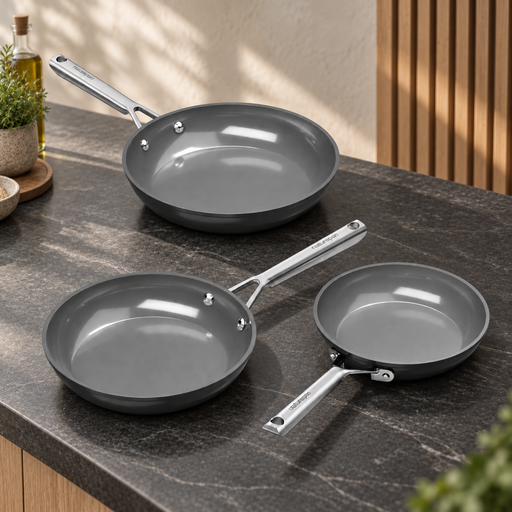
Why this fits the profile: Three sizes offer flexibility for breakfast, single meals and larger portions for the family.
The set lists the individual diameters of 20, 24 and 28 cm and is suitable for induction, gas, ceramic and electric cooking.
Ceramic coating according to the product description, oven use up to 260 °C and dishwasher-safe.
The right cleaning method depends on the material.
A PFAS-free frying pan may have a ceramic coating, but not every ceramic pan automatically has the same composition. Therefore, check the specific product information rather than just the name of the coating.
We've put together a full, up-to-date list of products that fully meet these strict selection criteria and comply with current European safety regulations.
For one or two people, 20 to 24 cm is often sufficient. For three or more people, a 28 cm frying pan is more practical. For induction, also measure the diameter of the cooking zone and the flat base.
Yes, but the cooking method differs from a non-stick frying pan. Preheat the pan gently, then add oil and let the food sear before turning it. This helps reduce sticking without needing an extra coating.
That depends on the material, temperature and maintenance. A coating can wear down due to scratches, overheating and harsh cleaning. Stainless steel, cast iron and carbon steel can last longer, but they require a suitable cooking and maintenance routine. Stop using a pan when the coating is visibly peeling or the base has become warped.
