
Vandaag of morgen in huis

Kwaliteit gegarandeerd

Welkomstaanbiedingen ontgrendelen: GRATIS bezorging | Tot 80% korting | Gratis 30 dagen JoyPlus-proefperiode
Download de app
A frying pan has to withstand a lot of daily use: high temperatures, metal spatulas, different types of hob and sometimes the dishwasher. Yet many models look alike. A shiny non-stick coating or the word ‘durable’ doesn’t automatically tell you how well a pan will work in your kitchen.
So keep an eye out for these three common pitfalls:
Aluminium is lightweight and known for transferring heat quickly. Cast or forged aluminium pans can also feel sturdy without being as heavy as some all-steel models. Do check that the base stays flat and that the pan has a coating suitable for your hob.
A magnetic base is essential for induction. An aluminium pan without an induction plate usually won’t be recognised by an induction hob. If you’re looking for a frying pan that works on all hob types, check that gas, induction, ceramic and electric hobs are explicitly listed.
A non-stick frying pan can be useful for cooking eggs, pancakes and dishes where you want to use less fat. However, how long it lasts also depends on how you use it. Ideally, use wooden, silicone or plastic utensils, and avoid heating an empty pan more than necessary.
Read claims about coatings in context. According to SENSARTE’s product information, its ILAG coating is free from PFOA, PFOS, APEO, lead and cadmium. This is a claim in the brand’s product description; it isn’t a reason on its own to rank the pan above other models. Always check the care instructions too.
A 28 cm frying pan is a practical mid-size option for everyday cooking. It’s suitable for omelettes, fried potatoes, vegetables or a meal for several people. A 30 cm frying pan gives you more room to cook ingredients side by side, but is less practical on a small hob zone.
A grill pan has ridges that leave grill marks and can allow excess fat to drain into the lower areas. This makes it suitable for meat, vegetables and sandwiches, but the surface is less practical for sauces or dishes you want to stir regularly.
Also consider how easy the pan is to clean:
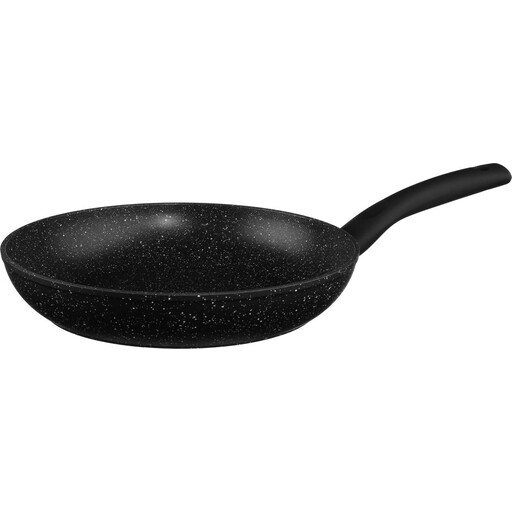
Why it suits this profile: The 28 cm size is versatile enough for everyday meals. According to the product information, this aluminium pan is suitable for gas, induction, ceramic and electric hobs.
The product information lists two non-stick coatings and a stainless steel induction plate. This makes its compatibility clearer than that of aluminium pans with no further details about the base.
28 cm diameter, aluminium body, two non-stick coatings and suitable for four types of hob. Hand-washing is recommended.
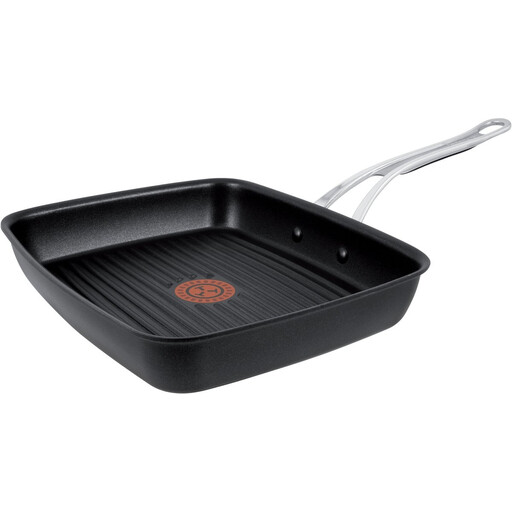
Why it suits this profile: This grill pan combines cast aluminium with a titanium coating, a stainless steel base for induction and a riveted stainless steel handle with a silicone insert.
The specifications explicitly list induction compatibility, a non-stick coating and dishwasher-safe construction. So you don’t have to infer these features from a general marketing claim.
Grill ridges, pouring spouts, an induction base and, according to the product information, dishwasher-safe construction. The pan measures 23 x 27 cm.
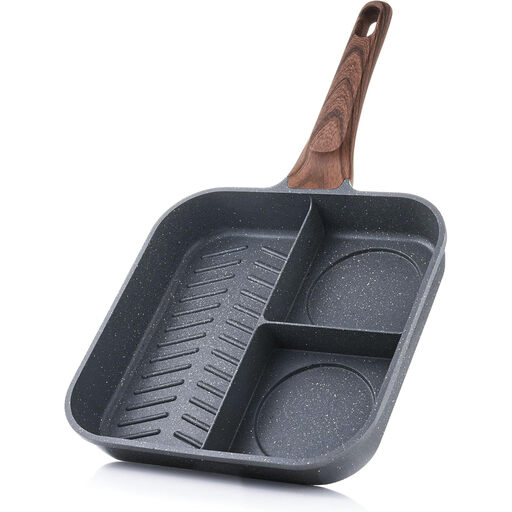
Why it suits this profile: The three sections are handy for preparing bacon, eggs, vegetables or pancakes at the same time, whether you’re making breakfast or a main meal.
The product description lists a 4.5 mm-thick magnetic stainless steel base and says the pan is suitable for induction, gas and electric hobs. Hand-washing is required, and the pan should not be used in the oven.
Three separate cooking zones, raised grill ridges, an aluminium construction and, according to the product information, a coating free from PFOA, PFOS and APEO.
We’ve put together a complete, up-to-date list of products that meet these strict selection criteria and the applicable European safety regulations.
A 28 cm frying pan is generally a practical mid-size option for a household. It gives you enough room for vegetables, meat or an omelette without being too unwieldy. Choose a 30 cm pan if you often cook larger quantities at once and your hob has a suitable zone.
Yes, if the pan has a magnetic base or induction plate. Aluminium itself isn’t recognised by every induction hob. Look for an explicit statement that the pan is induction-compatible, and check the product details if you’re unsure.
Let the pan cool first, then wash it with warm water, washing-up liquid and a soft sponge. Avoid metal utensils and abrasive cleaning products. Even if your frying pan is dishwasher-safe, hand-washing may be a sensible choice, according to the product information, to help keep the coating and surface in good condition for longer.
