
Vandaag of morgen in huis

Kwaliteit gegarandeerd

Welkomstaanbiedingen ontgrendelen: GRATIS bezorging | Tot 80% korting | Gratis 30 dagen JoyPlus-proefperiode
Download de app
Choosing a new frying pan might seem straightforward, until you have to decide between aluminium, stainless steel, cast iron, carbon steel or a non-stick coating. Terms such as “scratch-resistant”, “suitable for all heat sources” and “dishwasher-safe” only tell you so much unless you check the technical details.
Many disappointing purchases come down to three common pitfalls:
An aluminium frying pan generally heats up quickly and is relatively lightweight. Combined with a non-stick coating, it’s a practical choice for eggs, pancakes and vegetables. If you use it every day, check which cleaning methods are allowed, and avoid sharp utensils if the manufacturer advises against them.
An uncoated stainless steel frying pan is suitable for searing and can last a long time when used correctly. Food may stick more easily, but preheating the pan with a little oil can help. Models with an aluminium core or sandwich base are designed to distribute heat more evenly across the base; check the product specifications to confirm.
Cast iron frying pans retain heat for a long time, making them suitable for meat and vegetables that need a good sear. The trade-off is their heavier weight. An enamelled interior also needs careful handling to help prevent damage to the enamel.
A carbon steel wok responds quickly to temperature changes and is suitable for stir-frying. It usually needs seasoning before first use. After washing, dry it straight away and apply a light coating of oil to help prevent rust.
Choose a size to suit your household and cooking style:
A 24 cm frying pan will often fit well on a cooking zone of around 20 cm. With a 28 cm frying pan, it’s important that the base makes sufficient contact with the cooking zone. On induction, a pan that’s too large may not heat as evenly.
For a frying pan suitable for all heat sources, the product information should explicitly list gas, electric, ceramic, halogen and induction. An induction disc alone doesn’t always mean the whole pan is suitable for oven use.
Also look out for the following:
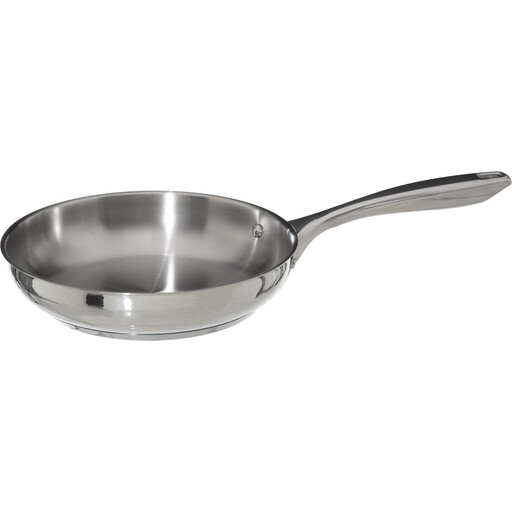
Why it suits this profile: A manageable size for everyday cooking without a non-stick coating. According to the product information, the pan is suitable for gas, electric, ceramic, halogen and induction hobs.
Its compatibility with different types of hob is clearly stated. Dishwasher use is also specified, so you can check in advance whether it suits your routine.
24 cm diameter, stainless steel body and a weight of 820 grams according to the product specifications.
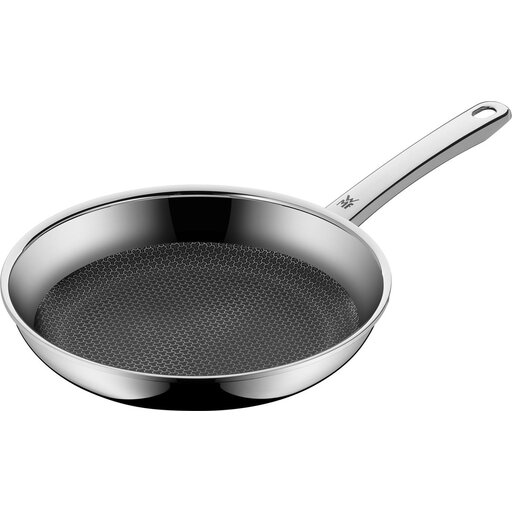
Why it suits this profile: For anyone looking for a spacious pan that combines stainless steel, an aluminium core and a non-stick coating. The manufacturer states that it’s suitable for all heat sources, including induction.
According to the product information, the pan isn’t dishwasher-safe. This helps avoid a disappointing purchase if you expect to clean it exclusively in the dishwasher.
28 cm diameter, three layers with an aluminium core, a honeycomb structure and a stated heat resistance of up to 260 °C.
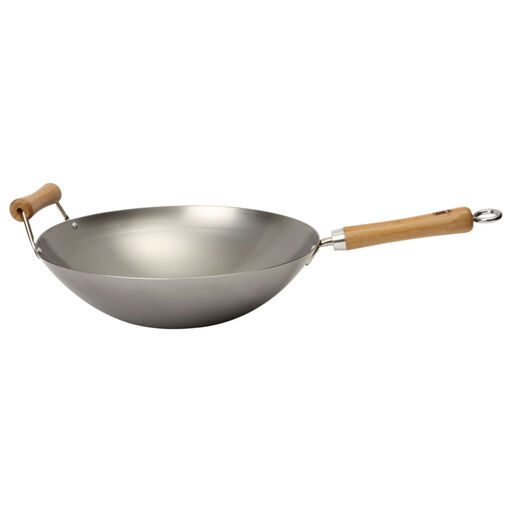
Why it suits this profile: Ideal for stir-frying larger portions. The product information states that it has a diameter of 36 cm, is suitable for induction and can cook around four to six portions.
The care requirements are clear: season before use, hand-wash, dry straight away and apply a light coating of oil. This wok isn’t dishwasher-safe.
Uncoated carbon steel, two handles and a large size for stir-frying, deep-frying and cooking for several people.
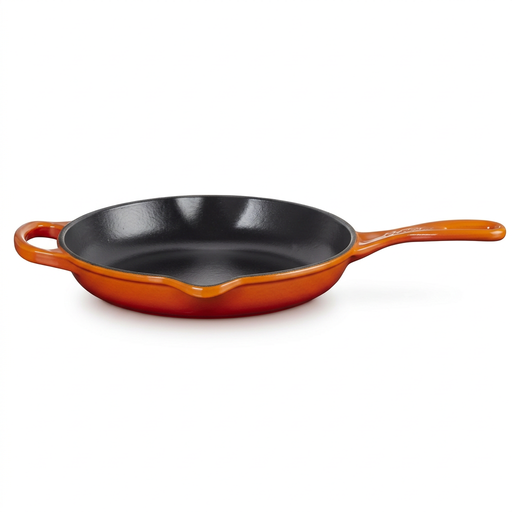
Why it suits this profile: This cast iron frying pan is designed for cooks who value heat retention and a robust pan more than a lightweight design.
The product specifications state that it weighs 1.93 kg, so you can consider how easy it will be to handle, lift and store before you buy.
Enamelled cast iron, two pouring spouts, dishwasher-safe according to the product information and a diameter of 23 cm.
We’ve put together a complete, up-to-date list of products that meet these strict selection criteria and the applicable European safety regulations.
A 24 cm frying pan is practical for smaller portions and a smaller cooking zone. A 28 cm frying pan gives you more room for several ingredients, but needs a suitably sized cooking zone and enough storage space. A 28 cm pan is often more practical for a family, while 24 cm can be more efficient for one or two people.
Choose a pan that’s explicitly stated to be suitable for induction. An induction frying pan usually has a magnetisable base or induction disc. Also check the diameter of the base, as a large pan on a small cooking zone may not heat as evenly.
A pan’s lifespan depends on its material, use and care. An uncoated stainless steel pan or cast iron frying pan can last a long time with careful use. With a non-stick frying pan, it’s important to avoid overheating, sharp utensils and unsuitable cleaning methods. Always check the care instructions and statutory guarantee terms.
