
Vandaag of morgen in huis

Kwaliteit gegarandeerd

Welkomstaanbiedingen ontgrendelen: GRATIS bezorging | Tot 80% korting | Gratis 30 dagen JoyPlus-proefperiode
Download de app
A frying pan might seem like a straightforward purchase, but you may not notice the difference between a good pan and a poor buy until you’ve used it for a few weeks. The non-stick coating may wear out sooner than expected, the pan may heat unevenly or it may not work with your induction hob.
As a Joybuy Product Recommendation Officer, I filter product information for practical details. That way, you can see not just which pan looks appealing, but which specifications suit your everyday needs.
A pan for gas or ceramic hobs won’t necessarily work on induction. Check that the product description explicitly mentions induction. A magnetic base or stainless steel induction disc is also relevant.
Pay attention to the size of your cooking zone, too. A 28 cm pan may heat less evenly on a small induction zone than a 20 or 24 cm pan.
“Non-stick frying pan” only describes how the pan’s inner coating works. It doesn’t automatically mean the pan is PFAS-free. If this matters to you, look for an explicit statement in the product specifications.
According to the product information, the Brabantia Onyx pans and the Brabantia Dusk set are PFAS-free. Other pans may be described as having a non-stick or ceramic coating without making the same claim. So check the full product specifications rather than relying on the product title alone.
A dishwasher-safe frying pan is convenient, but frequent washing can put more strain on the coating. Hand washing is recommended for many pans to help extend their lifespan.
Also check whether both the handle and the pan are oven-safe. A plastic or bakelite handle may have a lower temperature limit than an all-metal design.
A larger pan needs more cooking surface. A 28 cm frying pan may heat less evenly on a small cooking zone.
An aluminium frying pan is usually lightweight and heats up quickly. That makes it a good choice for everyday frying and sautéing. A forged or cast aluminium pan may feel sturdier than a thinner design.
A cast-iron frying pan retains heat for a long time and is suitable for searing. The trade-off is that cast iron is heavy. For example, the 23 cm Le Creuset Signature Skillet weighs around 1.93 kg. That weight helps keep it stable, but makes it less convenient to lift with one hand.
Stainless steel without a traditional non-stick coating requires more care with temperature and cooking fat. According to the product information, the WMF Profi Resist combines an aluminium core, a stainless steel interior and a PermaDur non-stick coating.
A ceramic frying pan can be an alternative to traditional coatings. According to the product information, the Brabantia Onyx has a double ceramic non-stick coating that is PFAS-free. When using a coated pan, it’s best to use wooden, silicone or plastic utensils. Avoid metal spatulas and abrasive sponges.
Look out for conflicting specifications, too. A pan may be described as dishwasher-safe, while hand washing is also recommended. So treat dishwasher safety as a convenience, not a guarantee of a longer lifespan.
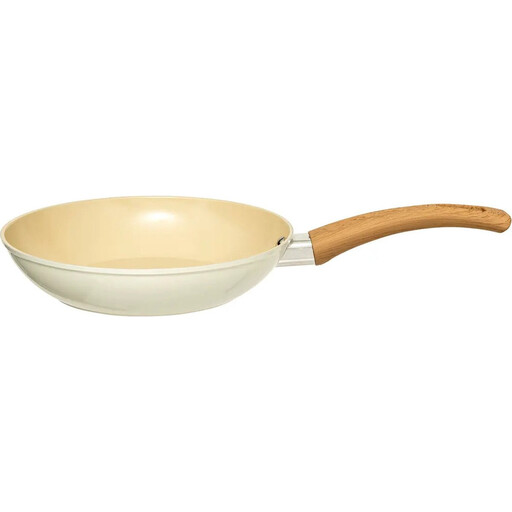
Why it suits this profile: Its compact 20 cm size and weight of around 320 grams make this pan practical for small portions, student kitchens and everyday use.
The pan is listed as suitable for gas, induction, ceramic and electric hobs. The specifications also mention two non-stick layers.
Made from recycled aluminium, suitable for all the listed heat sources and dishwasher-safe according to the product information.
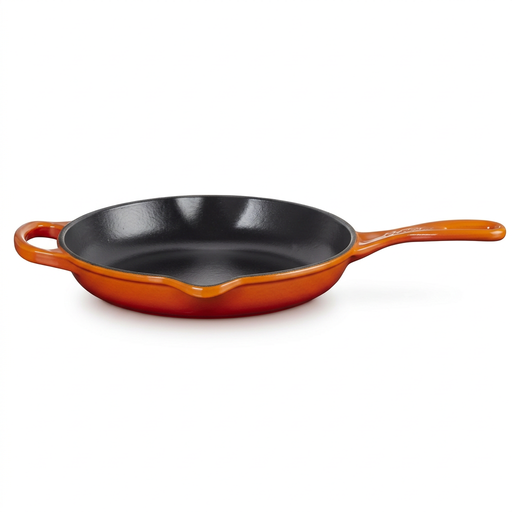
Why it suits this profile: Enamelled cast iron is a good choice if you often sear meat or vegetables and value heat retention.
This pan doesn’t have a traditional non-stick coating; the product specifications describe it as enamelled cast iron and PFAS-free. That makes the material clear.
Heat-retaining cast iron, two pouring spouts and suitable for high-heat searing. The pan is dishwasher-safe according to the product information.
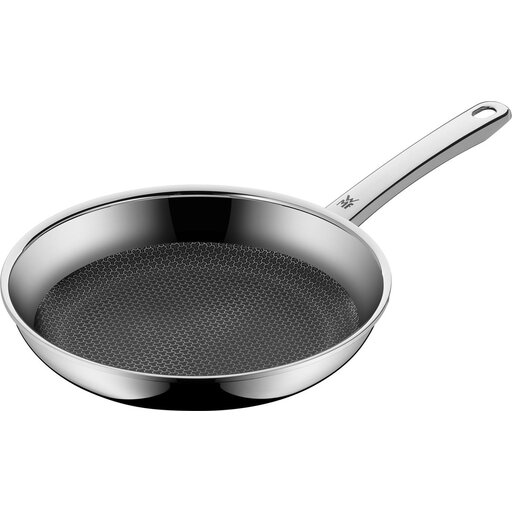
Why it suits this profile: Its 28 cm size and combination of stainless steel, aluminium and a non-stick coating make this pan suitable for larger portions and regular searing.
The specifications explicitly state that it’s suitable for induction, heat-resistant up to 260 °C and should be hand-washed, avoiding vague cleaning claims.
Three-layer construction, a honeycomb structure and a TransTherm base for heat distribution, according to the product description.
A frying pan is versatile for frying, searing and sautéing. For stir-fries, a wok with high sides may be more practical. According to the product information, the 28.5 cm Alpina aluminium wok is suitable for gas, electric, ceramic and halogen hobs, but not for the dishwasher.
If you regularly make chips or snacks, you could consider a deep fat fryer. The Fritel Profi 4620 has a capacity of 8 litres, a power output of 3300 watts and an adjustable temperature range of 150 to 190 °C. Use frying oil or solid fat as directed in the manual, and always let hot oil cool completely before draining it.
An air fryer uses hot air rather than a pan of oil. According to the product information, the Cecotec Cecofry FireDome 6000 offers several cooking settings and a temperature range of up to 260 °C. It’s a different appliance for a different cooking purpose, not a replacement for every frying pan.
We’ve put together a complete, up-to-date list of products that meet these strict selection criteria and the applicable European safety regulations.
A 20 cm pan is often enough for one person. A 24 cm pan is suitable for everyday use and smaller households. Choose 28 cm if you cook larger portions, but check that your cooking zone is big enough.
Choose a model whose product information explicitly mentions induction. Aluminium alone isn’t enough; the pan needs a magnetic base or induction disc. Also check that it sits flat on the hob.
Let the pan cool before washing it, don’t use metal utensils and avoid abrasive cleaning products. Even with a dishwasher-safe frying pan, hand washing can help keep the coating in good condition for longer. Stop using the pan if the coating starts to peel off or becomes visibly damaged.
